


Before oil, there was coal. By 1913, Britain exported nearly 100 million tons annually and supplied most of the world's internationally traded energy. How did one island nation become the dominant energy exporter of the industrial age?
If you’re following me but don’t yet receive these essays by email, you’re missing most of them. Substack doesn’t email articles to followers, only to subscribers. You can get every new essay free in your inbox by subscribing 👉:
When people think about the world’s great energy exporters, they usually think of Saudi Arabia, Russia, or other oil-producing nations. These countries extract energy from the ground and ship it around the world, allowing other nations to power their economies. Yet more than a century before oil became the dominant global fuel, another nation played a remarkably similar role. That nation was Britain.
Most histories of the Industrial Revolution focus on the coal Britain consumed at home. Coal powered British factories, railroads, ironworks, steamships, and cities. It was the foundation of Britain’s rise as the world’s first industrial nation. But Britain’s coal industry did far more than fuel its own economy. From the 1820s until the outbreak of the First World War, Britain was the world’s dominant exporter of energy.
Yet Britain's role as an energy exporter is often overlooked. Unlike oil, coal was expensive to transport and most of it was consumed close to where it was mined. Throughout the nineteenth century (and still today), the overwhelming majority of the world's coal production never crossed an international border.
Britain was the great exception. For decades, British coal flowed across Europe and around the world, helping to power transportation systems, industrial growth, and international trade.
This article examines the rise of Britain’s coal export industry and its global impact. It explains why coal became the most important energy source of the nineteenth century, why many nations depended on imported British coal, and how those imports helped power railroads, export industries, and steamship networks across much of the world. Long before Middle Eastern oil fueled the modern world, British coal helped fuel the first global industrial economy.
The British Industrial Revolution (the series)

The British Industrial Revolution is one of the great transformations in the material standard of living for the masses in world history. We cannot understand material progress without coming to grips with its importance.
If you enjoy this article, you should read my From Poverty to Progress book series.

Why Coal Became the World’s Most Important Energy Source
For most of human history, societies relied on four major sources of energy: food, wood, wind, and water.
Food powered human labor.
Food and fodder powered animals.
Wood provided heat and fuel for many industries.
Wind powered sailing ships and windmills.
Water powered mills and machinery along rivers and streams.
These energy sources supported the development of civilization, but they all shared an important limitation. They depended on current flows of energy from the natural environment. A society could harvest only so much wood from its forests. A river could provide only so much water power. Windmills worked only when the wind blew. Human and animal labor required large amounts of agricultural land to produce food.
Coal offered a fundamentally different source of energy. Instead of relying on current energy flows, societies could tap into energy that had been stored underground for millions of years. This gave coal several important advantages over traditional energy sources.
Coal contained far more energy than wood. A relatively small quantity of coal could perform the work of a much larger quantity of firewood. This reduced transportation and storage costs while increasing the amount of useful energy available to households and industries.
Coal did not require fertile land. Every acre devoted to producing food, fodder, or firewood was an acre that could not be used for other purposes. Coal allowed societies to expand their energy supplies without expanding agricultural production.
Coal provided a reliable source of energy. Rivers could flood or dry up. Wind could stop blowing. Harvests could fail. Coal could be mined, stockpiled, and used whenever needed.
Coal could be concentrated where energy was needed most. Water-powered industries had to locate near rivers. Windmills had to be built where winds were favorable. Coal could be transported to cities, factories, railroads, and ports. This gave industrial societies much greater flexibility in where they located economic activity.
Coal was ideally suited for steam engines. Steam power allowed industries to operate on a scale that traditional energy sources could not match. It also enabled the development of railroads and steamships, which transformed transportation during the nineteenth century.
These advantages explain why coal spread so rapidly after the Industrial Revolution began. Throughout the nineteenth century, coal increasingly replaced wood, charcoal, wind, and water as the dominant energy source of industrial societies. By 1913, coal supplied the majority of energy used by the world’s leading economies and had become the foundation of the global industrial system.

The Rise of British Coal Exports
Britain did not become the world’s dominant energy exporter overnight. Coal exports existed long before the Industrial Revolution, but they remained relatively small during the early nineteenth century. Most British coal was consumed at home, where it fueled one of the most dramatic economic transformations in human history.


Between 1820 and 1860, coal became the foundation of Britain’s industrial economy.
Coal heated homes in rapidly growing cities such as London, Manchester, Liverpool, Glasgow, and Birmingham.
Coal fueled ironworks, textile mills, and thousands of other factories.
Coal powered steam engines used in mining and manufacturing.
After the railroad boom began in the 1830s, locomotives became another major source of demand. By the middle of the nineteenth century, Britain depended on coal for almost every aspect of modern economic life.


Despite this enormous domestic demand, British coal production expanded even faster. Britain possessed some of the world’s largest coalfields. Many were located close to rivers, canals, and ports. This gave British producers a significant transportation advantage over many foreign competitors. Coal could be moved cheaply from mines to factories, cities, and export terminals. At the same time, improvements in mining technology allowed producers to extract larger quantities of coal at lower cost. Output rose steadily throughout the first half of the nineteenth century.
As production increased, coal producers began looking beyond Britain’s borders for new markets. They found them just as industrialization was beginning to spread across Europe. Factories, railroads, steamships, and growing cities all required vast quantities of fuel. Demand for energy was increasing almost everywhere.
Many nations struggled to satisfy this demand. Some lacked significant coal reserves. Others possessed coalfields that were too small, too remote, or too expensive to fully meet domestic needs. As a result, they increasingly turned to imported coal.
British producers were well positioned to meet this growing demand. They could mine coal in enormous quantities. They could transport it cheaply to major ports. They also had access to the world’s largest merchant fleet and the world’s most extensive trading network. These advantages allowed British coal exports to grow steadily during the middle decades of the nineteenth century.
By 1860, Britain was exporting roughly 15 million tons of coal each year. Export growth accelerated even further during the following decades as industrialization spread throughout Europe and much of the world.
By the eve of the First World War, Britain was the world’s dominant coal exporter. Its coal powered railroads, factories, cities, and steamships across multiple continents. The industry reached its peak in 1913, when Britain supplied more internationally traded energy than any nation in history up to that time.
Britain’s Competitors in the Energy Export Market
Britain was not the only nation that exported energy during the nineteenth century. Long before coal became the dominant industrial fuel, many regions exported energy-related products to neighboring countries. These exports helped supply households, industries, and transportation systems that lacked sufficient local resources.
The most important of these traditional energy exporters were found in northern and eastern Europe. Norway, Sweden, Russia, and parts of North America exported large quantities of firewood and charcoal. These commodities were especially important before the widespread adoption of coal. Firewood heated homes and fueled small industries. Charcoal remained an important fuel for iron production in many regions.
These products could be traded over considerable distances, particularly by sea. However, they faced important limitations. Wood contains far less usable energy than coal by weight. It also requires much more storage space. As a result, transportation costs represented a larger share of the final price. This limited the distance over which many traditional fuels could be traded economically.
Coal was different. It contained far more energy than wood or charcoal. It was also better suited for steam engines, which became increasingly important during the nineteenth century. Railroads, steamships, factories, and urban industries all demanded large and reliable supplies of fuel. As industrialization spread, coal increasingly replaced traditional energy sources throughout much of Europe and beyond.
This shift transformed the scale of energy trade. Earlier energy exports had primarily served regional markets. Coal created the possibility of supplying industrial economies across entire continents. By the middle of the nineteenth century, demand for imported coal was growing much faster than demand for traditional fuels. As a result, coal became the first truly global energy commodity, and Britain emerged as its dominant exporter.
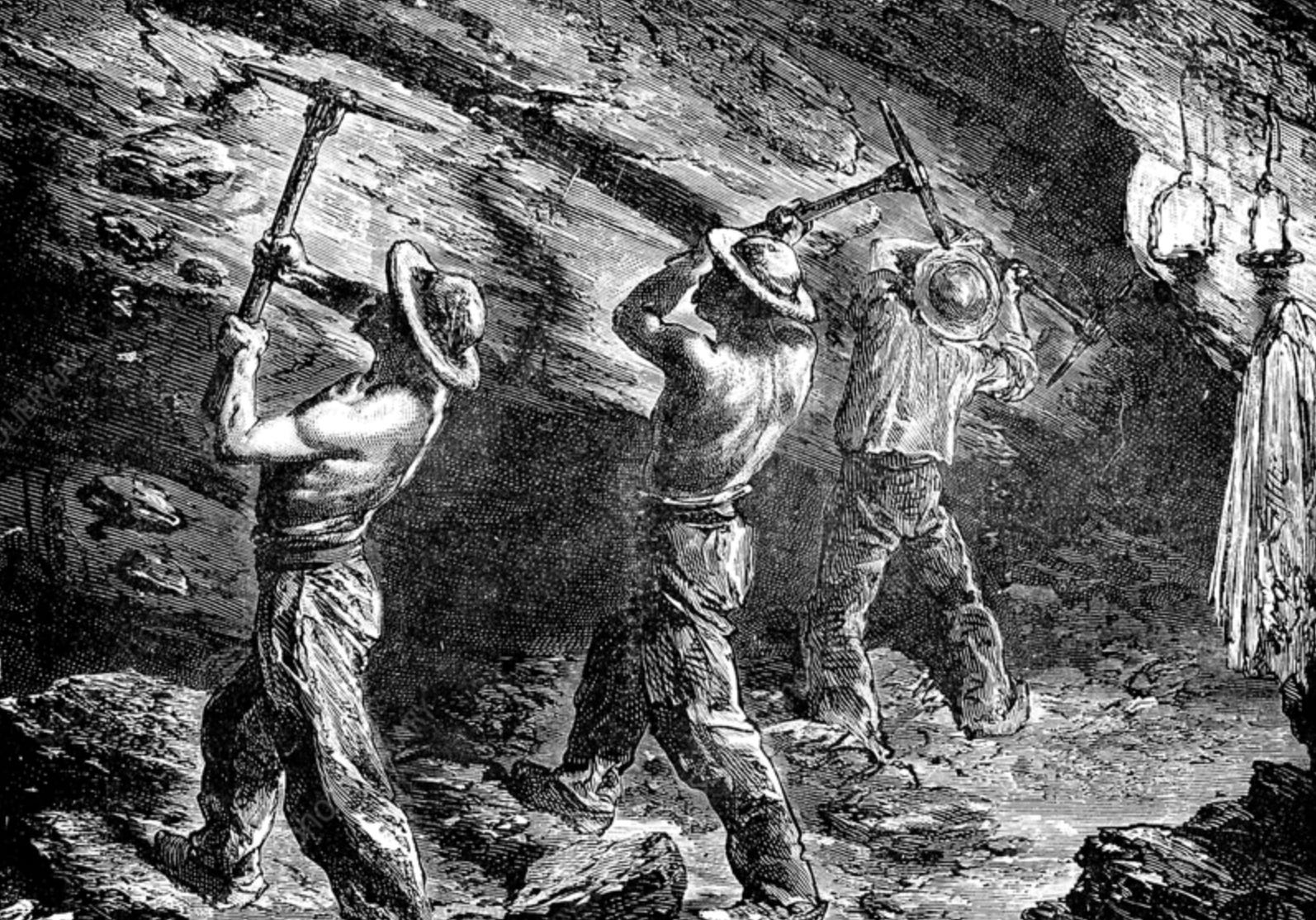
Why Britain Became the World’s Largest Coal Exporter
Britain’s dominance of the international coal trade was not an accident. It resulted from a rare combination of geography, natural resources, transportation infrastructure, and economic development.
Britain had massive coal reserves. The country possessed some of the largest coalfields in Europe. Important deposits were located in South Wales, northern England, the Midlands, and Scotland. These coalfields provided the foundation for both Britain’s industrial economy and its export trade.
Many British coalfields were situated relatively close to navigable rivers, canals, and ports. This reduced the cost of moving coal from mines to customers. Coal could be transported efficiently within Britain and shipped abroad at relatively low cost.
The British coal industry had far more experience that others. By the middle of the nineteenth century, British mining companies had decades of experience extracting coal on a large scale. They had developed skilled workforces, specialized equipment, and extensive transportation networks. This allowed British producers to expand output rapidly as foreign demand increased.
Britain had a superior transportation system. Canals connected many coalfields to growing industrial centers during the eighteenth century. Railroads expanded these connections during the nineteenth century. Together, these transportation networks linked mines to factories, cities, and export terminals.
Britain already possessed a substantial maritime economy. Britain possessed the world’s largest merchant fleet and controlled a vast network of shipping routes. Coal could therefore be transported from British ports to markets throughout Europe and much of the world. Few competitors possessed comparable shipping capacity.


These advantages reinforced one another. Large coalfields encouraged industrial growth. Industrial growth encouraged improvements in mining and transportation. Better transportation increased exports. Growing exports encouraged further investment in coal production. By the late nineteenth century, Britain had created a self-reinforcing system that no competitor could easily match.
As a result, Britain became far more than a major coal producer. It became the central supplier of internationally traded industrial energy. For much of the nineteenth century and the years immediately before the First World War, no other nation approached its position in the global coal market.

The British Coal Export Industry in 1913
The British coal export industry reached its peak in 1913, the last full year before the outbreak of the First World War. By that time, Britain had spent decades building the world’s largest coal industry and the world’s largest coal export trade.
Several statistics illustrate the scale of the industry in 1913:
British coal exports: roughly 95-100 million tons.
Share of British production exported: approximately one-third.
Share of global coal exports: well over one-half.
Largest coal exporter in the world by a wide margin.
Largest supplier of internationally traded energy.
British coal reached every major region connected to the global trading system. Large quantities flowed to nearby European markets, including France, Germany, Italy, the Netherlands, Denmark, Sweden, Norway, and Belgium. Other shipments traveled much farther. British coal fueled railroads, factories, ports, and steamships in Latin America, the Mediterranean, Africa, Asia, and the British Empire.
The export trade depended upon an enormous transportation network. Coal moved from mines in Wales, northern England, Scotland, and other coal-producing regions to major export ports. Cardiff became one of the world’s busiest coal-exporting ports. Newcastle, Hull, Glasgow, Liverpool, and several other ports also handled vast quantities of coal destined for foreign markets.
The scale of these exports becomes even more remarkable when compared to Britain’s domestic consumption. Despite exporting nearly 100 million tons of coal, Britain still consumed the majority of its production at home. British factories, railroads, steamships, electric utilities, and households used roughly two-thirds of the country’s coal output. Exports represented only the surplus remaining after the energy needs of the world’s leading industrial economy had been satisfied.
By 1913, Britain was not simply exporting a commodity. Britain was exporting the fuel that powered much of the global economy. Coal was the essential energy source of the age, and Britain had become its largest international supplier.
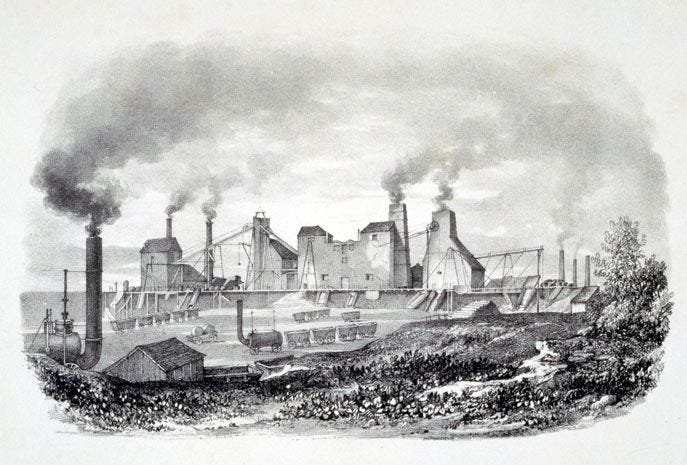
Coal Was Primarily a Domestic Energy Resource
The scale of Britain’s coal exports can create a misleading impression. Even at their peak, international coal shipments represented only a small fraction of global coal consumption. Throughout the nineteenth century, the vast majority of coal was burned relatively close to where it was mined.
This pattern existed for a simple reason: coal was expensive to transport. Although coal contained far more energy than wood, it was still bulky and heavy. Moving large quantities over land required substantial transportation infrastructure. Before the spread of railroads, transportation costs often exceeded the value of the coal itself. Even after railroads became common, long-distance transport remained expensive.
As a result, most nations relied primarily on domestic coal production whenever it was available. Britain consumed most of its own coal. Germany consumed most of its own coal. The United States consumed almost all of its own coal. Large industrial economies generally depended upon nearby coalfields rather than imports.
Britain’s export industry was therefore unusual. By 1913, Britain was exporting nearly 100 million tons of coal each year, yet it still consumed roughly two-thirds of its own production. Most other coal-producing nations exported a much smaller share of their output.
This distinction is important because it highlights how exceptional Britain’s coal trade had become. Coal was the world’s most important energy source, but it was usually a domestic commodity. Britain transformed it into one of the largest internationally traded energy products in history.
Nations With Large Domestic Coal Production
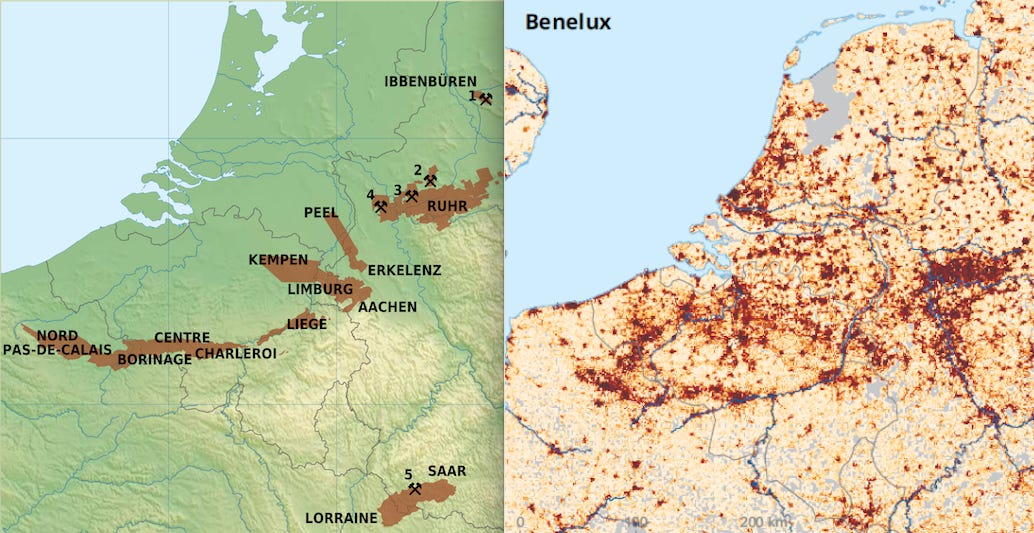
Several European nations possessed large domestic coal industries and therefore relied far less on imported British coal than many of their neighbors.
Germany
Germany’s most important coalfields were located in the Ruhr and Saar regions. By 1913, Germany produced roughly 190 million tons of coal annually, making it one of the world’s largest coal producers. Domestic production supplied the overwhelming majority of German energy demand.
Belgium
Belgium’s major coalfields were located in the Sambre-Meuse basin. By the early twentieth century, Belgium produced roughly 20 to 25 million tons of coal annually. Domestic production supplied most of the country’s energy needs, and Belgium occasionally exported coal to neighboring countries.
France
France’s largest coalfields were located in Nord-Pas-de-Calais and Saint-Étienne. By 1913, France produced roughly 40 million tons of coal annually. Domestic production supplied a substantial share of French energy demand, but not enough to satisfy the needs of the country’s growing industrial economy. As a result, France remained a significant coal importer throughout much of the nineteenth century.
Other Coal-Producing Nations
Several other European nations also possessed important coalfields.
Russia possessed significant coalfields in the Donets Basin (Donbas) of present-day eastern Ukraine and produced roughly 35-40 million tons of coal annually by 1913.
Austria-Hungary mined coal in Bohemia, Moravia, and Upper Silesia.
Spain possessed important coal deposits in Asturias.
Although these coalfields were often significant by regional standards, the countries that possessed them generally had smaller populations and lower levels of coal demand than Britain, Germany, or France. As a result, domestic production usually supplied a large share of local energy demand.
These countries demonstrate an important pattern. When large domestic coalfields existed, they usually supplied most of a nation’s energy needs. Imported coal often supplemented domestic production, but rarely replaced it.
Most of the World Lacked Significant Coalfields
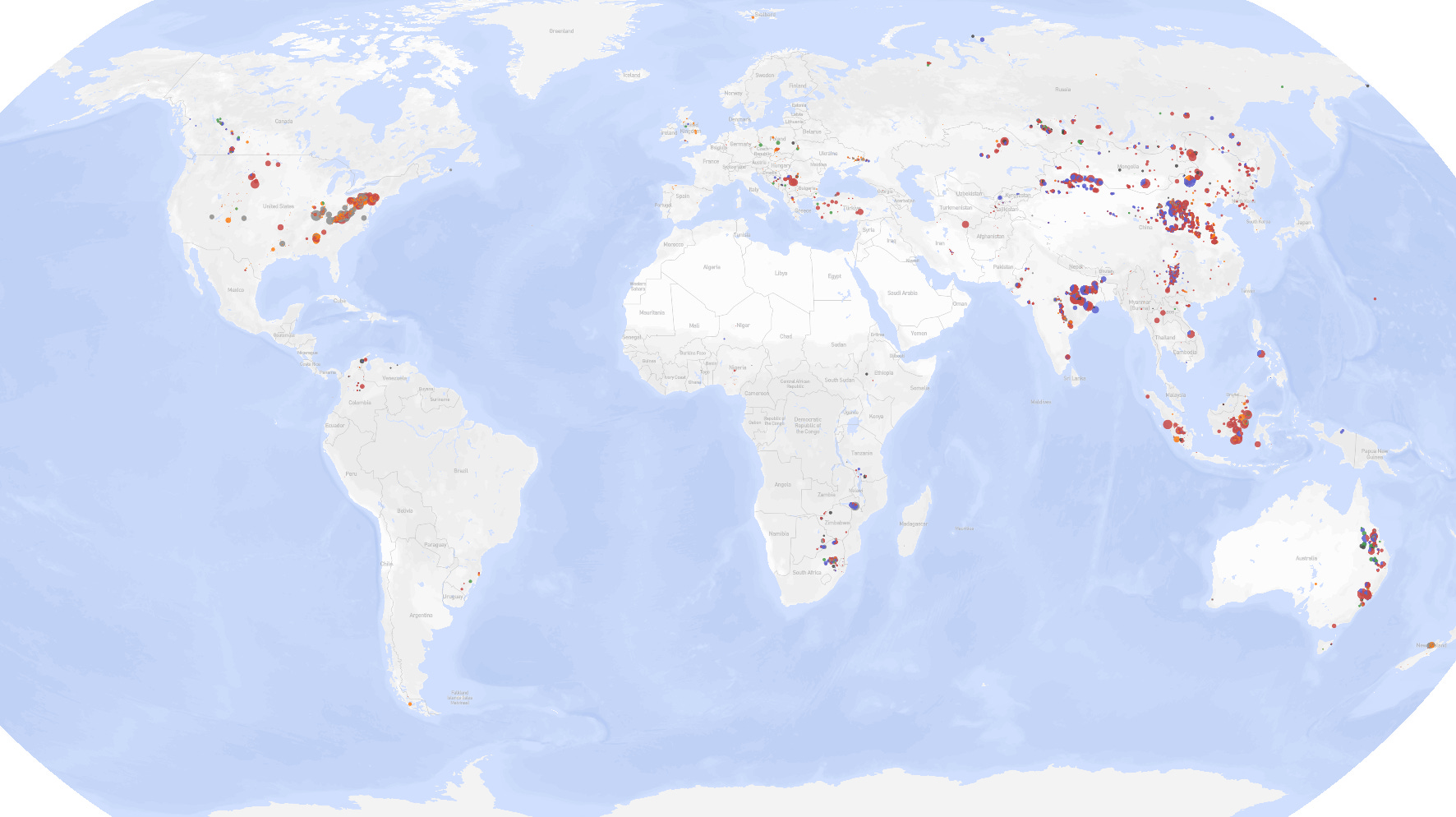
The coalfields that powered the Industrial Revolution were concentrated in a relatively small number of regions. Britain possessed large coalfields. So did Germany, Belgium, France, parts of Austria-Hungary, and the Donets Basin of the Russian Empire. Outside these areas, major coal deposits became much less common.
Large parts of southern Europe lacked significant coalfields. Italy possessed little coal of its own. Much of Scandinavia also lacked major coal reserves despite developing prosperous commercial economies. The Netherlands contained only limited coal deposits, while Denmark possessed virtually none.
The situation was similar across much of the rest of the world. Latin America contained some coal deposits, but few were developed on a large scale before the twentieth century. Most of Africa lacked major coal industries, with South Africa being the most important exception.
Coalfields existed in parts of China and India, but they were often far from major industrial centers and transportation networks. Japan possessed coal reserves, though on a much smaller scale than Britain or Germany.
As a result, the world’s coal resources were distributed very unevenly. A relatively small number of nations possessed the large, accessible coalfields needed to support industrialization on the scale seen in Britain and Germany. Most countries did not.
For much of the world, imported British coal became the only practical way to obtain industrial quantities of energy. Nations without major coalfields could import machinery, engineers, and technology from Britain, but none of those mattered without fuel. If they wanted railroads, steamships, modern industry, or large-scale urban growth, they needed coal. In many cases, British coal was the only realistic source.
The Geographical Limits of British Coal
British coal became the world’s dominant energy export, but that did not mean it could reach every market equally. Coal was far more transportable than firewood, yet it remained bulky and heavy. Transportation costs therefore played a major role in determining which regions could benefit from imported coal and which could not.
The cheapest way to move coal was by water. Ocean shipping could transport enormous quantities at relatively low cost. Rivers and canals provided another inexpensive transportation option. As a result, British coal flowed most easily to regions connected to major maritime trade routes and navigable waterways.
This gave coastal regions a significant advantage. Coal could be unloaded directly at major ports and delivered to nearby factories, railroads, steamships, and cities. In some cases, imported British coal was cheaper than transporting domestic coal over long distances by land. Countries such as Italy, Denmark, the Netherlands, Sweden, and Norway therefore became important consumers of British coal despite possessing few significant coalfields of their own.
Railroads reduced some of these geographical constraints, but they did not eliminate them. Rail transport was much cheaper than wagon transport, yet it remained more expensive than water transport for bulky commodities such as coal. Railroads also consumed large quantities of coal themselves. As a result, transportation costs continued to rise as coal moved farther inland. Railroads expanded the reach of British coal, but they did not make distance irrelevant.
The result was four distinct energy zones.
Regions with large domestic coalfields, who relied primarily on local production.
Coastal regions without major coalfields, but who could often import British coal at reasonable cost. Large navigable rivers pushed this region inland somewhat.
Inland regions connected to modern ports and railroads, who could also obtain imported coal, although at higher prices.
Inland regions lacking both coalfields and modern transportation networks facing the greatest difficulty obtaining industrial quantities of energy.
These geographical differences played an important role in shaping the spread of industrialization. Coal was the essential fuel of the nineteenth century, but access to coal remained highly uneven. British exports helped many nations overcome the limitations of their domestic energy resources, yet they could not fully overcome the constraints imposed by geography.
In this sense, British coal both weakened and reinforced geographical constraints. It allowed countries without major coalfields to gain access to industrial energy, but it did so primarily through shipping networks, ports, rivers, and railroads. The regions best connected to those networks gained the greatest benefit. Those that remained distant from them continued to face significant disadvantages during the age of steam.
Conclusion
When people think about the great energy exporters of history, they usually think of modern oil-producing nations. Yet long before oil dominated the global economy, Britain played a remarkably similar role. By the eve of the First World War, Britain exported nearly 100 million tons of coal annually and likely supplied well over half of the world’s internationally traded coal.
This achievement was remarkable because coal was primarily a domestic commodity. Most nations consumed coal close to where it was mined, and most industrial energy came from domestic coalfields. Britain became the great exception. Large coal reserves, favorable geography, advanced transportation networks, and an early start in industrialization allowed Britain to build the world’s largest coal export industry.
Yet British coal did not eliminate the importance of geography. Countries with large domestic coalfields retained important advantages, while the benefits of imported coal were concentrated in regions connected to ports, rivers, and railroads. Even so, British exports gave many nations access to industrial quantities of energy that they could not obtain at home.
The story of British coal exports therefore extends far beyond Britain itself. The next question is how other nations used that imported energy and how British coal helped power the first global industrial economy.
But that is for another article…
Bibliography
Roy Church, The History of the British Coal Industry, Volume 3: 1830-1913
Kenneth Warren, The British Coal Industry in the Nineteenth Century
John H. Brown, The British Coal Trade
David Turnock, The Historical Geography of the Coal Industry in Great Britain
Vaclav Smil, Energy and Civilization: A History
If you’ve been enjoying these essays but only follow me here, you’re not getting them by email. Followers see Notes; subscribers receive every new piece on the history and future of progress.
Subscribe free here 👉:
See also my other articles on:
The British Industrial Revolution (the series)
The British Industrial Revolution is one of the great transformations in the material standard of living for the masses in world history. We cannot understand material progress without coming to grips with its importance.
If you enjoyed this article, you should read my From Poverty to Progress book series.
You have not mentioned the quality of coal at all. Coal is not the same across all coalfields. Britain was blessed with many coalfields that produced high quality "steam coal", highly prized for making steam power especially for steam powered ships where speed was critical, like naval vessels or passenger ships. Also, the south Wales Sea ports came to be highly important, and not just Cardiff.