

Make someone’s day: Gift a subscription to your friends and family!
A central theme of this Substack and my book series is the importance of energy to human societies both today and in the past. Another theme key theme is the importance of geography as a constraint on human progress. I believe that wealthy nations should complete the Third Energy Transition, and build energy grids largely based on natural gas, nuclear, and hydropower. The exact blend of each nation will differ by geography and local local cost structure.
In other articles, I have explained why I believe that natural gas is a “no brainer” for the North American energy system. But what works for one region does not necessarily work for all other regions.
In this article, I will focus specifically on Germany, although I think my conclusions apply to much of Europe. Germany and much of the rest of Europe:
Have had a virtual stagnant economy since 2007, a time period longer than the Great Depression.
Have the most expensive electricity in the world.
Face serious problems with the stability of their electrical grid and prices due to increased adoption of intermittent solar and wind.
Have deliberately constrained domestic natural gas production (except in Norway) out of a desire to achieve Netzero by 2045.
In addition, many Europeans have deliberately moved to decommission their nuclear power plants. Germany shut down its last 3 nuclear reactors in April 2023. Ironically, this makes their stated goal of Netzero by 2045 that much harder.
Became increasingly dependent on natural gas imports from Russia.
Since the 2022 Russian invasion of Ukraine, Europe and particularly Germany have been in a self-imposed energy crisis. While the catalyst for this crisis was the war in Ukraine and the subsequent sanctions, the actual cause was a terrible energy policy over the last 20 years. This crisis is most urgent in Germany, which was, until very recently, the manufacturing powerhouse of Europe.
Oh, how times have changed!
While I believe that North America should focus on natural gas, I believe that Germany has no choice but to embark on a crash nuclear power program. While Europe has plenty of unexploited shale gas fields that have been made illegal by government policy, just removing government prohibitions will not solve the problem. I just don’t see Europe developing its domestic shale gas fields fast enough to match the achievements of the American shale gas industry.
While my proposal is a dramatic increase in German nuclear power production, such a crash program is not unprecedented. France (in the 1970s and 80s), the UK (in the 1950s-1970s), South Korea (1970s-1990s), and Sweden (1960s-80s) all dramatically increased their number of nuclear power plants within a few decades. In doing so, they greatly increased their energy security and national security while producing cheap electricity that is still available.
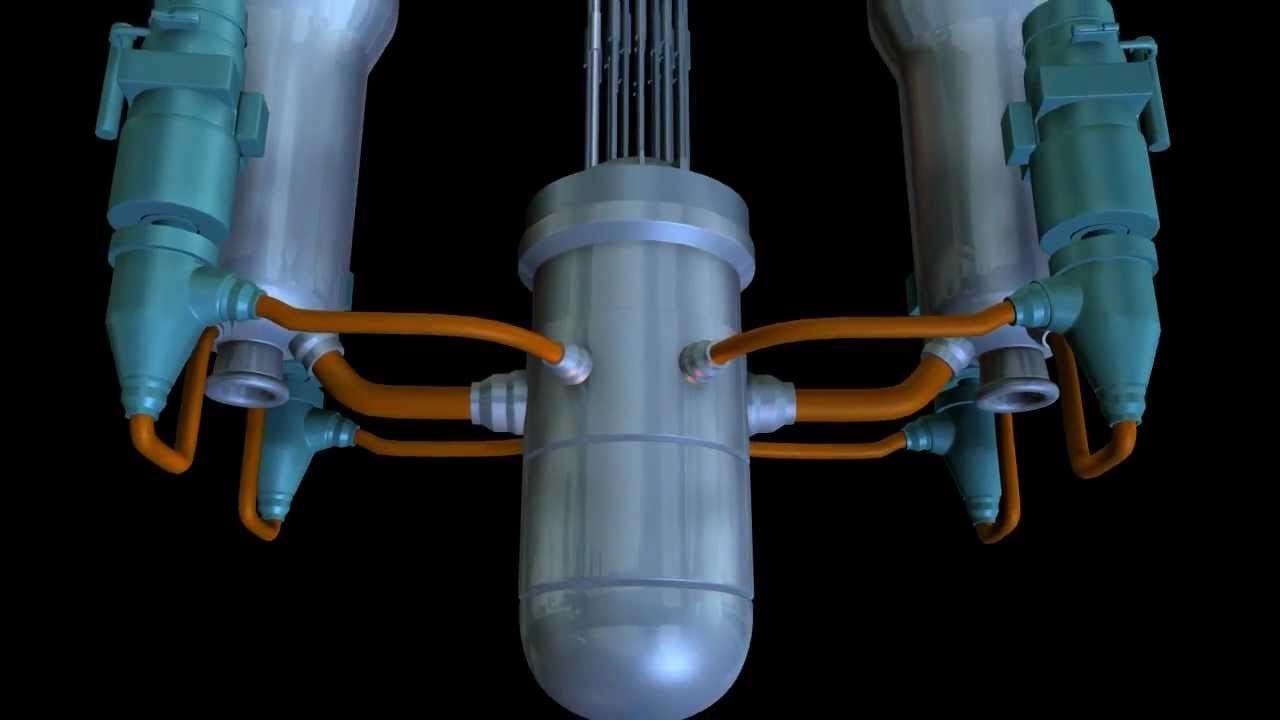
My proposal
My proposal for Germany includes the following:
Immediately recommission all the nuclear power plants in Germany that were decommissioned in April 2023 in as cost-effective a manner as possible. This would restore about 4.2 GW of base-load capacity.
Emsland with about 1.4 GW capacity
Isar 2 (1.5 GW)
Neckarwestheim 2 (1.3 GW)
Eliminate all subsidies and mandates for solar, wind, and biomass energy. These subsidies are radically distorting the electricity market.
Legalize shale gas exploration, drilling, and distribution. This will allow Germany to exploit its own shale gas fields.
Initiate a crash nuclear power program to construct 60 GW of South Korean APR-1400 nuclear power stations within 20 years (estimated cost = 100 billion Euros including financing costs and new transmission infrastructure). When completed, the total electricity output from the nuclear plants would supply approximately 85–90% of Germany’s current electricity demand, assuming high efficiency and base-load operation.
This program would construct 43 nuclear reactors spread across about 10 sites (most of which already previously had nuclear reactors which lowers the construction costs).Research the cost-effectiveness of temporarily recommissioning recently decommissioned coal plants and older nuclear power plants that are currently being dismantled. This step would potentially restore another 8-10 GW of base-load capacity of coal and 3 GW of nuclear power.
As I have argued in another article, coal-burning power plants should be phased out in wealthy nations that can afford to do so in favor of a blend of natural gas, nuclear, and hydro. The energy situation has become so dire in Germany, however, that it might be better to temporarily recommission a few coal plants until they can be replaced by APR-1400 nuclear power plants.
Why South Korean designs?
Given the number of Western nations that construct nuclear power stations, some may be surprised that I propose that Germany should look to South Korea instead of France or the USA. The reason is simple:
South Korea:
Has had a thriving nuclear power industry for decades with no accidents.
Is already a Western ally.
Have a standardized modular design (APR-1400) that can easily be replicated for dozens of plants. Standardization and modularity is critical to the long-term cost-effectiveness of any nuclear program.
(largely because of the above) Produces by far the cheapest nuclear power stations in the Western world. Only China can compete with South Korea on price, and China-produced nuclear power would potentially be a serious national security (one “software bug” could suddenly bring down the entire European electrical grid).
Can load follow (i.e. modulate its electrical output to adjust to consumer demand). The APR-1400 can operate from 50-100% capacity with a ramping rate of 5% of nominal power per minute. Load-following is critical to modern electrical grids that must equalize constantly changing electrical demand with electrical generation.
Has shown a willingness to license and construct overseas. South Koreans built the Barakah nuclear power plant in the UAE.
Is willing to license, hire, and train domestic workers/engineers, supply fuel, and oversee the construction on foreign soil. So while the design will be South Korean, it will be implemented by domestic German industry.
Quite simply, the South Koreans are the bad-asses of manufacturing exports in the West and have demonstrated expertise in nuclear exports. The APR-1400 design has been certified by the:
South Korean Nuclear Safety and Security Commission
U.S. Nuclear Regulatory Commission (NRC)
United Arab Emirates’ FANR
European Utility Requirements (EUR), particularly important for Germany
To get an agreement with South Korea, Germany would need to:
Pass legislation to legalize nuclear power and the APR-1400 design in particular.
Rebuild or retool its nuclear regulatory authority
Commit to long-term project and waste storage plans
Provide grid and cooling infrastructure.
If those conditions are met, South Korea would almost certainly license APR-1400s to Germany—and compete strongly with France, the U.S., and China for any such contract.
While the French national nuclear power industry was cutting-edge in the 1980s, their recent designs have had low standardization, poor construction reliability, plagued by delays with a build-time of 12-15 years or more (vs 7-9 years for South Korea). Most importantly, the cost is roughly $10 billion per 1.6 GW versus 1.5 billion per 1.4 GW for the South Korean version.
Why not design your own?
While in theory it would be great if the Germans designed their own nuclear power plants, it will likely take at least a decade, and it will likely be worse and far more expensive than the South Korean APR-1400. The goal is not to create the best design. The goal is to mass-produce a really good design as fast and as affordable as possible.
Germany should not attempt to design its own new reactor, no matter how cutting-edge the technology. It is better to learn by building for a few decades, and then create a new design that can be implemented in 20 years.
Can Germany afford it?
At this point, Germany cannot afford not to do it.
The German energy system is in shambles and is getting worse quickly. This is seriously undermining the German material standard of living and its manufacturing base. Particularly given that Germany (and the rest of Europe) intends to start a military build-up to deter Russia, a stable and affordable energy base is key to successfully doing so.
My proposed nuclear program is far cheaper than the Green Energy Transition of the last 20 years. Germany has already spent somewhere between 500 and 700 billion Euros on this endeaver. Some estimates go over one trillion Euros. On the other hand, my proposal would cost roughly 100 billion Euros.
What I am proposing is FAR cheaper than the existing Green Energy Transition, and far more likely to get positive results. Only anti-nuclear hysteria and political will get in the way of a sane energy policy in Germany.
Friedrich Merz should make nuclear power his #1 priority, and if it blows up his fragile parliamentary coalition, so be it. A coalition with the AFD would give Germany a solid pro-nuclear majority in the Bundestag.
The rest of this article is a more detailed argument for why Germany needs to take the plunge.
See also my other posts on Energy:
You might also enjoy reading my “From Poverty to Progress” book series:

Germany stands at a crossroads in its energy policy. The nation, once a pioneer in engineering innovation and industrial power, now faces a confluence of crises:
an unstable energy grid,
high electricity prices,
dependence on imports from politically uncertain suppliers
the pressing challenge of achieving ambitious climate targets without undermining economic competitiveness.
At its height circa 1997-2001, the German nuclear power industry operated 19 nuclear power plants with 21.5 GW output or 170-180 TWh/year. This amounted to 30-32% of Germany's total electricity generation in those years.
Since the decision to phase out nuclear energy in the wake of the 2011 Fukushima disaster, Germany has pursued an Energiewende (“energy transition”) centered on wind and solar power, coupled with a significant reliance on imported natural gas and coal during intermittency gaps. While this strategy has achieved notable renewable deployment, it has also revealed deep vulnerabilities—energy security risks, price volatility, carbon emissions that have not fallen fast enough to meet national goals, and challenges in maintaining grid stability.
A bold solution exists: initiating a massive nuclear power program that would make Germany a leader in advanced, safe, and low-carbon nuclear energy. Far from being a relic of the past, nuclear power has evolved technologically, economically, and operationally into one of the most promising tools for a sustainable and sovereign energy future.
This essay will explore seven major reasons why Germany should reverse its nuclear phase-out and embark on a large-scale nuclear renaissance.
Energy Security and Strategic Independence
Germany’s reliance on imported energy is a critical vulnerability. Even before the 2022 Russian invasion of Ukraine, Germany imported over 55% of its natural gas from Russia, much of it for electricity generation and industrial processes.
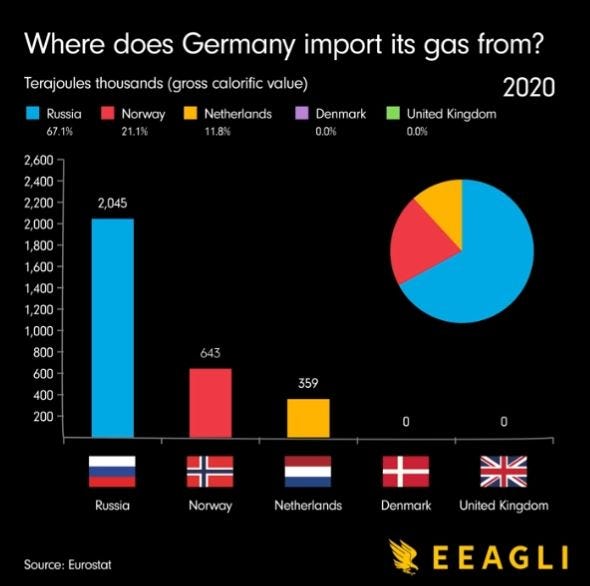
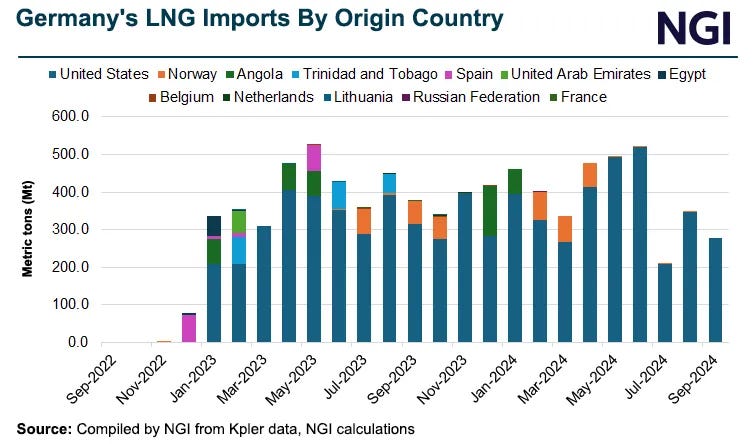
Following the disruption of these supplies, Germany turned to liquefied natural gas (LNG) imports from the United States, Qatar, and Norway—often at far higher prices and subject to global market fluctuations.
A massive nuclear power program would offer:
Fuel Supply Stability: Uranium is abundant, sourced from politically diverse regions (Canada, Australia, Kazakhstan, Namibia). Annual fuel costs for nuclear plants are minimal compared to fossil fuels, and strategic reserves can be stored for years.
Reduced Geopolitical Leverage: No foreign power can easily cut off Germany’s electricity supply if it is generated domestically from nuclear plants.
Lower Energy Import Bill: Replacing imported gas and coal with domestically generated nuclear power could save billions annually.
In essence, nuclear energy is a strategic hedge against geopolitical instability, a factor of increasing importance in a multipolar and volatile world.
Climate Commitments and Decarbonization
Germany has committed to achieving net-zero greenhouse gas emissions by 2045, with a 65% reduction from 1990 levels by 2030. This is extremely unlikely to be met purely from increased solar and wind generation.
Worse, the recent nuclear phase-out has paradoxically made these goals harder to reach.
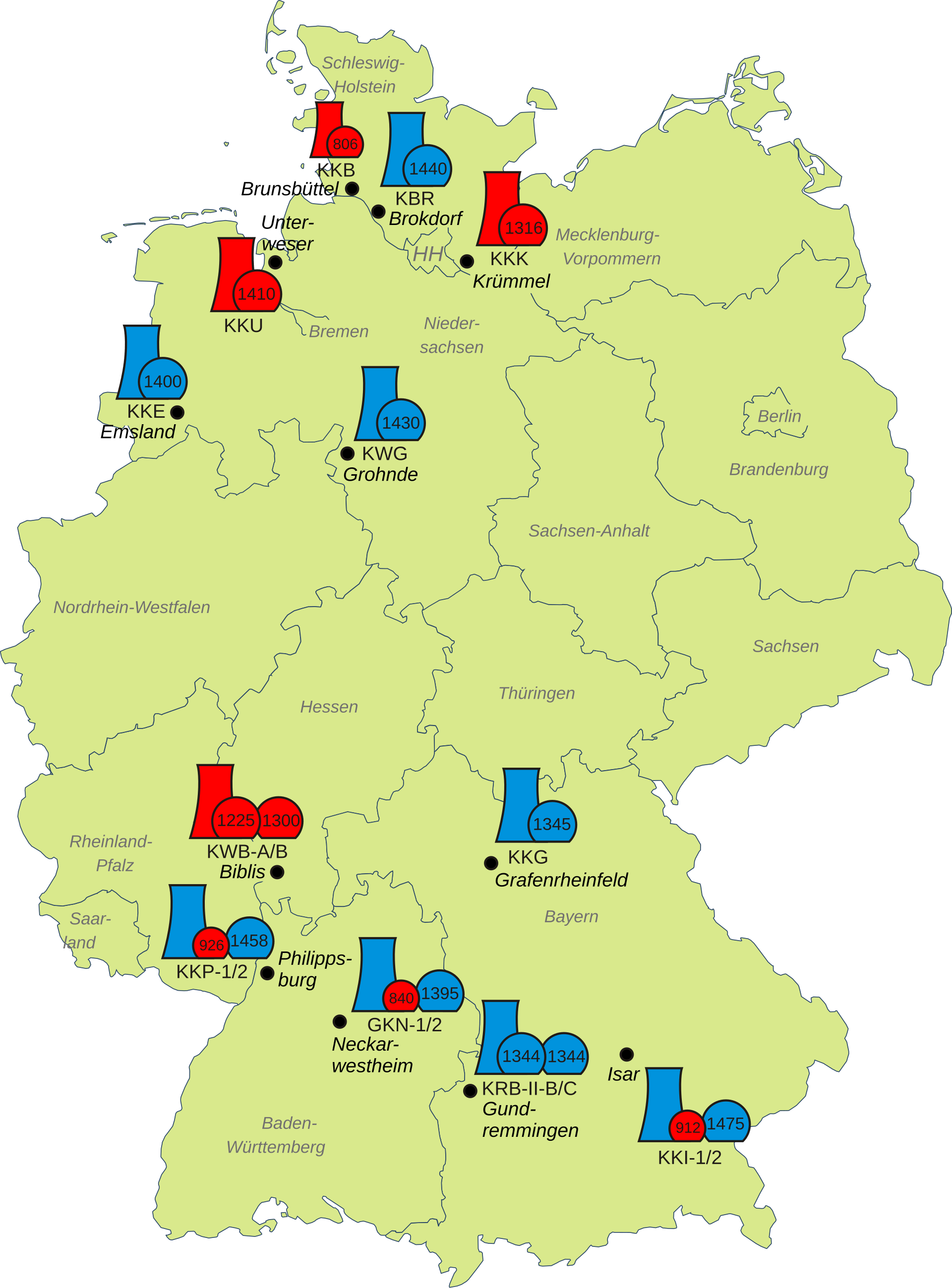

When nuclear plants were shut down, much of their output was replaced by coal and natural gas—not renewables—because intermittent wind and solar could not fully cover the gap.
Nuclear power offers:
Massive Carbon Avoidance: Life-cycle emissions from nuclear power (~12 g CO₂/kWh) are comparable to wind and lower than solar PV, and vastly lower than natural gas (~450 g) or coal (~1,000 g).
Baseload Decarbonization: Nuclear can provide 24/7 zero-carbon electricity, displacing fossil fuels without relying on battery storage that is still expensive and resource-intensive.
Sector Coupling: Nuclear can produce hydrogen through high-temperature electrolysis or thermochemical cycles, decarbonizing industries like steel, cement, and shipping.
Without nuclear power, Germany risks either missing its climate targets or achieving them at far higher cost, with serious industrial competitiveness losses.
Technological and Industrial Leadership
Germany is a country of engineering excellence—home to Siemens, BASF, Volkswagen, and other industrial giants. Yet in nuclear technology, Germany has ceded leadership to France, China, South Korea, and Russia. This is a missed opportunity not only for domestic benefits but also for global influence.
A massive nuclear program could:
Reignite the German Engineering Edge: Developing advanced reactors, small modular reactors (SMRs), and next-generation fuel cycles could place Germany back at the forefront of clean-energy technology exports.
Boost Domestic Industry: Nuclear construction and operation require high-value manufacturing—from precision components to control systems—that could invigorate German heavy industry.
Research Synergy: Collaboration between universities, research institutes, and companies could yield breakthroughs in materials science, robotics, and reactor safety.
Given the global push for decarbonization, the export market for nuclear technology, services, and expertise is projected to be worth hundreds of billions of euros in the coming decades.
Economic Competitiveness and Price Stability
Even before the nuclear phase-out and the Russian invasion of Ukraine, German energy prices were dangerously high (even in comparison to the rest of Europe, which has some of the highest energy prices in the world).
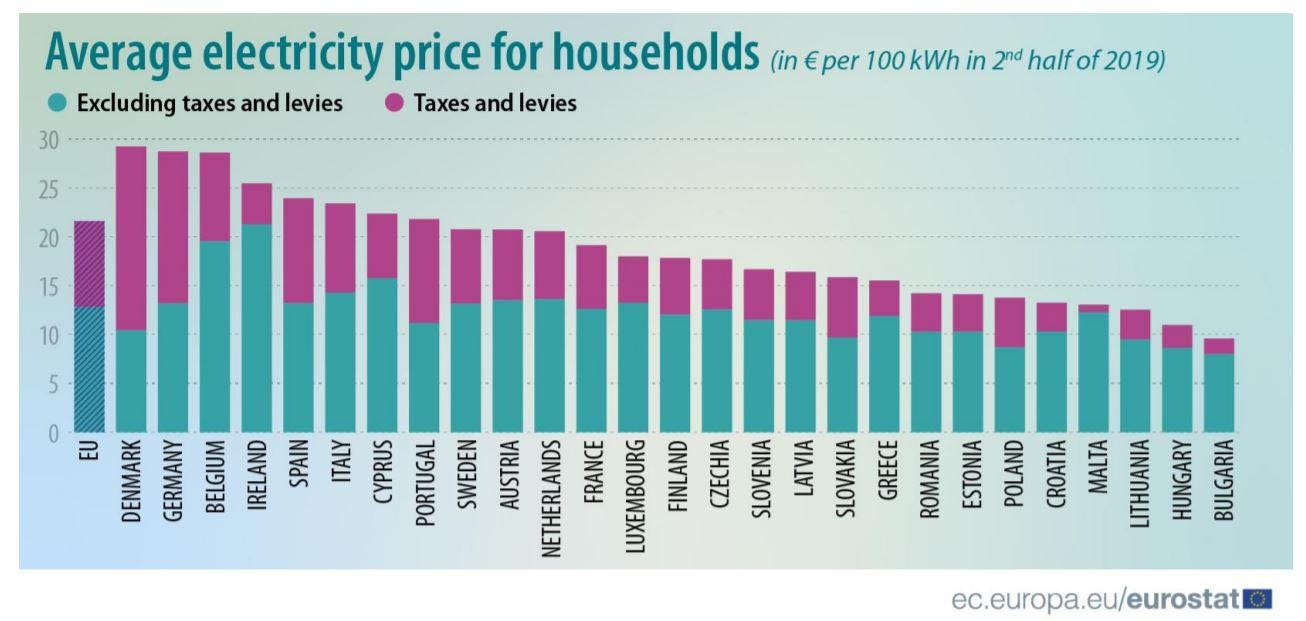
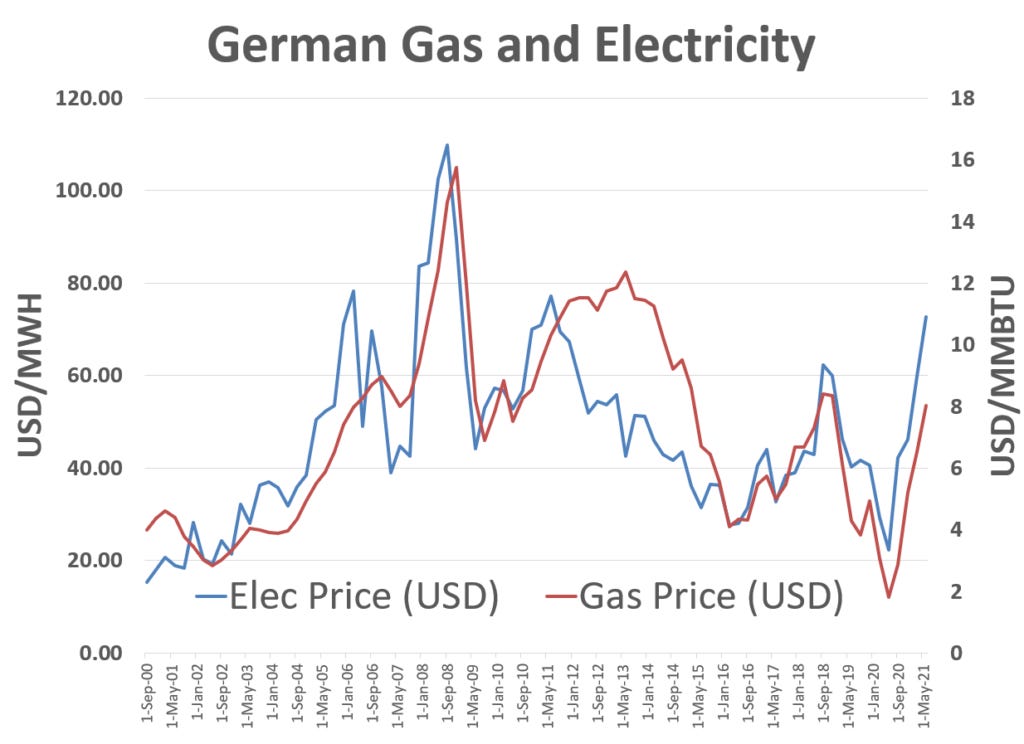
This was partly due to shortages of electricity and partly due to taxes. As I have written elsewhere, the Green Energy Transition is really government-mandated Energy Austerity.
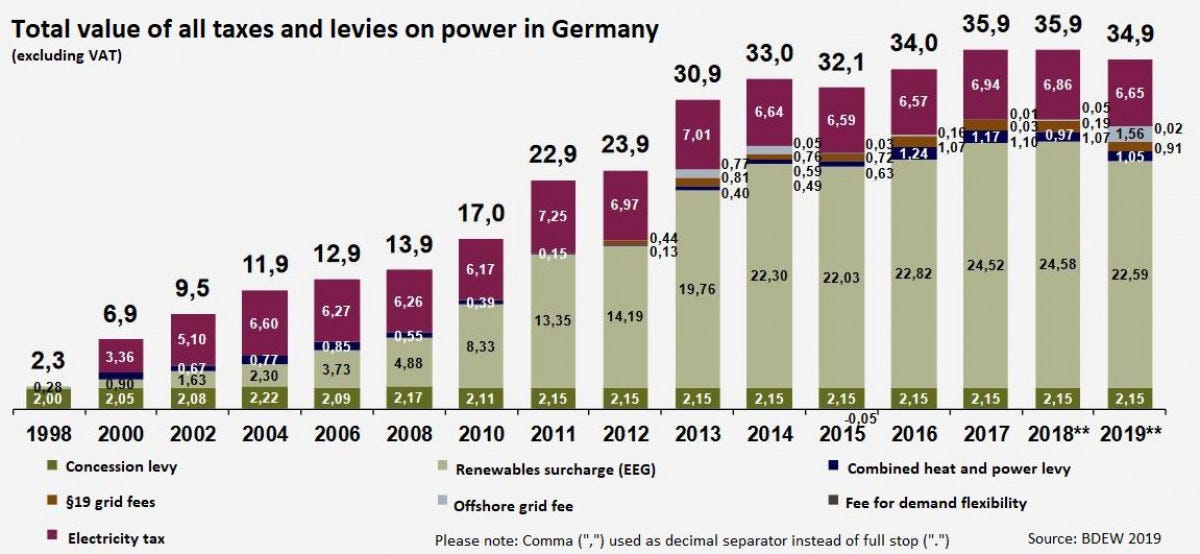
Energy costs are critical for industrial competitiveness. Germany currently has some of the highest electricity prices in the industrialized world, partly due to renewable subsidies, grid costs, and volatile fossil fuel prices. This has driven concerns about “deindustrialization,” with companies shifting production abroad to cheaper energy markets.
Nuclear power offers:
Stable Long-Term Costs: While nuclear plants require high upfront investment, they have low and predictable operating costs over 60–80 years.
Protection from Fossil Price Shocks: Nuclear’s minimal fuel cost component shields consumers from global fuel price swings.
Economic Multiplier Effect: Each gigawatt-scale nuclear plant generates thousands of direct jobs during construction and hundreds during operation, with extensive local supply chain benefits.
For a manufacturing powerhouse like Germany, reliable low-cost power is not just an economic advantage—it is an existential necessity. Asian, Eastern European, and Latin American manufacturing can compete based on lower wages, but Germany cannot possibly do so. It needs cheap energy to counter-balance high wages.
Grid Reliability and System Integration
Germany’s grid is increasingly stressed by the variable output of wind and solar. In 2023, wind power generated 23% of electricity and solar 12%, but output swings dramatically by season and weather conditions. Fossil plants currently balance these fluctuations, undermining emissions goals.
Nuclear can complement renewables by:
Providing Firm Capacity: Nuclear plants can operate at high capacity factors (>90%), ensuring stable supply when renewables are low.
Load-Following Ability: Modern reactors can ramp output up or down to match demand, aiding integration with variable renewables.
Reducing Need for Storage: Without firm low-carbon capacity like nuclear, Germany would need massive battery or hydrogen storage, adding cost and complexity.
France, which generates ~70% of its electricity from nuclear, demonstrates how large-scale nuclear deployment enables both grid stability and low-carbon performance.
Modern Safety and Waste Management Innovations
The public perception of nuclear power in Germany remains shaped by Chernobyl (1986) and Fukushima (2011). Yet nuclear safety has advanced dramatically.
Passive Safety Systems: Many new reactor designs use gravity, natural circulation, or material properties to shut down safely without human intervention or external power.
Waste Solutions: While Germany currently stores nuclear waste in interim facilities, geological repositories—like Finland’s Onkalo spent nuclear fuel repository—demonstrate safe long-term disposal is technically feasible. Additionally, advanced reactors could recycle spent fuel, reducing waste volume and toxicity.
The risks of nuclear accidents, while never zero, are vastly smaller than the risks posed by climate change and air pollution from fossil fuels.
Public Opinion and Political Opportunity
Historically, German public opinion has been strongly anti-nuclear. However, recent energy crises and rising electricity prices have shifted attitudes. Polls in 2023 showed a majority of Germans favor extending the operation of existing plants, with growing openness to new nuclear construction. In a recent poll, 55% of Germans favored a return to nuclear energy, while only 36% are opposed. This is a massive shift.
This shift creates a political window for leaders to present a clear, forward-looking nuclear vision—especially if it is framed around climate leadership, energy sovereignty, and industrial competitiveness.
Conclusion
Germany’s decision to phase out nuclear power was rooted in sincere safety concerns, but the world has changed. The climate crisis is accelerating, geopolitical tensions are rising, and the need for reliable, affordable, and low-carbon energy has never been greater. Nuclear power, once seen as a threat, is now a potential savior—offering unmatched energy density, reliability, and scalability.
A massive nuclear power program would secure Germany’s energy future, cut emissions decisively, revitalize its industrial base, and position it as a global leader in clean technology. The choice is not between nuclear and renewables—it is between a pragmatic, diversified, and resilient energy mix, and one that risks economic and environmental shortfalls.
Germany has the engineering talent, the economic strength, and the moral imperative to act. A nuclear renaissance would not only power the nation—it would power its leadership in the fight for a sustainable and prosperous future.
See also my other posts on Energy:
You might also enjoy reading my “From Poverty to Progress” book series:
Here are some more great energy-related Substack columns that you might be interested in:
This won't happen until the disappearance of the Generation of 1968 plus the German equivalent of younger Boomers/GenX who, in Germany, were extremely heavily involved in the Green Party and the anti-nuclear movement. (This generation was different in the US).
There needs to be a very vibrant and obvious counter-movement among young people who support nuclear energy and a wider return of German engineering.
Unfortunately, there are some years left of German deindustrialization. Germany will watch the world go by until the Boomers and the Greens are gone..
1) Germany should start with recommissioning old reactors. Note that the date of decommissioning does NOT directly correspond to the effort that is required to bring it back (there is a story behind it). We very likely can get beyond 10 GW this way.
2) Germany already has domestic designs. First the Konvoi AMD it's evolution designs, second the EPR Franco-German crossbreed. Framatome holds the IP, not sure if they will sell it.
3) The deal with Westinghouse makes it impossible for KHNP&KEPCO to sell the APR1400 to Germany, as far as we know.
4) In any case, such a massive build-out should use at least two designs and supply chains for redundancy.