

Make someone’s day: Gift a subscription to your friends and family!
One of the most disingenuous arguments that supporters of government subsidies and mandates for Green energy make is that these subsidies are fine because “actually, fossil fuels are even more heavily subsidized.” While there is some truth in the statement, the Green claims go far beyond that truth. So far, in fact, as to make the statement incredibly dishonest.
The truth is that subsidies to fossil fuels in wealthy Western nations are significantly lower than subsidies to solar, wind, utility-scale batteries, and electric vehicles. While the global fossil fuel industry would keep going without a stumble if all fossil fuel subsidies were immediately abolished, the Green energy industry is just as dependent upon government subsidies and mandates as military contractors.
The fossil fuels industry is not kept going by government subsidies. Far from it. The fact is that fossil fuels are used because their physical and chemical properties make them:
abundant
energy dense
affordable
easy to transport
easy to store
they can be scaled or modulated on demand
applicable to residential, commercial, industrial, and the transportation sector.
can do far more than generate electricity
No other energy resource comes close to those combined advantages. The most favored Green energy technologies are particularly limited in those regards.
Let’s first discuss where the small truth in this claim originates.
See also my other posts on Energy:
You might also enjoy reading my “From Poverty to Progress” book series:

Where the Myth Comes From
In 2022, the International Monetary Fund estimated that fossil fuel subsidies reached nearly seven trillion dollars worldwide. That figure represented 7.1 percent of global GDP, and headlines quickly suggested that governments, particularly wealthy ones, were propping up coal, oil, and gas at astonishing levels while claiming to fight climate change. This interpretation fit a popular narrative: powerful fossil fuel lobbies kept Western governments hooked on hydrocarbons by securing more subsidies than solar, wind, or other renewables.
But the reality is less sensational. The IMF’s figure, while eye-catching, was never a measure of direct financial support. Instead, it was dominated by what economists call “implicit subsidies”—theoretical values assigned to unpriced externalities like health costs from pollution or damages from climate change. While useful for policy modeling, these are not actual transfers of money. Treating them as equivalent to government spending obscures the real story of how energy is supported, taxed, and consumed.
When we turn away from implicit calculations and focus solely on explicit subsidies—real, budgetary outlays, tax breaks, or regulated price caps—the picture shifts dramatically. Wealthy Western countries overwhelmingly tax fossil fuels rather than subsidize them, while explicit subsidies are concentrated in developing economies that often use them to keep domestic fuel affordable for social and political reasons.
The Geography of Explicit Fossil Fuel Subsidies
When measured properly, explicit fossil fuel subsidies are not concentrated in the wealthy West but in the developing world. The International Energy Agency reported that in 2023, consumer-facing fossil fuel subsidies in emerging and developing economies reached about six hundred twenty billion dollars. In those same regions, support for clean energy totaled just seventy billion. The imbalance reflects political pressures: many governments in these regions keep fuel prices low to protect households from volatile global energy markets and to avoid social unrest.
In the Middle East and North Africa, subsidies have often consumed double-digit percentages of GDP. Saudi Arabia, Iran, and Egypt have long maintained artificially low fuel prices, with subsidies sometimes exceeding spending on healthcare or education. In the Commonwealth of Independent States, countries such as Kazakhstan and Uzbekistan also heavily subsidize oil and gas to preserve domestic affordability and social stability.
South and Southeast Asia provide further examples. India, Pakistan, and Indonesia have historically maintained caps on gasoline, LPG, and electricity prices. Indonesia, in particular, spent over twenty billion dollars in 2014, nearly 2.5 percent of GDP, before beginning reforms to redirect funds to infrastructure and social programs.
These subsidies are not marginal. Ecuador in 2023 spent more than three percent of its GDP on fossil fuel subsidies, more than the entire health budget and about seventy percent of education spending. Iran, one of the largest subsidizers in the world, has long sold gasoline for the equivalent of ten cents per liter, costing the treasury tens of billions annually. Even Turkey, which has smaller explicit subsidies, maintains capacity payments and favorable pricing to coal and gas generators that amount to significant fiscal transfers.
Oil and gas-producing nations regularly subsidize prices.
It is absolutely true that non-Western nations that produce oil and natural gas regularly subsidize the prices so their citizens can purchase them in abundance. This is typically done:
To establish distributive justice against the claim that citizens do not benefit from oil and gas production and exports.
To maintain the legitimacy of these mostly authoritarian regimes.
The beneficiaries of these subsidies are not Western energy companies, as those subsidies do not affect exports to wealthy Western nations. The beneficiaries are consumers in those nations, particularly middle-class and poor consumers, who would not otherwise be able to afford to purchase oil and natural gas at market prices.
Let’s take a look at the list of the Top 25 nations by their total amount of fossil fuel consumption subsidies.
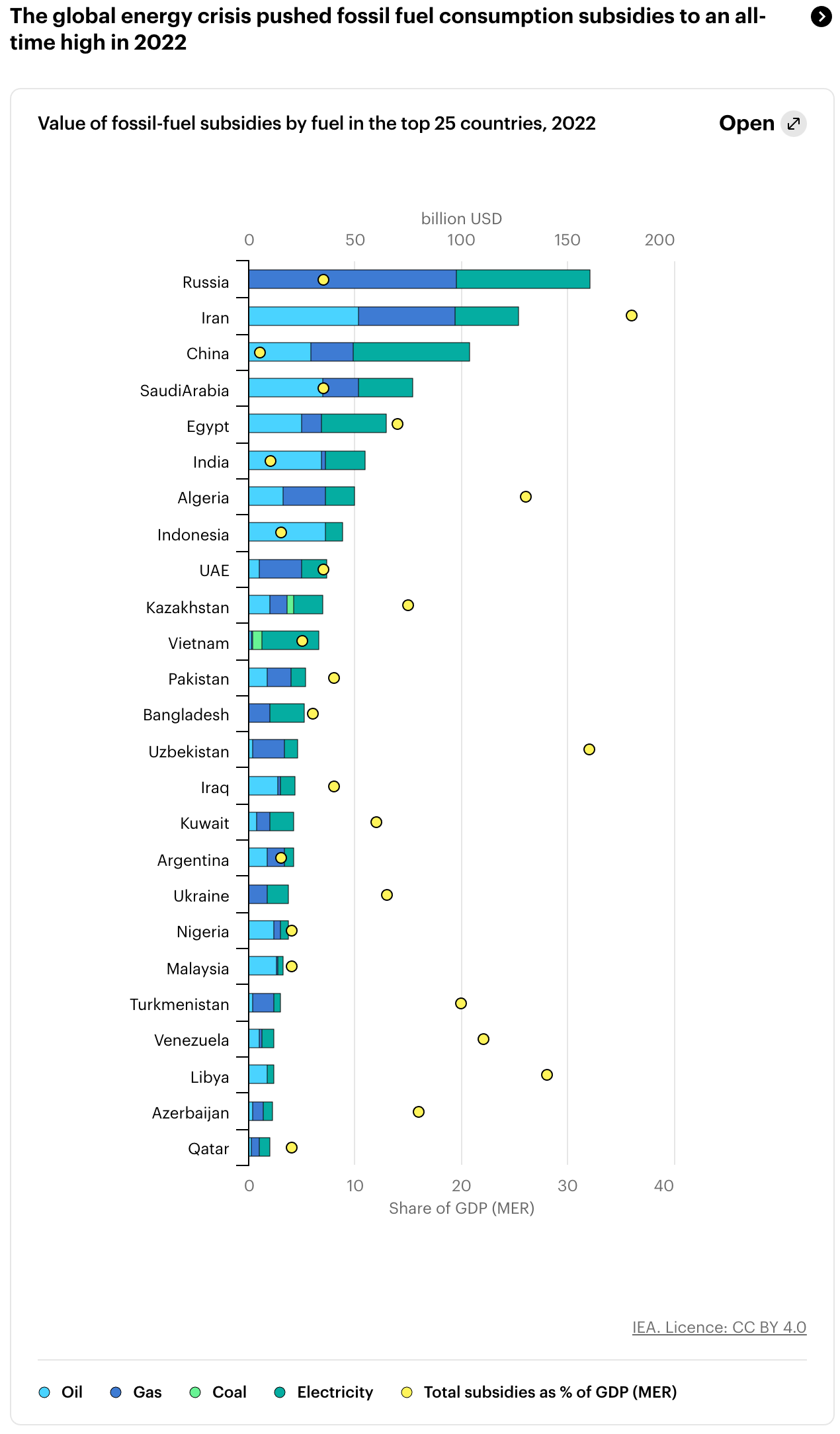
Visual inspection leads to the following observations:
Total global subsidies in 2022 exceed $1 trillion. To a certain extent, this is because the year 2022 saw global energy price disruptions due to the Russian invasion of Ukraine. The 2022 subsidies were roughly double the 2021 levels. Only time will tell whether this is the “new normal” or just a short-term blip.
The amount in these nations dwarfs Green energy subsidies in those nations ($70 billion).
The vast majority are themselves oil and natural gas exporting nations. The biggest exceptions are China, Egypt, India, Vietnam and Bangladesh. Most likely, these nations are on the list largely due to their large population size. Note the relatively low total amount of subsidies as a percentage of GDP, particularly in China and India.
The vast majority are some form of authoritarian regime. The main exceptions are India and Argentina. It is best to think of these subsidies as “brides” that the authoritarian rulers give to the masses to prevent revolt.
Oil, gas, and coal are relatively evenly divided in the amount of subsidies globally, although this varies dramatically by nation.
None of them are wealthy, Western nations.
A few nations, such as Iran, Algeria, Libya, and Uzbekistan spend 25% or more of their entire GDP on these subsidies! This is enough to make an economist or libertarian to slide into a coma.
Regional Burdens
Explicit subsidies in developing economies are often structured as price caps or rebates on gasoline, diesel, natural gas, and electricity. The burden as a share of national budgets is enormous:
Middle East and North Africa (MENA): Countries such as Egypt, Iran, and Saudi Arabia maintain artificially low fuel prices. In some years, subsidies here have exceeded 10–15% of GDP, crowding out spending on healthcare and education.
Commonwealth of Independent States (CIS): Oil- and gas-producing economies like Kazakhstan and Uzbekistan have long relied on subsidized energy for social stability, with subsidies running into tens of billions annually.
South Asia and East Asia (Developing): Countries like India, Indonesia, and Pakistan have historically capped gasoline and LPG prices. Although some reforms have reduced subsidies, explicit support still amounts to tens of billions of dollars per year.
Country Examples
Ecuador: Fossil-fuel subsidies exceeded 3% of GDP in 2023, a sum greater than the entire health budget and 70% of education spending.
Iran: Among the largest subsidizers in the world, with ultra-low fuel prices—gasoline often sold at ~$0.10 per liter. These subsidies amount to tens of billions annually, heavily straining public finances.
Indonesia: Long one of the largest providers of fuel subsidies. In 2014, explicit fuel subsidies cost the government over $20 billion annually, about 2.5% of GDP, until partial reforms redirected funds to infrastructure and social spending.
Turkey: Direct subsidies are smaller (~0.2% of GDP in recent years), but still significant in absolute terms. The government uses capacity payments and favorable pricing to support coal and gas.
The Social Costs of Subsidies in Developing Nations
Such subsidies may be politically popular, but they are fiscally damaging. They encourage overconsumption, discourage investment in efficiency or clean energy, and crowd out social spending. In Ecuador, subsidies exceed the total spent on cash-transfer programs for the poor. In Egypt during the early 2010s, fuel subsidies cost more than double the country’s education budget.
For governments with fragile finances, this is a severe trade-off. Billions spent keeping fuel artificially cheap could otherwise finance hospitals, schools, or targeted poverty relief. Instead, subsidies disproportionately benefit wealthier households that consume more fuel, making them both fiscally regressive and environmentally damaging.
Subsidies are redistributive
Ironically, these policies can easily be rationalized from a Left-of-Center ideological perspective because they clearly do redistribute material goods downward to the lower classes. Any non-Green Leftist should perceive these policies as positive ones. Given how much they dislike fossil fuels, however, it is not surprising that Greens abhor these policies.
Personally, though I put material progress far ahead of mitigating environmental damages, I agree with the Greens on this specific issue. These policies:
are horribly wasteful
seriously distort markets
greatly increase the fiscal deficit in developing nations.
If the Greens said “We should abolish fossil fuel subsidies globally,” I would agree with them completely (although I fully understand why those nations have not yet done so). Instead, the Greens use terrible subsidies in developing nations as an excuse to argue for almost as terrible Green energy subsidies in wealthy Western nations.
I disagree. I believe that ending all energy subsidies beyond research and development in all nations.
Western nations do have some limited subsidies
In wealthy Western nations the definition of subsidy is a little fuzzy. Most industries get some form of subsidy, usually in the form of tax exemptions and deductions. Fossil fuels are no exception. Personally, I would be happy to get rid of almost all of them, but it is fair to call them “subsidies.”
Let’s take a closer look at them in both the United States and Europe.

Subsidies in United States
The vast majority of actual subsidies for the fossil fuel industry is in the form of tax deductions. The United States provides some explicit tax provisions for fossil fuel producers, but their fiscal cost is modest compared with overall tax revenues from energy. According to Congressional Budget Office and Treasury estimates, fossil fuel–related tax preferences cost about $15–20 billion over ten years—roughly $1.5–2 billion per year.
The largest items include the expensing of intangible drilling costs (about $1 billion annually), percentage depletion allowances for smaller producers (around $600 million annually), and accelerated depreciation for natural gas pipelines (a few hundred million annually).
Crucially, these are not cash transfers but methods of tax accounting. In most cases, they allow companies to deduct costs more quickly than under a “neutral” tax system. The oil and gas sector still pays billions in federal and state taxes each year. The difference is timing: deductions may reduce taxable income in early years but are balanced later. So in the long-run the overall taxes raised are roughly the same.
Calling these provisions “subsidies” stretches the definition, as they do not lower fuel prices for consumers or guarantee government outlays.
Taxes paid in the United States
The fossil fuel industry in the United States is often portrayed as a beneficiary of government largesse, but this overlooks a crucial reality: oil, gas, and coal companies are subject to a range of special taxes, royalties, and fees that do not apply to most other industries. Far from being “subsidized,” fossil fuel production is a significant source of government revenue at the federal, state, and local levels.
Federal Royalties and Lease Payments
Unlike most private industries, oil and gas producers must pay royalties to the federal government for the right to extract resources from public lands and offshore waters. These royalties are typically 12.5% to 18.75% of the value of the oil or gas produced, depending on the lease terms. In addition, companies must pay upfront lease bonuses at competitive auctions, as well as annual rental fees until production begins. According to the U.S. Office of Natural Resources Revenue (ONRR), federal royalties, rents, and bonuses from oil, gas, and coal generated more than $16 billion in 2022 alone. Other industries rarely face this type of direct revenue-sharing obligation simply to operate.
Severance Taxes
Many oil- and gas-producing states levy severance taxes—charges assessed on the extraction of natural resources. Texas, for example, imposes a 4.6% tax on the market value of oil produced and a 7.5% tax on natural gas. Wyoming, North Dakota, Oklahoma, and Alaska all collect significant severance taxes as well. In 2022, Texas collected over $10 billion in oil and gas severance taxes, making them one of the state’s largest revenue sources. No equivalent tax applies to most other industries; manufacturers of cars, steel, or computers are not charged a percentage of the value of the raw materials they use.
Fuel Excise Taxes
The fossil fuel supply chain also bears the burden of federal and state excise taxes on refined petroleum products. The federal government collects 18.4 cents per gallon of gasoline and 24.4 cents per gallon of diesel, while state excise taxes add an average of 31 cents per gallon on top of that. These taxes raise more than $50 billion annually and are almost entirely borne by fossil fuel consumption. While end consumers pay the tax at the pump, it is fossil fuel producers and refiners who serve as the tax collectors, a unique administrative and financial burden compared with most other industries.
Abandonment, Cleanup, and Environmental Fees
Oil, gas, and coal companies also face a host of environmental fees that other industries largely avoid. Federal law requires offshore drillers to pay into the Oil Spill Liability Trust Fund, financed by an 8-cents-per-barrel excise tax on crude oil. Coal producers pay fees into the Abandoned Mine Land Reclamation Fund, which has raised more than $11 billion since 1977 to restore damaged lands. Companies must also post financial assurance bonds to cover the eventual costs of plugging wells and restoring sites. These obligations, unique to extractive industries, add billions in costs that do not apply to most manufacturers or service providers.
A Net Contributor, Not a Beneficiary
When combined, royalties, severance taxes, lease bonuses, environmental fees, and fuel excise taxes make the fossil fuel industry one of the largest sources of non-income tax revenue in the United States. In many states, oil and gas revenues fund schools, infrastructure, and public services. At the federal level, they finance everything from environmental cleanup to the Highway Trust Fund.
Far from enjoying extraordinary subsidies, the fossil fuel sector bears fiscal obligations that few other industries face. While it does benefit from certain tax accounting provisions, the overall balance shows that oil, gas, and coal producers are net contributors to government budgets at every level.
The US Total
When combined, these figures illustrate the scale of the industry’s net fiscal contribution.
Federal royalties, rents, and bonuses: approximately $16 billion.
Fuel excise taxes: over $50 billion.
State severance taxes: roughly $15–20 billion nationally, conservatively including major producing states.
Environmental and reclamation fees: at least $1–2 billion per year in active collections, plus ongoing financial assurance obligations.
This results in a combined annual net fiscal contribution in the range of $80–90 billion per year, a figure that significantly exceeds the roughly $2 billion per year in explicit federal fossil fuel tax preferences such as intangible drilling cost expensing and percentage depletion allowances.
Even accounting for the limited federal tax preferences that accelerate cost recovery for certain exploration and production activities, the net effect is clear: the U.S. fossil fuel industry contributes far more to government revenue than it receives in direct subsidies. In essence, the industry is a net payer, providing substantial funds for infrastructure, environmental programs, and general government revenue, while bearing costs unique among U.S. industries.

Subsidies in Europe
The fossil fuel industry in Europe benefits from various explicit subsidies, which are direct financial transfers or tax expenditures provided by governments. These subsidies have been particularly pronounced in response to energy crises and are primarily aimed at mitigating the impact of high energy prices on consumers and businesses.
Direct Financial Transfers and Tax Expenditures
In 2022, the European Union allocated approximately €136 billion in fossil fuel subsidies, a significant increase from €60 billion in 2021. This surge was largely due to emergency measures implemented to address the energy price spikes resulting from geopolitical tensions and supply disruptions. Tax At HandEconomy and Finance
By 2023, these subsidies decreased to around €111 billion, reflecting the gradual phase-out of crisis-related support measures. eumonitor.eu
Capacity Payments for Fossil Fuel Power Plants
European countries have established capacity mechanisms to ensure the availability of electricity during peak demand periods. These mechanisms often involve payments to fossil fuel power plants to remain operational as backup sources. Since 2015, such payments have amounted to approximately €53 billion, with a significant portion directed towards fossil fuel facilities. The Guardian+1
Company Car Tax Benefits
In several EU countries, company car schemes provide substantial tax advantages for employees using fossil fuel-powered vehicles. A study estimated that these subsidies cost taxpayers around €42 billion annually across the five largest EU countries. The subsidies stem from tax benefits like benefit-in-kind schemes, depreciation write-offs, VAT deductions, and fuel cards, which are not typically available to private car owners. T&E
Germany's Subsidy Allocation
Germany is the largest subsidizer of fossil fuels in the EU, allocating about €41 billion in subsidies in 2023. These subsidies encompass direct financial transfers, tax exemptions, and other support mechanisms aimed at reducing the cost burden on consumers and businesses.
Taxes in Europe
The fossil fuel industry in Europe faces some of the highest taxation rates globally. These taxes are implemented at both the national and European levels and serve multiple purposes, including revenue generation and environmental deterrence.
Excise Duties: European countries impose significant excise duties on fuels. For instance, in 2022, the average excise duty on gasoline in the EU was approximately €0.50 per liter, while diesel attracted a slightly higher rate. These duties contribute substantially to national revenues and are among the highest in the world .
Carbon Pricing: The European Union Emissions Trading System (EU ETS) is a cornerstone of the EU's climate policy. It sets a price on carbon emissions, effectively taxing companies based on their greenhouse gas emissions. The revenue generated from the sale of emission allowances is used to fund climate-related initiatives and to incentivize industries to reduce their carbon footprints.
Windfall Profit Taxes: In response to the energy crisis, the EU introduced a solidarity contribution, commonly referred to as a windfall profit tax, targeting companies in the fossil fuel sector that reported exceptional profits due to soaring energy prices. This measure aimed to redistribute some of these profits to support vulnerable consumers and businesses .
In short, claims that fossil fuel companies are heavily subsidized in the United States neglect the reality of these multi-layered taxes and fees. When explicit subsidies are measured against royalties, severance taxes, excise taxes, and environmental fees, fossil fuel companies are not beneficiaries—they are among the most significant net contributors to the U.S. fiscal system.
The Total in Europe
And it should not surprise you that when the explicit subsidies and taxes are added up, the fossil fuel industry in Europe.
Net Fiscal Contribution of the Fossil Fuel Industry in Europe
Total Explicit Subsidies (2023): €247 billion
Total Taxes Paid (2023): €370.2 billion
Net Fiscal Contribution:
€370.2 billion (Taxes Paid) – €247 billion (Subsidies) = €123.2 billion
Green subsidies
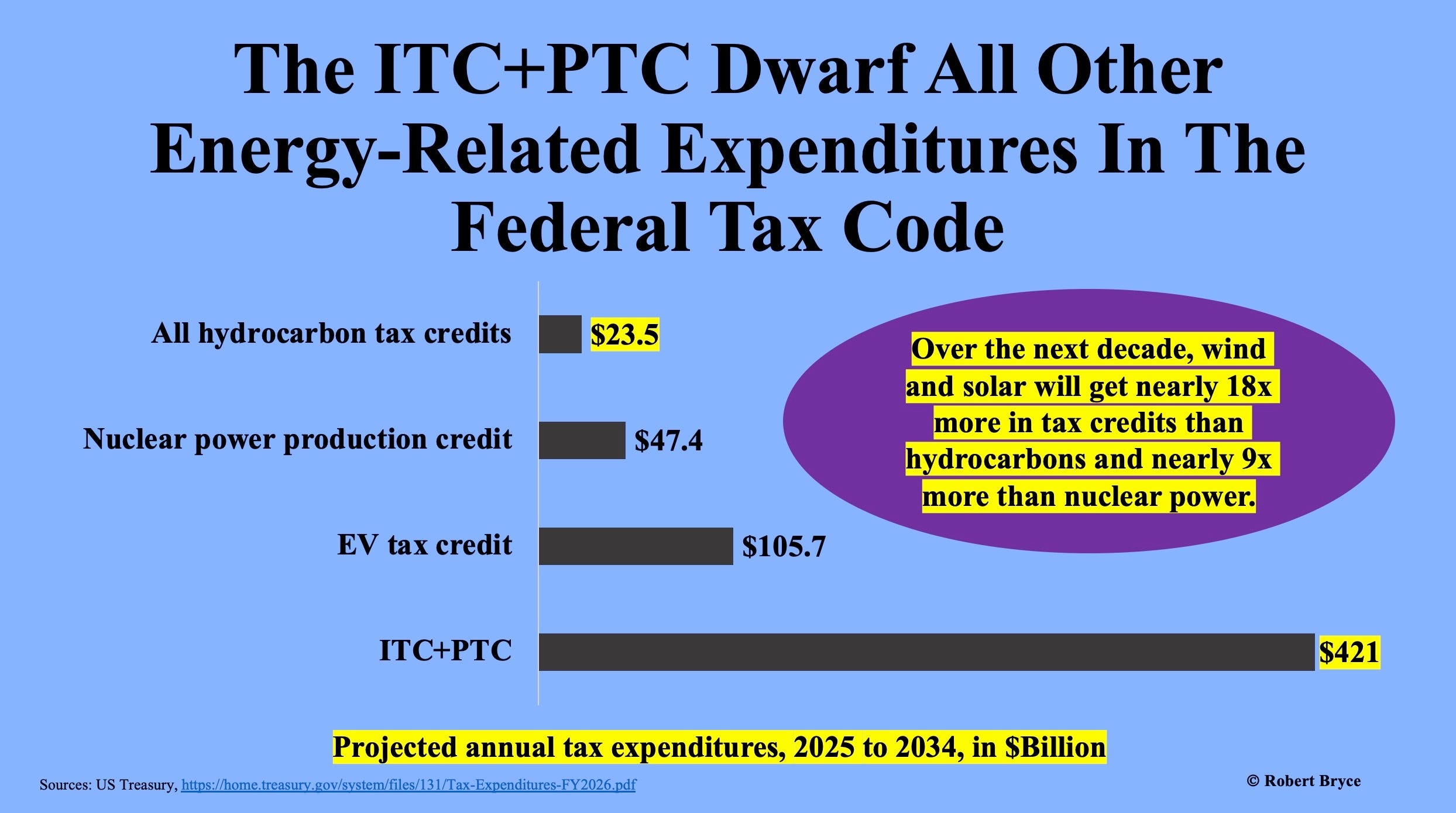
The imbalance between fossil fuel taxes and renewable subsidies in wealthy nations makes the myth of heavy fossil support even less plausible. In the United States, the Inflation Reduction Act of 2022 committed nearly 370 billion dollars over a decade to renewable energy, electric vehicles, and clean technologies. In Germany, annual subsidies for renewable energy under the Renewable Energy Act have run into the tens of billions of euros for over a decade, driving rapid expansion of wind and solar. France and the United Kingdom have implemented guaranteed feed-in tariffs and contracts for difference to accelerate renewable deployment, with cumulative commitments in the tens of billions.
When we add up the total Green subsidies per MWh of electricity produce, the numbers are eye-opening:
Solar: about $280 per MWh of electricity produced.
Wind: about $35 per MWh.
Fossil fuels: on the order of <$1 per MWh (and this number does not include taxes paid by the industry).
In short, the actual direction of fiscal flows in wealthy countries is the opposite of the popular claim. Fossil fuels are taxed heavily, while renewables are subsidized generously.
Implicit subsidies do not exist
As it became more known that fossil fuel subsidies in wealthy Western nations are, at best, very limited, Greens shifted to talking about “implicit subsidies.” Unfortunately, this very deceptive concept has even been adopted by the IMF, energy consultants, and many global financial companies.

According to the IMF:
“Implicit subsidies occur when the retail price fails to include external costs, inclusive of the standard consumption tax. External costs include contributions to climate change through greenhouse gas emissions, local health damages (primarily pre-mature deaths) through the release of harmful local pollutants like fine particulates, and traffic congestion and accident externalities associated with the use of road fuels.”
In other words, the term “implicit subsidies” has effectively replaced the old term “social cost” so that it can be described as a subsidy. This is disingenuous. What Greens are really saying is “if my favored policy were adopted, fossil fuels would be much more expensive, so since they are not, I will call them an implicit subsidy.” So while an explicit subsidy is actually a subsidy, an implicit subsidy is about missing penalties that Greens believe should be forced on the fossil fuels industry.
But that is not what a subsidy actually is.
The actual definition of a subsidy is “Monetary assistance granted by a government to a person or group in support of an enterprise regarded as being in the public interest,” and I would add that the result is a cheaper price than what the market price would be. An implicit subsidy is by definition not a subsidy. It is instead a moral argument to increase the price of energy (which is what most of the Green energy agenda leads to intentionally or unintentionally).
Implicit subsidies are clearly not subsidies at all, and it is dishonest to claim otherwise. It would be far more honest to continue using the accepted terms of “social cost” or “negative externalities.”

Externalities are very hard to calculate and go both ways
As I argue in my article arguing against carbon taxes, externalities are:
Very hard to calculate with any precision. Even experts working with good faith from the same assumptions can come to wildly different negative costs. Indeed, if externalities were easy to calculate, they would already be bundled into market prices. The very reason why they are not is because they are extremely difficult to calculate.
Constantly changing due to market conditions, the wealth of the society, technological innovation, and patterns of consumption.
Will be determined by politics, not science or economics.
Ignore the massive positive externalities from widespread usage of fossil fuels leading to dramatic declines of absolute poverty (even after inflation). For anyone on the Left to argue that massive declines in poverty are not social gains is just not credible.

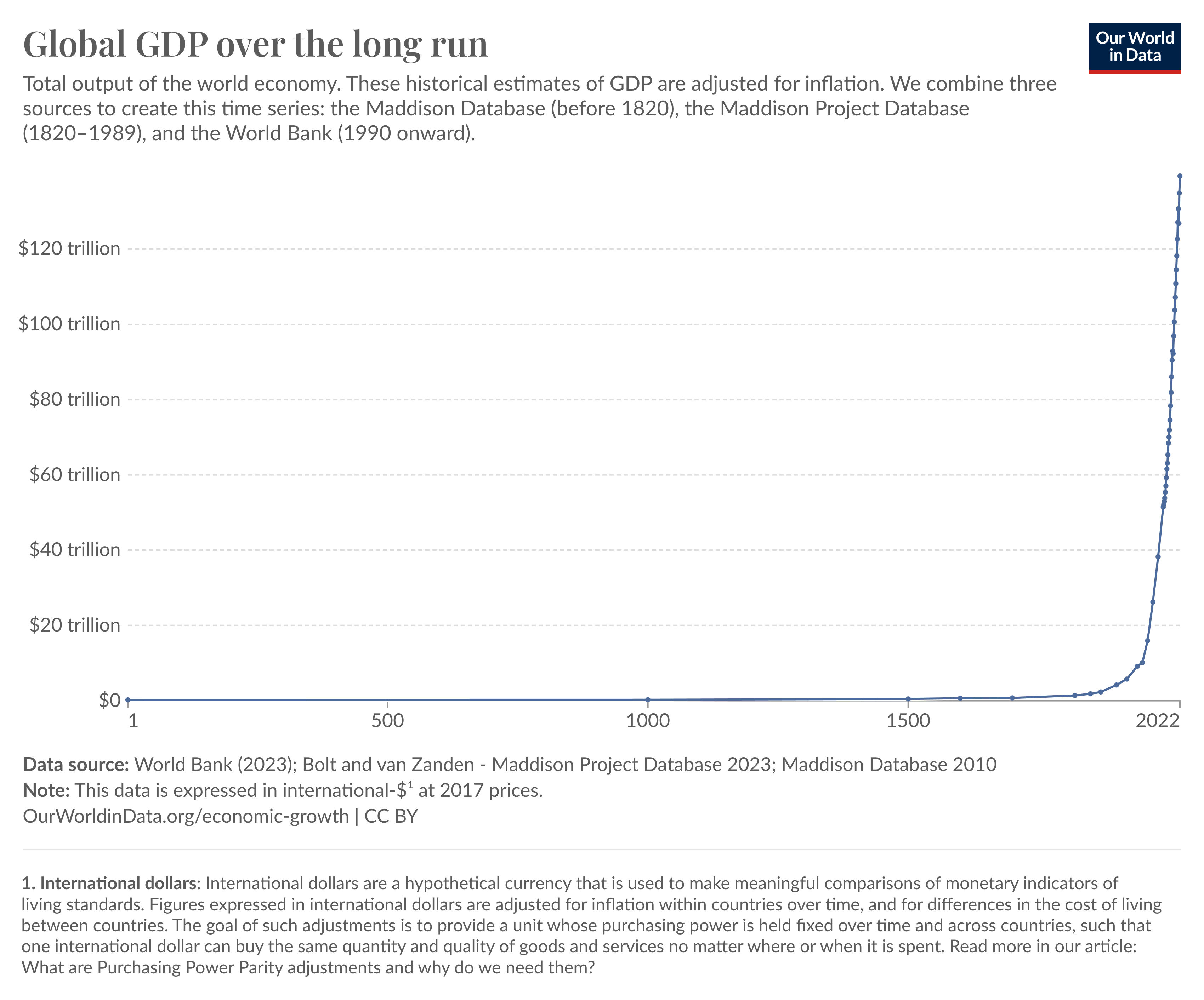
If I am correct, fossil fuels have hidden positive externalities that are likely in the range of tens of trillions of dollars. The wealthiest pre-industrial society was the Dutch Republic which peaked at an estimated $2100 per capita GDP just before 1700. Today, numbers over $50,000 per capita GDP are common in industrialized societies. In 2023 the world economy was about $100 trillion, more than 100 times greater than the estimated world economy in 1700 ($750 billion).
That is exactly why, I consider widespread usage of fossil fuels to be the Fifth Key to Progress.
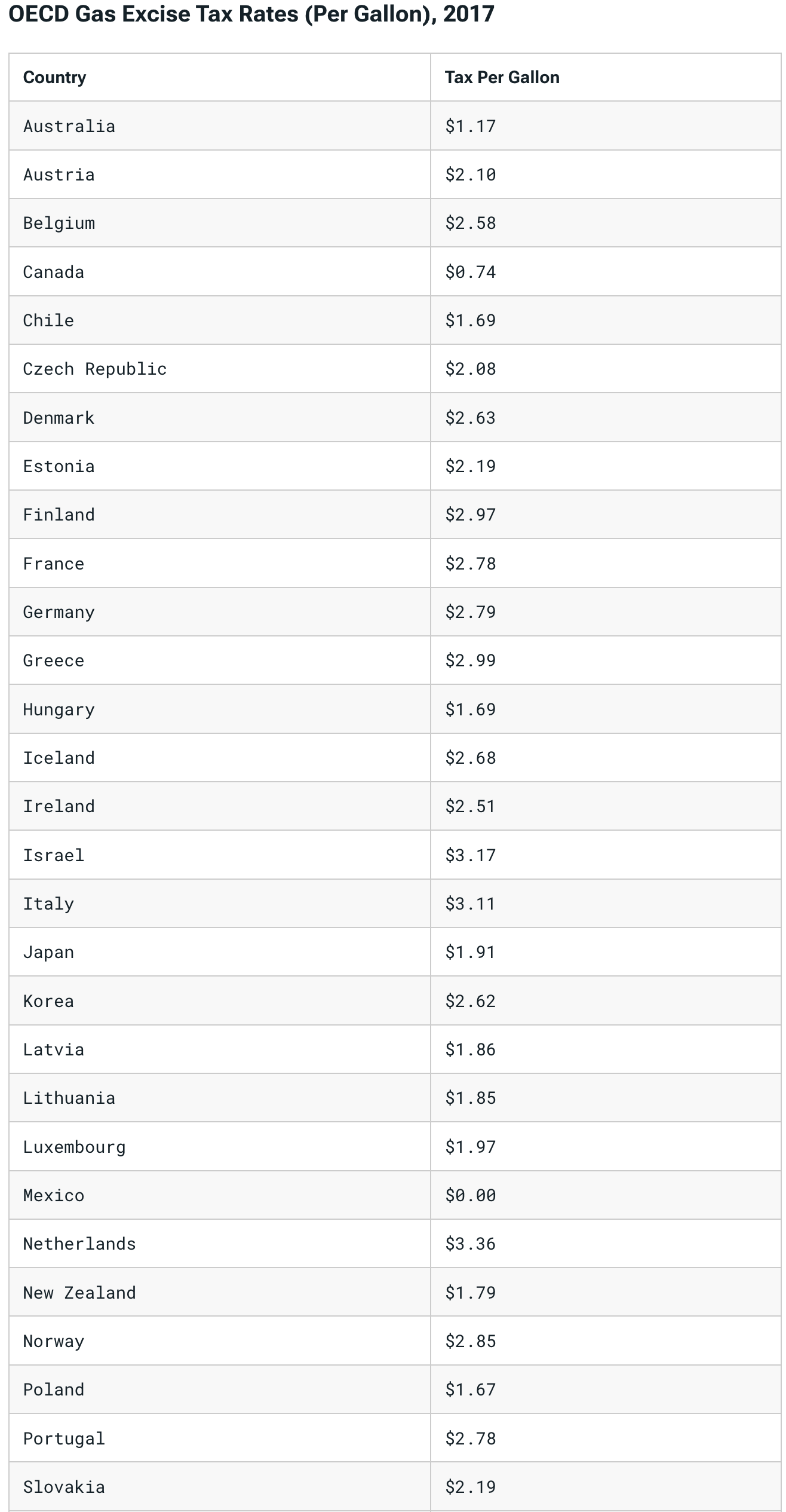
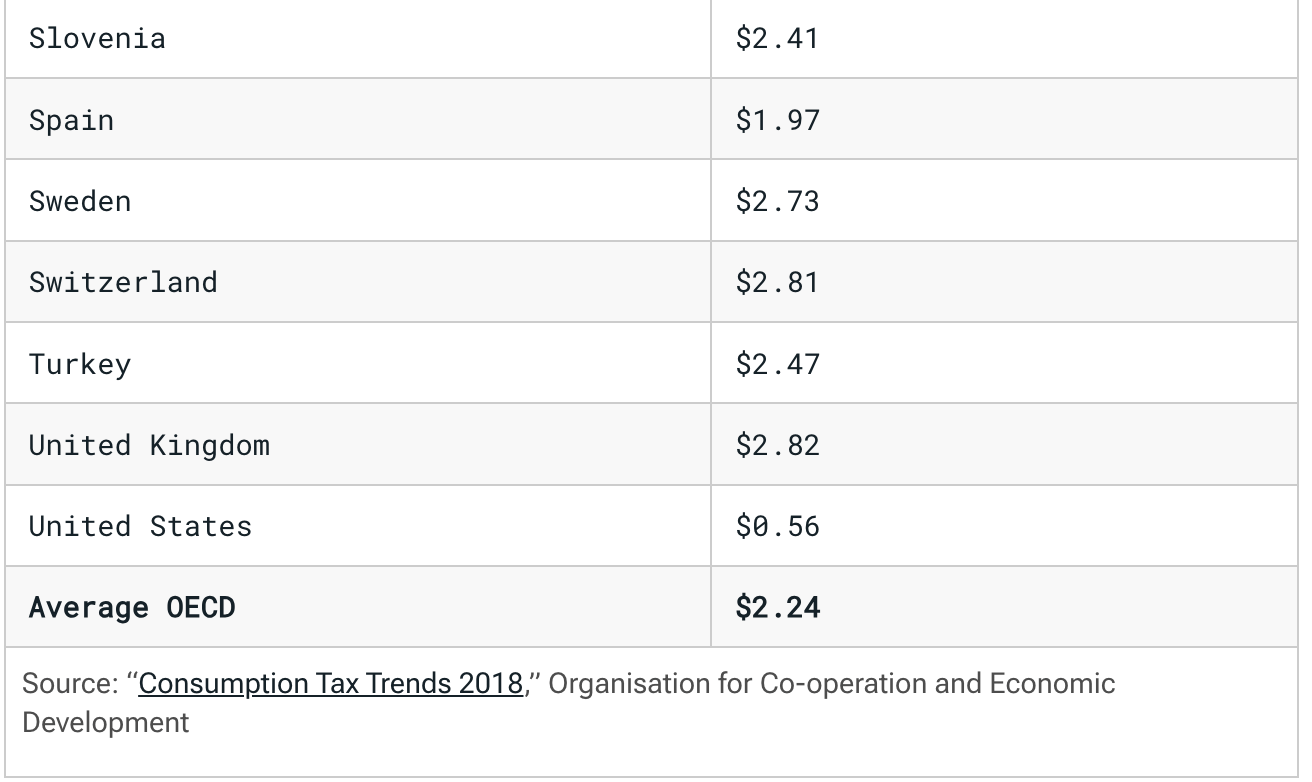
Fossil fuels are heavily taxed in the West
Greens conveniently ignore that fossil fuels are heavily taxed in wealthy Western nations. The most common are excise taxes on gasoline. Many nations also add a VAT and sales tax on top.
With the exception of the United States and Australia, this tax is typically over $2 per gallon. This dramatically increases the end cost of gasoline that the consumer pays. In addition, many Western nations have a carbon tax. Solar, wind and other renewables do not have to pay these taxes (so is this actually an implicit subsidy for solar and wind. Be consistent; you cannot have it both ways.)
Why the Myth Persists
The persistence of the belief that Western governments lavish subsidies on fossil fuels stems from the conflation of implicit and explicit subsidies. Advocacy groups and media outlets frequently cite IMF numbers without explaining that the bulk is theoretical, not fiscal. The result is a distorted impression that trillions in taxpayer dollars are flowing to oil companies, when in reality most of those dollars exist only as hypothetical foregone taxes.
This framing serves political purposes. Casting fossil fuels as “lavishly subsidized” bolsters arguments for more aggressive taxation and regulation. But from a public finance perspective, it risks undermining credibility. When voters discover that governments in fact tax fossil fuels more than they subsidize them, they may discount legitimate concerns about externalities.
Setting the Record Straight
The claim that wealthy Western governments subsidize fossil fuels more than renewables does not withstand scrutiny. Explicit subsidies—the only subsidies that actually appear in government budgets—are overwhelmingly concentrated in developing economies, where they consume large shares of GDP and undermine fiscal stability. Wealthy countries, by contrast, are net collectors of revenue from fossil fuel consumption, with taxes dwarfing the modest remaining subsidies.
Meanwhile, renewable energy in the West benefits from large, sustained public support, through direct subsidies, tax credits, and guaranteed pricing schemes. The imbalance is stark: developing nations spend hundreds of billions each year to keep fossil fuels cheap, while wealthy nations spend tens of billions to make renewables more competitive.
Dispelling the myth matters. Clear distinctions between implicit and explicit subsidies help policymakers and the public understand the true fiscal landscape. They also clarify where reforms are most urgent: in developing economies where explicit subsidies remain vast and costly. Only by addressing these real subsidies—not imagined ones—can the world redirect resources from fossil fuel dependence toward sustainable, long-term energy futures.
Key takeaways
Fossil fuel subsidies are largely restricted to non-Western developing nations, particularly those with large fossil fuel industries. Those subsidies largely consist of price subsidies for consumers. It is not clear how much this really benefits the fossil fuel industry, as without subsidies, that same oil and gas would be exported to nations that do not subsidize prices.
The fossil fuels industry in wealthy Western nations are net contributors to public finance (i.e. the subsidies are less than the taxes paid).
Many of the so-called tax subsidies in the US are actually just a different means of accounting with no clear subsidies.
In wealthy Western nations, subsidies per unit of energy are far higher for solar and wind than for fossil fuels. In addition, the fossil fuels industry pays far more taxes.
Implicit subsidies do not exist. They are just penalties that Green want to impose on the fossil fuel industries but have not been able to do so… yet.
See also my other posts on Energy:
You might also enjoy reading my “From Poverty to Progress” book series:
Here are some more great energy-related Substack columns that you might be interested in:
I think I'd go one step further than you do on the full expensing point.
Immediate depreciation makes the tax code neutral (sometimes full expensing and IDC is one form of this).
Without immediate expensing, there's a bias in the tax system against capital investment. So, it's even better than you say because allowing full expensing is a tax neutral system.
The Tax Foundation has lots of good analysis on this point.
https://taxfoundation.org/blog/one-big-beautiful-bill-expensing-state-tax-conformity/
And some more comments here as it relates to recent improvements in US tax policy: https://www.c3solutions.org/policy-paper/the-economic-and-environmental-case-for-immediate-expensing/
is it really so foolish for lower-income countries to subsidize fossil fuels if fossil fuels' positive externalities are so large?