

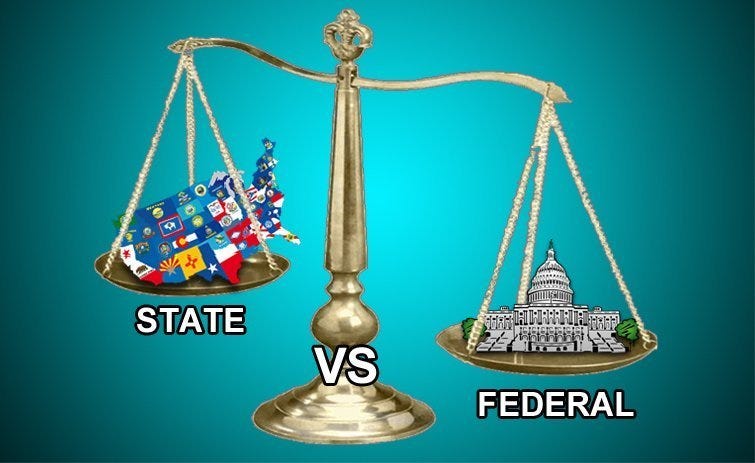
A century of federal expansion reshaped America—replacing state-driven governance with a centralized administrative state that challenges the Constitution’s design.
If you’re following me but don’t yet receive these essays by email, you’re missing most of them. Substack doesn’t email articles to followers—only to subscribers. You can get every new essay free in your inbox by subscribing 👉:
A larger and larger percentage of Americans are frustrated with the ability of their government to solve problems. The American political system is good about identifying problems that frustrate voters, but it is bad about implementing solutions that actually work. The result is increased public expectation about what the government can accomplish, combined with declining results. Not surprisingly, this has led to increasing frustrations.
This frustration has recently boiled over into a:
Zero-sum competition over power over the federal government
A tiny minority of voters having an effective veto power over each party
Increasing support for political violence, particularly on the Left
Declining confidence in our institutions, particularly the federal government.
I think it is important to identify deep structural reasons for this trend. I believe that one of the root causes (but clearly not the only cause) has been the rise of a totally new form of government that has arisen over the last one hundred years that is completely at odds with the US Constitution.
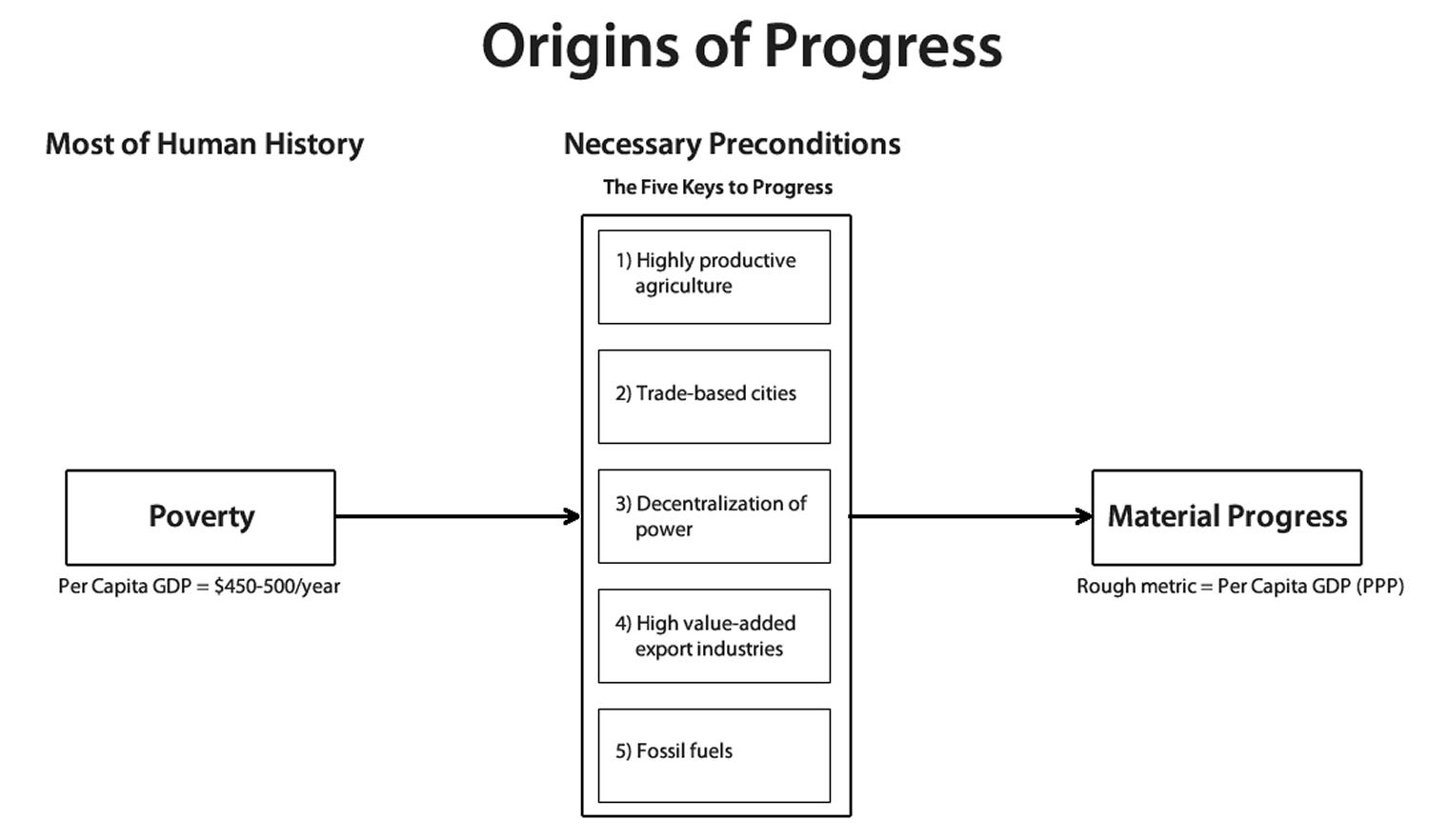
One of the key threads that runs through this Substack and my book series is the benefits of decentralization (or perhaps more accurately the dangers of over-centralization). That is why I have identified one of the Five Keys to Progress as:
Decentralized political, economic, religious, and ideological power. It is of particular importance that elites are forced into transparent, non-violent competition that undermines their ability to forcibly extract wealth from the masses. This also allows citizens to freely choose among institutions based upon how much they have to offer to each individual and society in general.
To minimize the ability of powerful elites to extract surplus from the masses, it is essential that a society has social norms and institutions that compel non-violent competition between them. Each nation that experiences material progress for the masses evolves its own social norms and institutions. None of these social norms and institutions are identical, but they must function over the long term to maintain the foundations of material progress.
This essay will focus on American traditions that decentralized political, economic, religious, and ideological power. In particular, I will focus on the Federalist principles of the US Constitution and how they have been gradually eroded over the last century.
Federalism
The United States Constitution was designed upon Federalist principles that carefully divided power between the federal government and the states. Federalism was intended to ensure a system of decentralized sovereignty, where the federal government exercised only enumerated powers while the states retained broad authority over local matters.
The Tenth Amendment made this principle explicit, reserving undelegated powers to the states or to the people. The ultimate purpose was to prevent tyranny by dispersing power and to allow diverse communities to govern themselves in accordance with their own values and circumstances.

Yet over the past century, this balance has been dramatically altered. The rise of the federal bureaucracy and the Administrative State has shifted power away from the states and concentrated it in Washington, D.C. And within the federal government, the Administrative State has shifted power away from Congress, the Presidency, and the Supreme Court towards the federal bureaucracy (which is barely even mentioned in the US Constitution).
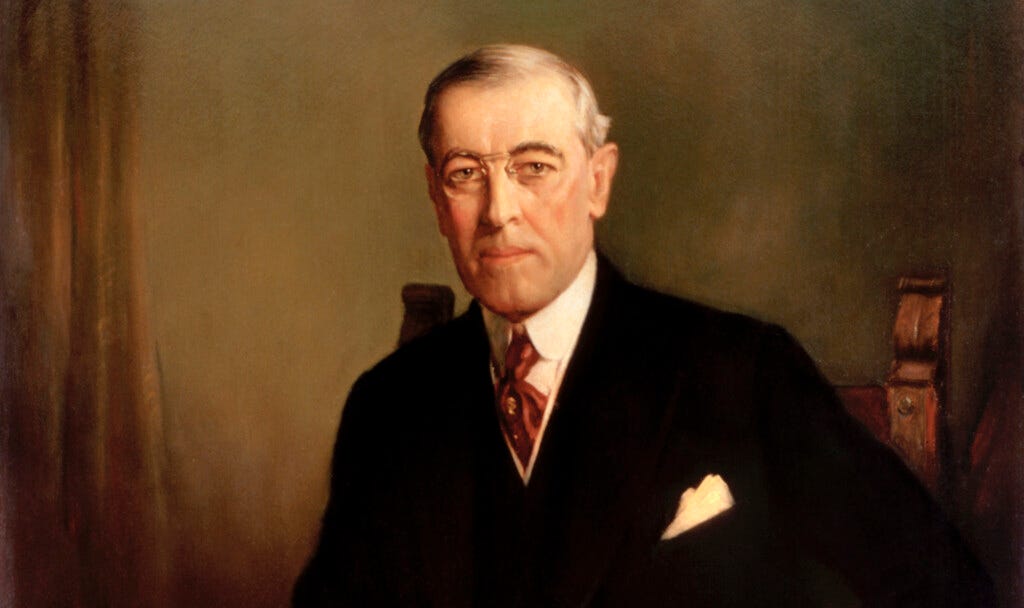
This trend started with President Woodrow Wilson (1913-1921). Wilson explicitly rejected the Federalist constitutional order as outdated and inadequate for modern governance. His writings reveal a clear desire to replace the Constitution’s system of checks, balances, and federalism with an Administrative State run by experts. The New Deal, the Great Society, and subsequent expansions of the bureaucracy entrenched this vision, sidelining the Tenth Amendment and hollowing out the principle of federalism.
This essay will show, with direct references to Wilson’s own words, how the federal bureaucracy grew in deliberate violation of Federalist principles embedded in the US Constitution. It will then examine why the Tenth Amendment is so critical to federalism and how its neglect has harmed American governance. Finally, it will highlight the benefits of federalism, including decentralization, state-level experimentation, and the potential to depolarize politics, and argue that a renewed embrace of federalism is essential to restoring liberty and self-government in the United States.
If you enjoy this article, you should read my From Poverty to Progress book series.
The Intellectual Origins of the Administrative State
Woodrow Wilson’s academic career was devoted to political science, and long before becoming president, he articulated a philosophy of governance at odds with the Constitution’s design. In his 1887 essay, The Study of Administration, Wilson made his famous declaration:
“The field of administration is a field of business. It is removed from the hurry and strife of politics.”
With this claim, Woodrow Wilson introduced the notion that government could be divided into two spheres:
politics, which set broad goals, and
administration, which experts would carry out scientifically and neutrally.
Wilson believed administrators should be insulated from democratic pressures and allowed to act according to professional judgment. Also hidden within his worldview was a moral justification for concentrating power within the federal government, particularly the federal bureaucracy.
Keep in mind that at the time, Woodrow Wilson was just another Political Science professor. The fact that this same man later became the President of the United States and was able to actually implement his vision is extraordinary. I can think of no other instance where a professor invented an influential new theory of governance and then actually went on to implement it in an entire nation.
Even more revealing are his writings in Constitutional Government in the United States (1908). Here Wilson directly challenged the Federalist system embedded in the US Constitution:
“No living thing can have its organs offset against each other, as checks, and live. On the contrary, its life is dependent upon their quick cooperation, their ready response to the commands of instinct or intelligence, their amicable community of purpose.”
Wilson was openly attacking the Constitution’s deliberate separation of powers, which the Founders had designed to prevent tyranny. To Wilson, these checks and balances were not safeguards of liberty but obstacles to efficiency. He continued:
“Government is not a machine, but a living thing. It falls, not under the theory of the universe, but under the theory of organic life. It is accountable to Darwin, not to Newton.”
With these words, Wilson rejected the Constitution’s fixed principles in favor of an evolutionary view of government, one that could adapt its structure and powers to new circumstances.
Wilson’s disdain for the Tenth Amendment’s reservation of powers to the states was implicit in his emphasis on centralized administration. He saw the states as relics of a bygone era. In his History of the American People (1902), he described the Founders’ system of federalism as an experiment suitable to an agrarian society but inadequate for an industrial one. He argued that modern conditions demanded national solutions administered by experts:
“The functions of government are every day becoming more complex, and the machinery through which they are to be carried out more delicate and elaborate. The functions of government are multiplying at a pace which leaves no time for deliberation.”
For Wilson, only a strong, centralized bureaucracy could handle this complexity. Wilson later wrote what became the standard text in Political Science in the period between World War I and World War II: The State: Elements Of Historical And Practical Politics. This textbook played a critical role in train future American bureaucrats.

Expansion of the federal bureaucracy
In 1790, the federal government was astonishingly small compared to today. Historical records show that in 1790, the entire federal workforce numbered only about 1,000–1,500 civilian employees. This figure included customs collectors, postal workers, clerks, and staff in the few executive departments that existed. By 1801, at the end of Thomas Jefferson’s first year as president, the federal workforce was still under 3,000 (excluding the military). The Post Office alone accounted for the majority of employees as it expanded, but even then it was modest.
In 1790, there were only four cabinet members under President George Washington:
Secretary of State – Thomas Jefferson (appointed in March 1790, succeeding John Jay who had been acting under the Confederation system).
Secretary of the Treasury – Alexander Hamilton.
Secretary of War – Henry Knox.
Attorney General – Edmund Randolph (technically not a department head at first, but part of the cabinet from the beginning).
Since about 1910, there has been a massive expansion of federal bureaucracy. Today, the scale of the federal government is almost unimaginable compared to 1790.
According to the Office of Personnel Management (OPM), there are about 2.2 million civilian federal employees. If you include active-duty military (about 1.3 million) and postal workers (roughly 600,000), the total number of federal workers rises to around 4.1 million.
That is nearly 3,000 times larger than the federal civilian workforce in 1790. Of course, a portion of this is due to America’s much higher population, but this only accounts for a tiny percentage of the expansion. The primary reason is the massive expansion of the powers of the federal government.
Meanwhile, the Cabinet has expanded from Washington’s 4 original positions to 15 executive departments today. In addition, there are many cabinet-rank officials outside the 15 departments (e.g., U.S. Trade Representative, UN Ambassador, EPA Administrator, SBA Administrator), bringing the “cabinet table” to 20+ officials depending on the president.
This expansion was not an accident, nor merely a byproduct of modern complexity. It was the direct consequence of intellectual and political movements, particularly the Progressive Era and the influence of Woodrow Wilson.
The New Freedom
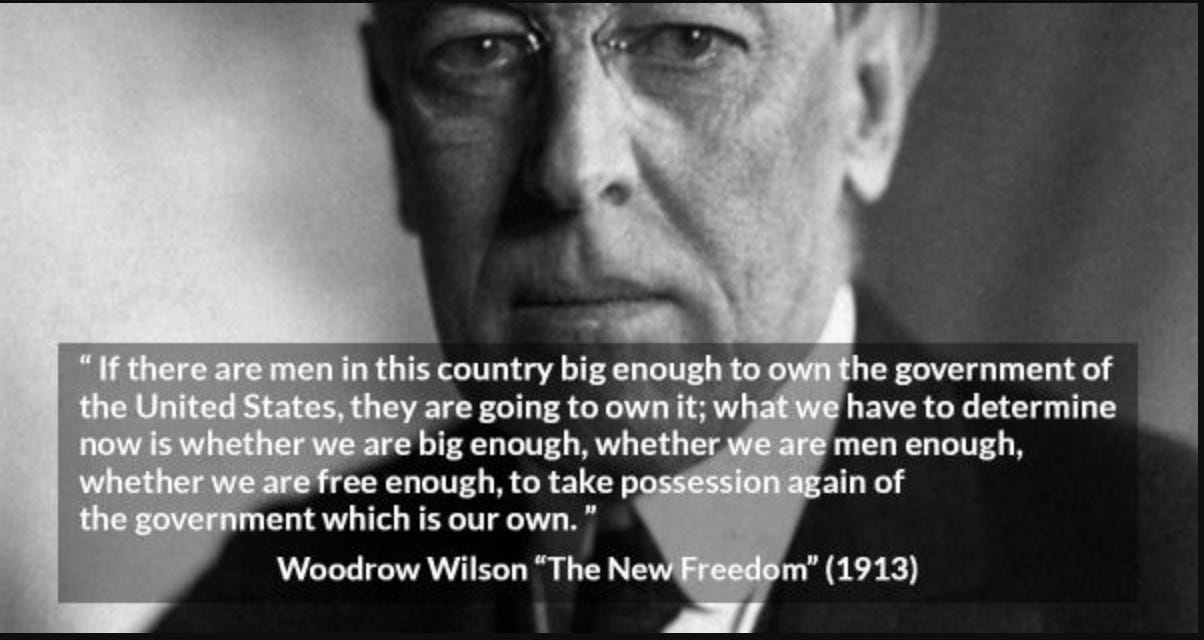
In The New Freedom (1913), a collection of his campaign speeches, Wilson expressed even more bluntly his belief that the Founders’ Constitution was outdated. He told his audience:
“The makers of the Constitution constructed the federal government upon a Newtonian principle. All that progressives ask or desire is permission—in an era when development, evolution, is the scientific word—to interpret the Constitution according to the Darwinian principle.”
Here, Wilson was explicit: the Constitution’s fixed, mechanical limits, what he called “Newtonian,” had to give way to a Darwinian system of adaptation, in which the federal government could evolve and expand according to circumstances.
Wilson further argued that liberty was no longer secured by limiting government, but by empowering it:
“If you want to understand the real Declaration of Independence, do not repeat the preface. Listen to the body of it. It is the body of it that asserts that men have the right to alter their governments, and to institute new governments. Not a government founded upon liberty safeguarded by limitations, but liberty safeguarded by the proper use of governmental power.”
In this passage, Wilson inverted the Founders’ philosophy. Where Madison and Jefferson argued that liberty depended on restraining government, Wilson argued that liberty required government to act vigorously.
Perhaps most tellingly, Wilson claimed the people must reinterpret their Constitution whenever society changes:
“The Constitution of the United States has proved itself the most splendid vehicle of political life that any nation has ever known, but it has proved itself a vehicle only, and is not to be mistaken for the life of the nation itself.”
This statement implied that the Constitution was not a fixed covenant but merely a tool to be adjusted or discarded as conditions required. In this sense, Wilson not only tolerated but demanded a living Constitution that could authorize the vast expansion of federal power through the Administrative State.
Wilson implements his vision
After the at-that-time dominant Republican party split in 1912, Woodrow Wilson was able to win the Presidential election and become President. As an interesting footnote, the 1912 Presidential election is the only election in history that featured three Presidents (former, current, or future).
The 1912 Presidential candidates were:
Woodrow Wilson, the Democratic nominee and future President (1913 to 1921).
William Howard Taft, the Republican nomination and current President (1909 to 1913).
Theodore Roosevelt, the Progressive Party nominee and former Republican President (1901 to 1909) and who just might be the most interesting man in American history.

Sorry, buddy, but Theodore Roosevelt beats you by a mile And, oh by the way, Eugene Debs, the Socialist party nominee, who won 6% of the vote.

Riding Wilson’s coattails, the Democratic Party also won both chambers of Congress, the first time they accomplished that feat since the 1892 elections. Wilson and Congress moved quickly to implement his vision. Particularly important in their ability to do so was World War I, which justified a great expansion in federal power.
Wilson’s presidency (1913–1921) saw the creation of key bureaucratic institutions.
The Federal Reserve Act of 1913 established an independent central bank managed by a board of experts.
The Federal Trade Commission, created in 1914, was empowered to issue rules, adjudicate cases, and enforce compliance: functions that blended legislative, executive, and judicial powers in a single body.
Clayton Antitrust Act (1914) – strengthened earlier antitrust laws, exempted labor unions from being treated as illegal combinations in restraint of trade.
Underwood Tariff Act (1913) – significantly lowered tariffs and introduced a federal income tax (enabled by the 16th Amendment).
Adamson Act (1916) – established the eight-hour workday for railroad workers, with overtime pay.
Keating–Owen Child Labor Act (1916) – first federal law restricting child labor (later struck down by the Supreme Court).
Federal Farm Loan Act (1916) – created credit systems for farmers through Federal Land Banks.
Jones Act (1916) – granted greater autonomy (and eventual promise of independence) to the Philippines; also granted U.S. citizenship to people of Puerto Rico.
16th, 17th, 18th, and 19th Amendments ratified during Wilson’s presidency:
16th (1913): federal income tax.
17th (1913): direct election of U.S. Senators.
18th (1919): Prohibition of production, transport, and sale of alcohol
19th (1920): women’s suffrage.
Entry into World War I (1917) – mobilized U.S. economy and military; sent American Expeditionary Forces under General Pershing to Europe.
Selective Service Act (1917) – instituted the military draft to build up the U.S. Army.
War Industries Board (1917) – coordinated production and supplies during the war.
Espionage Act (1917) and Sedition Act (1918) – wartime measures limiting speech and dissent against the war effort.
These agencies and programs were designed to embody Wilson’s philosophy: insulated from politics, managed by specialists, and empowered to govern vast swaths of economic life.
The New Deal
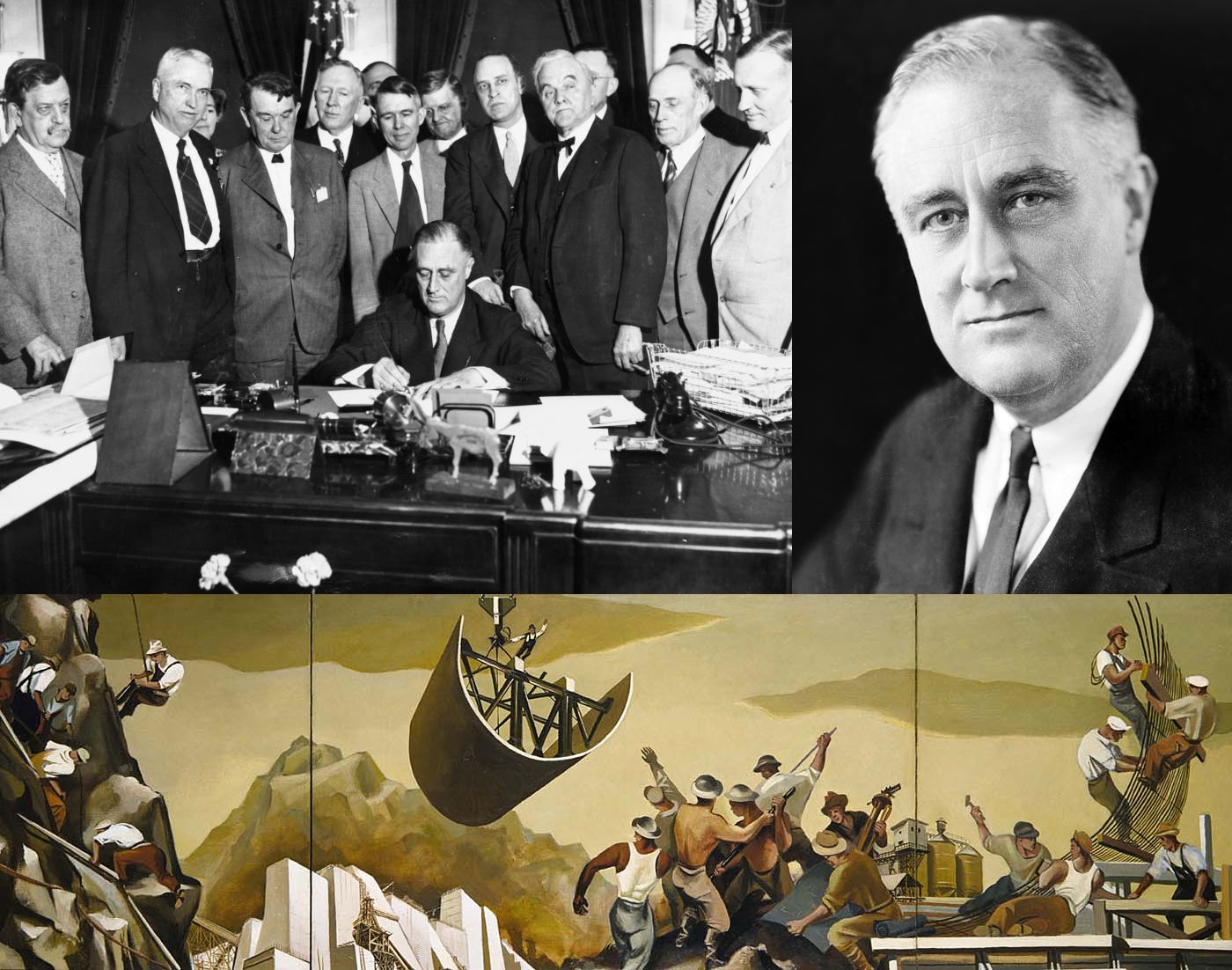
The New Deal of the 1930s took Wilson’s Administrative vision to unprecedented heights. Franklin Roosevelt’s response to the Great Depression created a sprawling array of agencies: the Securities and Exchange Commission, the Social Security Administration, the National Labor Relations Board, and many others. These agencies exercised enormous regulatory and enforcement powers.
While the Supreme Court initially resisted (striking down parts of the New Deal in 1935), it soon capitulated, especially after Roosevelt’s court-packing threat. By the late 1930s, the Court looked the other way on the constitutionality of the Administrative State, effectively allowing the balance of powers to be rewritten.

The Great Society
If the New Deal established theAdministrative State as a permanent feature of American government, the Great Society of the 1960s expanded its reach into areas once firmly reserved for the states. President Lyndon B. Johnson launched an ambitious array of social programs aimed at eliminating poverty and racial injustice. While well-intentioned, these programs further undermined federalism by centralizing social policy in Washington.
Medicare and Medicaid, created in 1965, transformed the relationship between the federal government and health care. For the first time, Washington assumed direct responsibility for financing and regulating medical services. In 1966, Medicare and Medicaid together cost $4.6 billion; by 1980, costs had risen to $60 billion, with the federal government paying more than 80 percent of total program expenditures. States were left administering Medicaid under detailed federal guidelines, effectively making them subunits of federal policy rather than sovereign actors.
Education was also federalized. The Elementary and Secondary Education Act of 1965 injected $1 billion in federal funds into local schools during its first year. By 1980, federal education spending had grown to over $14 billion annually. Federal funds accounted for nearly 10 percent of total K–12 education budgets, but because they were attached to strict conditions, they exercised influence disproportionate to their share of total spending. State and local school boards increasingly had to adapt their curricula, testing, and administrative structures to federal rules.
Welfare underwent similar centralization. Aid to Families with Dependent Children (AFDC) had originated in the New Deal, but under the Great Society it expanded significantly. In 1960, AFDC supported 3 million recipients; by 1975, that number had grown to more than 11 million. Federal regulations dictated eligibility and benefits, reducing states’ flexibility. By the mid-1970s, federal expenditures covered more than half of all AFDC costs, effectively placing welfare under national management.
Housing and urban development programs, also launched in 1965, reshaped local governance. The Department of Housing and Urban Development directed billions in federal grants and subsidies toward local housing projects and urban renewal. By the 1970s, federal aid to local governments reached nearly $50 billion per year, surpassing many state budgets. Local autonomy was curtailed, as access to federal funds required compliance with national planning standards and civil rights enforcement mechanisms.
Taken together, these programs shifted the fiscal balance of the American government. In 1960, states and localities accounted for about 60 percent of domestic social spending while the federal government covered 40 percent. By 1980, the proportions had reversed, with Washington responsible for more than 60 percent. This fiscal dominance gave the federal government unprecedented leverage over policy domains that the Tenth Amendment had left to the states.
The powers not delegated to the United States by the Constitution, nor prohibited by it to the States, are reserved to the States respectively, or to the people.
- The Tenth Amendment to the US Constitution (and part of the Bill of Rights)
The Tenth Amendment
The Tenth Amendment to the US Constitution was meant to serve as a bulwark against such centralization. It was a necessary precondition for all the states ratifying the Constitution. Without it, the Anti-Federalists may have blocked ratification and left us with the Articles of Confederation as our constitution.
Its clear text underscores that the federal government’s powers are limited to those explicitly delegated by the Constitution. All other powers, an enormous range of governing authority, belonged to the states or the people. This arrangement allowed the federal government to handle truly national issues such as foreign policy and defense, while the states retained sovereignty over domestic affairs.
Yet the Supreme Court’s interpretation of the Commerce Clause rendered the Tenth Amendment nearly meaningless. In Wickard v. Filburn (1942), the Court ruled that Congress could regulate wheat a farmer grew for personal consumption because it affected the overall market for wheat. In Gonzales v. Raich (2005), the Court upheld federal prohibition of marijuana grown and consumed entirely within one state. These decisions illustrate how the Commerce Clause became a blank check for federal regulation, nullifying the Tenth Amendment’s original function.
Federal spending further eroded state sovereignty. By conditioning federal funds on state compliance with national regulations, Congress effectively coerced states into implementing federal policies. For instance, the federal government conditioned highway funding on states adopting a national drinking age of 21. Though formally voluntary, states could not realistically refuse the funds. In this way, Washington extended its reach into areas constitutionally reserved for the states.
The cumulative effect has been the hollowing out of federalism. The Tenth Amendment remains on the books, but in practice it is ignored. The very principle it enshrined—that most governing power belongs to the states and the people—has been supplanted by the Administrative State.
The Benefits of Federalism
Federalism is not a mere constitutional formality. It is a vital safeguard of liberty and good governance. Its benefits are manifold, touching nearly every aspect of American political, social, and economic life. Far from being an archaic structure of government, federalism offers practical advantages that remain indispensable for a large and diverse republic.
First, federalism decentralizes power (the Third Key to Progress). By preventing the concentration of authority in one level of government, it reduces the risk of tyranny. The Founders believed that dividing power between the federal government and the states created a double security for liberty. Citizens would be protected both by the federal government from abuses by their state, and by their state from abuses by the federal government.
This dispersion of authority also forces multiple governments to compete for the loyalty of the people, which restrains their tendency to overreach. The United States has over 90,000 local governments (counties, cities, towns, and school districts) all of which provide citizens with avenues to check power and demand accountability. A highly centralized system would reduce these opportunities and make it easier for unchecked authority to dominate.
Second, federalism encourages state-level experimentation. This decentralized small-scale experimentation, iterating based on results, is one of the foundations of material progress.
States have often been called “laboratories of democracy,” a phrase made famous by Justice Louis Brandeis. When states have the freedom to experiment, they can test different approaches to solving social and economic problems. Successful innovations can spread, while failures remain contained. This process has shaped many aspects of American life.
For example, Wisconsin pioneered unemployment insurance in 1932 before it was adopted nationally in the Social Security Act of 1935. Massachusetts experimented with near-universal health coverage in 2006, influencing the later Affordable Care Act. Charter schools, environmental policies such as cap-and-trade programs, and criminal justice reforms like drug decriminalization were all tested at the state level before spreading more widely. Without federalism, such experimentation would be more limited, and national policies would be riskier, since every innovation would have to be applied to all fifty states at once.
Third, federalism respects geographical and cultural diversity. The United States is not a homogenous nation but a vast collection of regions with different cultures, histories, and priorities. Federalism allows Utah to adopt policies that reflect its distinct religious and cultural identity, while California pursues policies aligned with its progressive political culture, and Texas develops its own path emphasizing economic growth and limited regulation.
These differences are not weaknesses but strengths: they allow citizens to live in communities that reflect their values without requiring a false uniformity at the national level. This respect for diversity makes union possible despite deep regional differences. It also permits gradual adaptation to cultural change rather than sudden, imposed uniformity.
Fourth, federalism enhances accountability. State and local governments are closer to the people and more responsive to their needs. Citizens can directly petition their state representatives, attend local meetings, or even run for local office in ways that would be impossible at the federal level. When government is closer to the people, its actions are more transparent and its officials more answerable. If a policy fails in a state, voters can replace their state leaders without having to overturn national institutions. In contrast, a distant federal bureaucracy often seems unaccountable, and citizens feel powerless to influence it. By dispersing authority, federalism strengthens the ability of ordinary people to oversee their rulers.
Fifth, federalism fosters competition among states, which can produce efficiency and innovation. When states have discretion, they often compete to attract businesses and residents. This competition can lead states to keep taxes and regulations reasonable, to improve infrastructure, and to invest in education and services. States that fail to govern effectively risk losing people and investment to more successful neighbors. While not a perfect system, this form of competition creates a dynamic in which states are incentivized to meet the needs of their citizens or face consequences. Federal uniformity, by contrast, tends to produce complacency, since there are fewer alternatives for citizens to choose from.
Sixth, federalism promotes stability by providing multiple centers of power. In times of crisis, states can step in when the federal government falters. During the COVID-19 pandemic, for example, states adopted widely different approaches to public health, lockdowns, and vaccine distribution. While this produced disagreements, it also showed the resilience of federalism: states were able to act quickly and independently when the federal government was slow or inconsistent. In other crises—whether hurricanes, wildfires, or financial downturns—states often serve as first responders, demonstrating that decentralization adds redundancy and resilience to the system.
Seventh, federalism can ease polarization by reducing the stakes of national politics. When authority is centralized in Washington, every national election becomes a fight to control the entire country’s direction. This zero-sum dynamic encourages extremism and hardens divisions.
Federalism diffuses power, making national outcomes less decisive for daily life. Controversial issues such as school curricula, environmental regulations, or health care delivery can be resolved differently in different states, allowing citizens to live under laws more aligned with their values without forcing a single policy on the entire country. This arrangement reduces the need to nationalize every dispute, providing space for pluralism in a deeply divided society.
Eighth, federalism cultivates civic virtue by encouraging participation at multiple levels of government. Citizens learn self-government through involvement in local politics, state legislatures, and national debates. This multi-layered participation builds habits of responsibility and strengthens the democratic fabric. When everything is centralized, citizens may feel alienated and disengaged, weakening the sense of shared responsibility that democracy requires. Federalism fosters active citizenship by keeping politics closer to home.
Finally, federalism provides citizens with the freedom to “vote with their feet.” Because each state has the authority to adopt its own policies, Americans who find themselves dissatisfied with the political culture or regulatory environment of one state can relocate to another that better aligns with their values and priorities. This mobility serves as a release valve, reducing the sense of permanent frustration that comes from being forced to live under a uniform national policy that contradicts deeply held beliefs. Whether moving for lower taxes, stronger gun rights, more permissive social policies, or a different approach to education, citizens benefit from the diversity of options within a single nation. This freedom of movement reinforces both individual liberty and social stability, since it allows disagreement without requiring every political conflict to be settled at the national level.
In all these ways—decentralization of power, encouragement of experimentation, respect for diversity, enhancement of accountability, promotion of competition, provision of stability, reduction of polarization, and cultivation of civic virtue—federalism serves as an indispensable foundation of American liberty. The erosion of federalism through the Administrative State has not only violated the Constitution’s design but deprived the nation of these vital benefits. To restore federalism is not simply to honor the Founders’ intent but to revive a system of governance that remains uniquely suited to America’s size, diversity, and democratic aspirations.
The Left has hit an historic dead end

Make someone’s day: Gift a subscription to your friends and family!
Progressive case for Federalism
Typically, Progressives oppose the concept of Federalism. They may not realize it, but this is a legacy of Woodrow Wilson’s theory of an Administrative State. Progressives typically believe that federal bureaucrats should be empowered to implement their ideological vision on the federal level. To a large extent, this has been quite successful over the last 100 years. But all indications suggest that this long trend may have reached its logical culmination. Permanent minority status over the federal government seem quite plausible for the foreseeable future.
Progressives have reasons to embrace federalism. While many on the Left grow frustrated with the constitutional checks that limit the scope of federal power, it is worth recognizing that those same limits do not restrain state governments to nearly the same degree. Within the framework of the Constitution, states have broad authority to regulate education, health care, criminal justice, environmental policy, and civil rights protections.
This means that advocates of a Social Justice agenda do not have to wait for national consensus or fight endlessly over the composition of the Supreme Court; they can instead pursue ambitious reforms at the state level. By securing victories in individual states, Progressives can demonstrate proof of concept, build momentum for their ideas, and allow other states to copy successful policies. In this way, federalism not only safeguards liberty but also provides a realistic path for advancing social change without intensifying the zero-sum struggle for control of Washington.
Federalism: one simple reform to solve all our problems

Make someone’s day: Gift a subscription to your friends and family!
Federalism and the Path to Depolarization
The centralization of power in Washington has nationalized every cultural and political conflict. Issues such as education, healthcare, and social policy become national battles because they are controlled by federal law and bureaucracy. This dynamic fuels polarization, as citizens across fifty diverse states are forced into the same fights. Yet the very divisiveness of these issues demonstrates how federalism could help to lower the temperature of political life. When authority is decentralized, states are free to adopt policies that reflect the values of their own populations rather than fighting over a single national standard.
Abortion is perhaps the clearest example. For decades after Roe v. Wade (1973), abortion policy was dictated by a federal constitutional standard imposed on all fifty states. This decision transformed abortion into a perpetual national struggle, with every presidential election, judicial nomination, and congressional debate overshadowed by the issue.
By contrast, the Supreme Court’s decision in Dobbs v. Jackson Women’s Health Organization (2022) returned abortion policy to the states. The result has been highly polarized at the state level, with some banning abortion almost entirely and others codifying broad protections. While controversial, this arrangement reflects federalist principles: communities decide according to their own values rather than having one policy forced on the entire nation. Over time, state diversity may reduce the intensity of national political conflict, as citizens recognize that the issue can be resolved differently across jurisdictions.
Marijuana legalization is another divisive issue that federalism has already defused to some degree. Federal law still prohibits marijuana under the Controlled Substances Act, yet many states have legalized it for medical or recreational use. This state-level experimentation has allowed citizens to experience different models of legalization without requiring national uniformity.
States like Colorado, California, and Oregon have chosen liberal policies, while others retain strict prohibitions. The federal government has largely tolerated this diversity in practice. The result is a reduction of national polarization: citizens may disagree, but they see that state-level choice allows coexistence without a national mandate. Federalism thus channels conflict into local politics, where compromise and experimentation are more feasible.
Gun regulation provides another illustration. The Second Amendment protects an individual right to bear arms, but within that framework, states have considerable room to regulate firearms. Some states, like New York and California, impose strict gun control measures, while others, like Texas and Arizona, adopt far more permissive laws.
This federalist diversity allows different communities to address the issue in ways that match their own cultures and concerns. A centralized, one-size-fits-all approach would intensify conflict by forcing urban and rural populations—whose experiences with gun violence and self-defense differ dramatically—into the same mold. Federalism recognizes this diversity and provides a pressure valve for a deeply divisive issue.
Climate policy is also marked by regional divisions. At the national level, debates over carbon emissions, environmental regulations, and energy production are contentious, with sharp divides between fossil fuel–producing states and those emphasizing renewable energy. Yet states have taken widely different approaches. California has imposed aggressive emissions standards, promoted electric vehicles, and invested heavily in renewable energy, while Texas has emphasized oil, gas, and deregulation, even as it has also become a leader in wind power.
This diversity allows each state to pursue its own priorities rather than fighting over a national consensus. While environmental issues do have cross-border effects, federalism can still reduce polarization by allowing states to set ambitious goals voluntarily rather than forcing reluctant regions into compliance with uniform mandates.
Other cultural disputes, such as education curricula, transgender rights, same-sex marriage, and religious liberty, could also be better managed under a robust federalism. Citizens increasingly live in communities with distinct social values. Forcing all Americans into a single national policy on these issues heightens resentment and magnifies polarization. Allowing states to resolve such questions differently would respect diversity, reduce the stakes of national elections, and foster greater tolerance for disagreement.
Federalism cannot eliminate conflict. States themselves may become deeply polarized, and some issues, such as civil rights, do require national standards to protect fundamental liberties. But federalism can lower the stakes of politics by confining most cultural battles to state and local arenas. By permitting pluralism, it makes coexistence possible in a vast and diverse republic. Instead of every national election being treated as a winner-takes-all contest over cultural identity, citizens could increasingly view politics as a patchwork of local and state decisions, with room for differences across the country. In this sense, federalism is not only a constitutional safeguard but a practical remedy for America’s deepening polarization.

An Originalist Supreme Court
For decades, the Supreme Court enabled the growth of the Administrative State and the neglect of the Tenth Amendment. But in recent years, the rise of an Originalist majority has raised the possibility of reversing these trends. Originalism seeks to interpret the Constitution according to its original public meaning, which includes a strict reading of enumerated powers and the preservation of state sovereignty.
Recent cases suggest a willingness to rein in federal overreach. In National Federation of Independent Business v. Sebelius (2012), the Court limited Congress’s ability to coerce states through conditional spending, striking down the requirement that states expand Medicaid or lose all funding. In West Virginia v. EPA (2022), the Court invoked the “major questions doctrine” to restrict administrative agencies from claiming sweeping powers not clearly granted by Congress. These rulings reflect a recognition that agencies have usurped authority not intended for them.
An Originalist Court could go further. It might revisit expansive interpretations of the Commerce Clause that have justified near-limitless federal regulation. It could strengthen the Tenth Amendment by reviving doctrines that protect state sovereignty from federal encroachment. It could also restrict the delegation of legislative powers to administrative agencies, restoring Congress to its proper lawmaking role. If pursued consistently, such jurisprudence could begin to reverse a century of centralization and restore the balance between federal and state authority envisioned by the Founders.
Restoring Federalism
Any discussion of what might happen if the Supreme Court continues down this Originalist path is speculative. Court decisions are shaped not only by legal philosophy but also by political realities, public opinion, and the willingness of justices to push doctrinal change. Still, some possible outcomes can be imagined.
In health care, an assertive application of the Tenth Amendment could return much regulatory authority to the states. Instead of federal dominance through Medicare, Medicaid, and the Affordable Care Act, states might design their own systems of health insurance and care delivery. Some states could experiment with single-payer models, others with market-oriented approaches. The federal government might retain limited functions, such as oversight of interstate insurance markets, but the day-to-day structure of health care could once again become primarily a state responsibility.
In education, federal mandates attached to funding might be curtailed. States and local school boards could regain greater discretion over curricula, testing, and school accountability. Federal aid might continue, but without the heavy conditions that now shape local education policy. This would allow schools to reflect the cultural and political preferences of their communities rather than conforming to national directives.
In welfare and social policy, states might be granted more autonomy to structure assistance programs. Instead of Washington dictating eligibility and benefit levels, states could experiment with diverse models, balancing work requirements, cash aid, and social services in ways suited to their populations. This could revive the laboratories of democracy that the Founders envisioned.
The risks of such decentralization must also be acknowledged. States differ in wealth, capacity, and political culture. Greater state control could widen disparities in social services, leaving some populations with weaker protections than others. Citizens might find themselves with dramatically different access to health care, education, or welfare depending on where they live. For this reason, any projection of a restored federalism remains speculative and uncertain. The extent to which the Supreme Court would actually go in reshaping American governance is unknowable, but the potential trajectory is clear: a return to greater state sovereignty and a narrowing of federal power.
Conclusion
The rise of the administrative state, rooted in Woodrow Wilson’s rejection of Federalist principles, has transformed American government. Wilson explicitly rejected the Constitution’s separation of powers and federalism, calling instead for a living, evolutionary government run by experts. His ideas laid the foundation for the vast federal bureaucracy that now governs nearly every aspect of life. This bureaucracy has effectively nullified the Tenth Amendment and centralized authority in Washington, D.C., in direct violation of the Federalist vision.
The New Deal entrenched the administrative state, and the Great Society further expanded federal control into health care, education, welfare, and housing—areas the Constitution had left to the states. These expansions undermined state sovereignty, reduced experimentation, and fueled political polarization. Yet federalism remains essential. Its benefits, including decentralization, innovation, respect for diversity, accountability, competition, stability, civic participation, and depolarization, are as valuable today as they were in 1789.
With an Originalist majority on the Supreme Court, there is new hope that the principles of federalism can be revived. While the actual outcomes remain speculative, the Court has the potential to limit the power of the Administrative State, reinvigorate the Tenth Amendment, and restore the constitutional balance between federal and state authority envisioned by the Framers.
Bibliography
If you are interested in reading more on this topic, I would recommend:
Kersch, Ken I. Constructing Civil Liberties: Discontinuities in the Development of American Constitutional Law. Cambridge University Press, 2004
Skowronek, Stephen. Building a New American State: The Expansion of National Administrative Capacities, 1877–1920. Cambridge University Press, 1982
Wilson, Woodrow. A History of the American People. Harper & Brothers, 1902
Wilson, Woodrow. Constitutional Government in the United States. Columbia University Press, 1908
Wilson, Woodrow. The New Freedom: A Call for the Emancipation of the Generous Energies of a People. Doubleday, Page & Company, 1913
Wilson, Woodrow. The Study of Administration. Political Science Quarterly, Vol. 2, No. 2 (June 1887)
If you’ve been enjoying these essays but only follow me here, you’re not getting them by email. Followers see Notes; subscribers receive every new piece on the history and future of progress.
Subscribe free here 👉:
If you enjoyed this article, you should read my From Poverty to Progress book series.
I'm thrilled to see others thinking seriously about this direction. But I struggle to find a pathway from here (back) to there. So much of the interdependency is fiscal, and states and cities are pretty hooked on Federal money (even though it all comes from their residents originally). How do they pull back autonomy, when there's the constant call to "get IRA dollars for our local housing and transportation needs"?
I agree but with one major exception to your federalism argument. States should have only the barest minimum of say in regulating the Bill of Rights. I don’t give a crap that Californians want unconstitutional gun restrictions or Texas likes to morality police speech. Those are part of the American social contract and undermining them is almost as destructive as the centralization of power.