

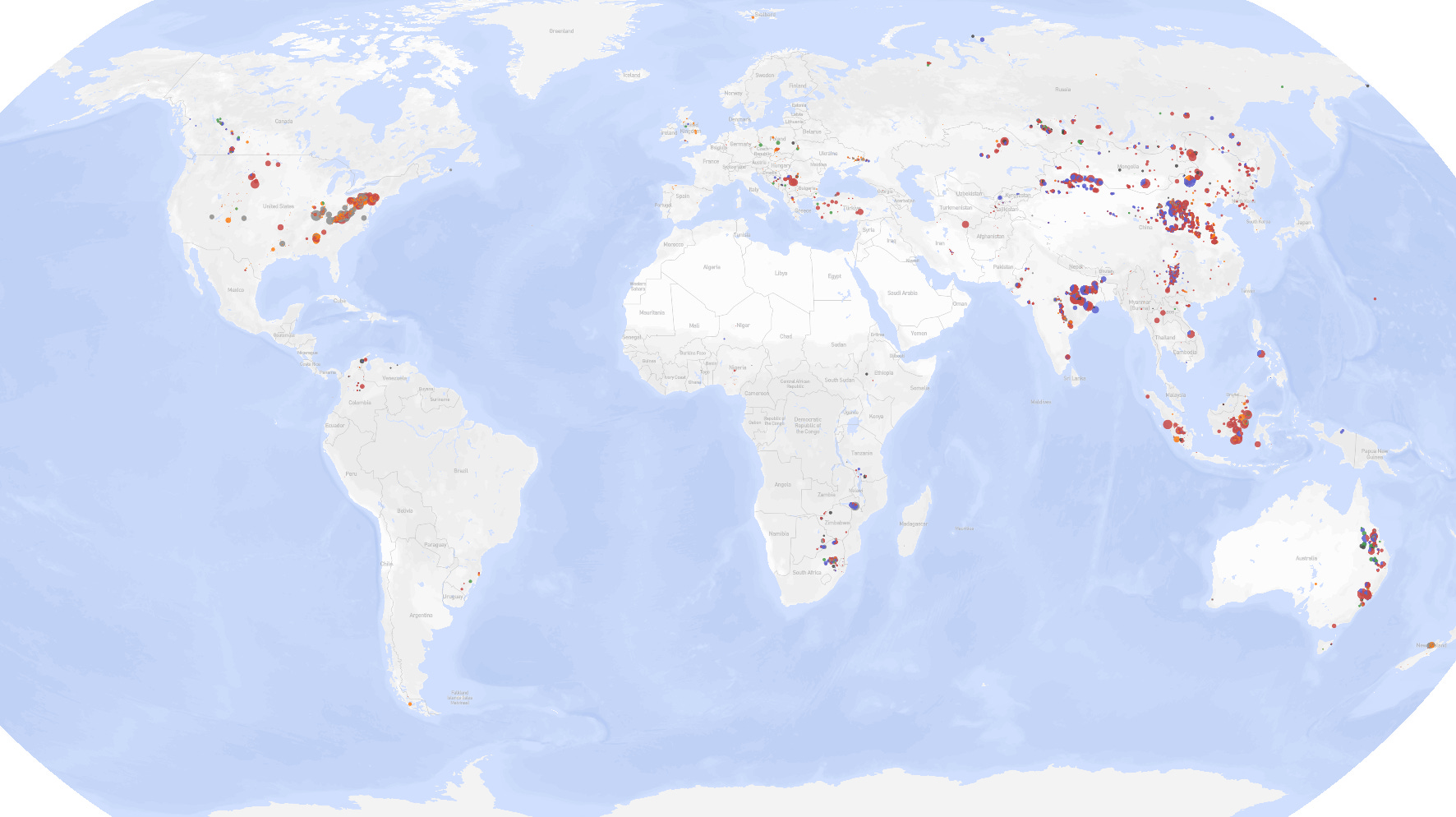
The rest of the world had enormous coal reserves, but few regions could match the accessibility and geography of northwestern Europe’s coalfields.
If you’re following me but don’t yet receive these essays by email, you’re missing most of them. Substack doesn’t email articles to followers, only to subscribers. You can get every new essay free in your inbox by subscribing 👉:
Coal helped power the modern world, but most coalfields were surprisingly poor foundations for early industrialization. Some were buried too deeply underground. Others were trapped behind mountains, far from navigable rivers, or isolated from major commercial populations. Before railroads and modern mining technology, enormous coal reserves often mattered less than a smaller coalfield located beside the right river, port, or city.
In Part 1 of this series, I covered the coalfields of Europe and argued that not all coal deposits were equally useful before industrialization. Britain, Belgium, and parts of western Germany possessed unusually favorable coal geography: shallow seams, navigable waterways, nearby commercial centers, and transportation systems that made large-scale coal use possible before railroads and steam-powered mining.

This second article expands the comparison globally. It examines how the coalfields of North America, China, India, Japan, Australia, southern Africa, and other regions compared under pre-industrial conditions. Some possessed much larger reserves than Europe. Others had favorable transportation geography or nearby populations. But very few combined accessibility, transportation, commercial integration, and geographical concentration as effectively as the coalfields of northwestern Europe.
You can read articles on related topics here:
Impact of Geography on human societies (the series)

If you’re following me but don’t yet receive these essays by email, you’re missing most of them. Substack doesn’t email articles to followers—only to subscribers. You can get every new essay free in your inbox by subscribing 👉:
If you enjoy this article, you should read my From Poverty to Progress book series.

Criteria for Comparing Coalfields
This article uses the same criteria introduced in Part 1 on the coalfields of Europe. The goal is not simply to compare the total amount of coal underground, but to compare how useful different coalfields were under pre-industrial conditions before railroads, steam-powered pumps, and modern mining technology.
The five criteria remain:
Shallowness of seams
Thickness of seams
Dryness or drainability of geology
Ease of transportation
Nearby population and industry
The reason for the importance of each of these criteria is explained in the first article.
European Benchmark
As a point of reference, I will briefly summarize the quality of the coalfields during the pre-industrial era from the first article:
Britain: Exceptional
Sambre–Meuse (Belgium): Exceptional
Ruhr Basin (Prussia): Very Strong
Northern France: Moderate
Upper Silesia (Prussia): Moderate
Bohemia (Austria-Hungary): Moderate
Donets Basin (Russia): Moderate-to-Weak
Asturias (Spain): Weak-to-Moderate
Outside Europe, some regions possessed coal reserves far larger than Britain, Belgium, or the Ruhr. But size alone did not determine usefulness before industrialization. The key question was whether coalfields were shallow, transport-connected, commercially integrated, and geographically accessible using pre-industrial technology.
The following sections goes into more detail on coalfields outside Europe, from best by pre-industrial standards to worst. Keep in mind that this rating is not applicable to after the Industrial Revolution when technology changed radically.
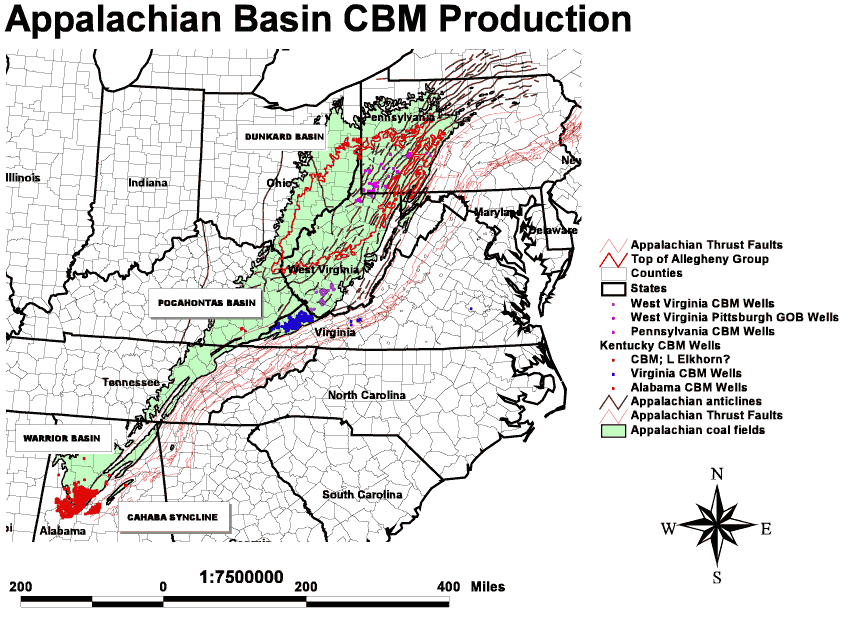
Appalachian Coalfields (USA): Very Strong
The Appalachian coalfields were located primarily within the eastern United States during the 19th century and stretched from Pennsylvania through West Virginia and into the American South. These coalfields eventually became some of the largest industrial energy sources in the world. Before industrialization, however, the region possessed both major geographical advantages and important limitations.
Geological Origins
The Appalachian coalfields formed within large Carboniferous sedimentary basins that were later uplifted and folded during the formation of the Appalachian Mountains. This geological history exposed many coal seams along hillsides, valleys, and escarpments rather than leaving them deeply buried underground.
The region also contained enormous reserves spread across a long north-south belt. Compared to many European coalfields, Appalachia possessed unusually large deposits combined with relatively accessible seam exposure.
Shallowness of Seams: Strong
Many Appalachian coal seams were exposed near the surface along hillsides and river valleys. Early mining often relied on drift mines cut directly into exposed coal seams.
Some deposits were located in rugged mountainous terrain, but overall the region possessed much more accessible coal than many inland coal basins elsewhere in the world.
Thickness of Seams: Exceptional
The Appalachian coalfields contained some of the world’s largest and thickest coal deposits. The reserves stretched across a vast region and included both high-quality bituminous coal and anthracite deposits in Pennsylvania.
These enormous reserves later helped support the rise of the United States as the world’s leading industrial economy.
Dryness or Drainability of Geology: Strong
The mountainous terrain provided important drainage advantages. Many mines benefited from gravity drainage and lower groundwater pressure than flatter lowland coalfields.
Although flooding still occurred in deeper mines, drainage conditions were generally more favorable than in many continental European basins.
Ease of Transportation: Moderate
The Appalachian coalfields possessed both strengths and weaknesses in transportation geography. The region was connected to:
the Ohio River system
the Mississippi Basin
Atlantic coastal ports
the Great Lakes through later canal systems
However, the Appalachian Mountains also created major transportation barriers before railroads. Much of the region remained relatively isolated during the pre-industrial era, and large-scale coal transportation expanded mainly after canals and railroads connected the coalfields more fully to eastern cities and industrial markets.
Nearby Population and Industry: Moderate
Before industrialization, much of Appalachia remained a frontier region with relatively low population density compared to northwestern Europe. The surrounding economy was still less urbanized and commercially developed than Britain or the Low Countries.
However, the coalfields were located relatively close to the rapidly growing commercial cities of the northeastern United States, including:
Philadelphia
New York
Baltimore
Pittsburgh
As American population and industry expanded during the 19th century, the Appalachian coalfields became increasingly integrated into one of the world’s largest industrial economies.
The Appalachian coalfields demonstrate that extremely favorable geology alone was not sufficient for early industrialization. Appalachia possessed enormous and relatively accessible coal reserves, but its mountainous terrain and frontier settlement patterns delayed full industrial exploitation until transportation infrastructure improved during the 19th century.
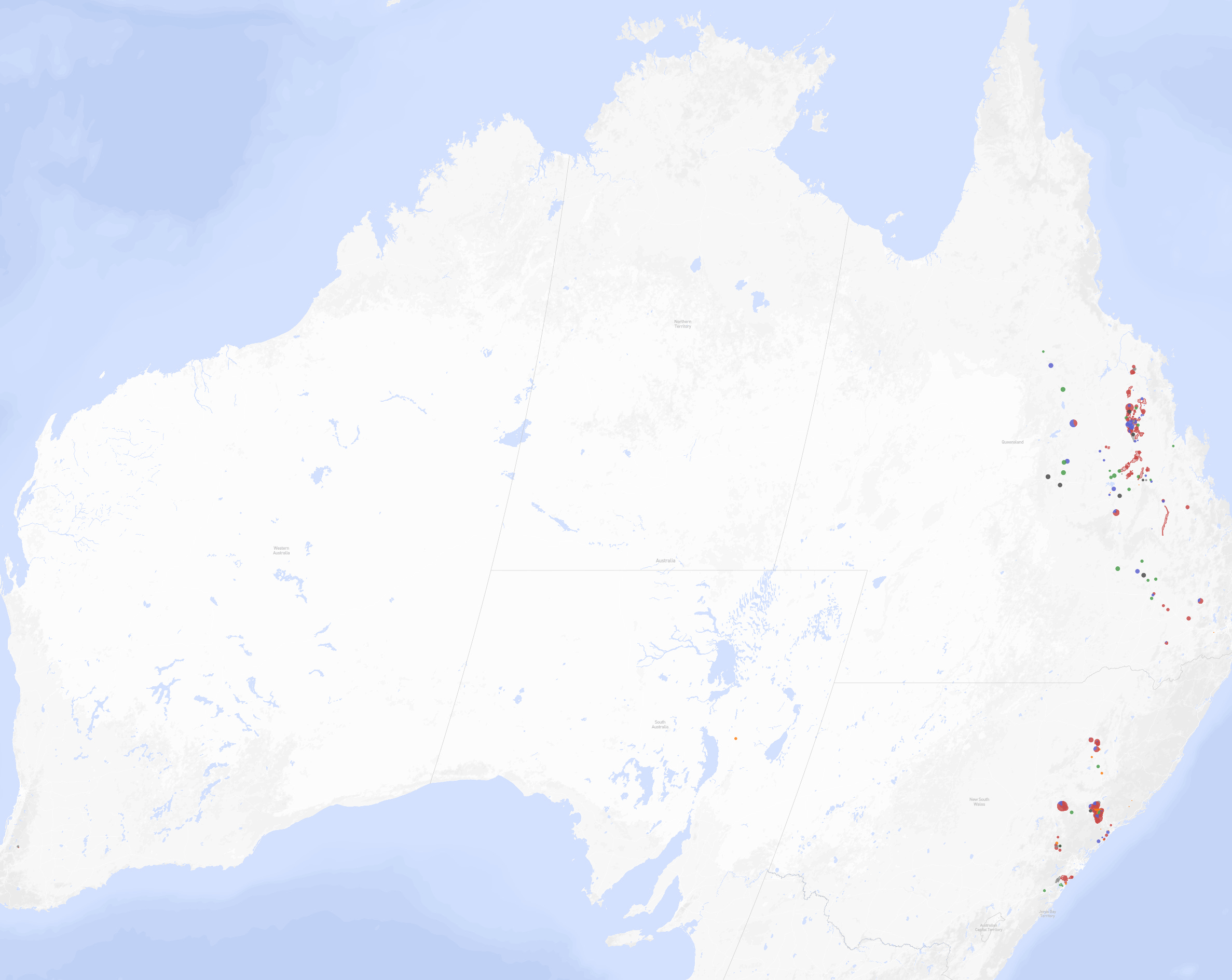
Australian Coalfields: Moderate-to-Strong
Australia’s most important coalfields during the 19th century were located primarily in New South Wales, especially around:
the Hunter Valley
Newcastle
the Sydney Basin
These regions contained substantial coal reserves located unusually close to the Pacific coast. Compared to many inland coalfields elsewhere in the world, Australia possessed several important transportation advantages. However, the continent’s small population and extreme remoteness from the world’s major industrial centers limited the pre-industrial importance of its coal.
Geological Origins
Australia’s major coal deposits formed within large sedimentary basins preserved along the eastern edge of the continent. The Sydney Basin in particular retained extensive Permian coal formations with relatively accessible seams near the coast.
Unlike the heavily folded coalfields of Europe or Japan, many Australian deposits remained comparatively stable and less tectonically disrupted. This helped preserve thick and accessible coal seams across broad areas.
Shallowness of Seams: Strong
Many Australian coal seams were relatively accessible before modern mining technology. In parts of New South Wales, coal seams were exposed near cliffs, valleys, and coastal areas. Early mining often benefited from drift mining and relatively simple extraction methods.
Thickness of Seams: Strong
The coalfields of eastern Australia contained substantial reserves with many thick seams capable of supporting very large-scale production. Although Australia’s reserves were smaller than those of Appalachia or northern China, they were still exceptionally large relative to the country’s population.
Dryness or Drainability of Geology: Strong
Drainage conditions were generally favorable. Compared to wetter European coalfields, many Australian mining regions experienced lower groundwater pressures and fewer flooding problems. This made several Australian coalfields relatively easy to mine before modern pumping systems.
Ease of Transportation: Strong
Transportation geography was one of Australia’s major advantages. Important coalfields were located close to:
the Pacific coast
natural harbors
coastal shipping routes
ports such as Newcastle and Sydney
Coal could therefore be transported cheaply by sea along Australia’s eastern coastline.
However, Australia remained geographically remote from the major industrial economies of Europe, East Asia, and North America. This limited the global significance of Australian coal before steam shipping and industrial globalization expanded during the late 19th century. And before European settlement, the situation was far worse.
Nearby Population and Industry: Weak
Before industrialization, Australia possessed a very small population and only limited industrial development.
The continent lacked:
large commercial cities
dense manufacturing regions
major pre-industrial industrial markets
As a result, much of Australia’s coal potential remained underutilized until population growth, export markets, railroads, and industrialization expanded during the late 19th century. And before European settlement, the situation was far worse.
The Australian coalfields demonstrate again that excellent geology and transportation were not sufficient by themselves to create an early industrial core. Australia possessed highly favorable coastal coal geography, but its small population and isolation from the world’s major commercial economies limited its pre-industrial importance.
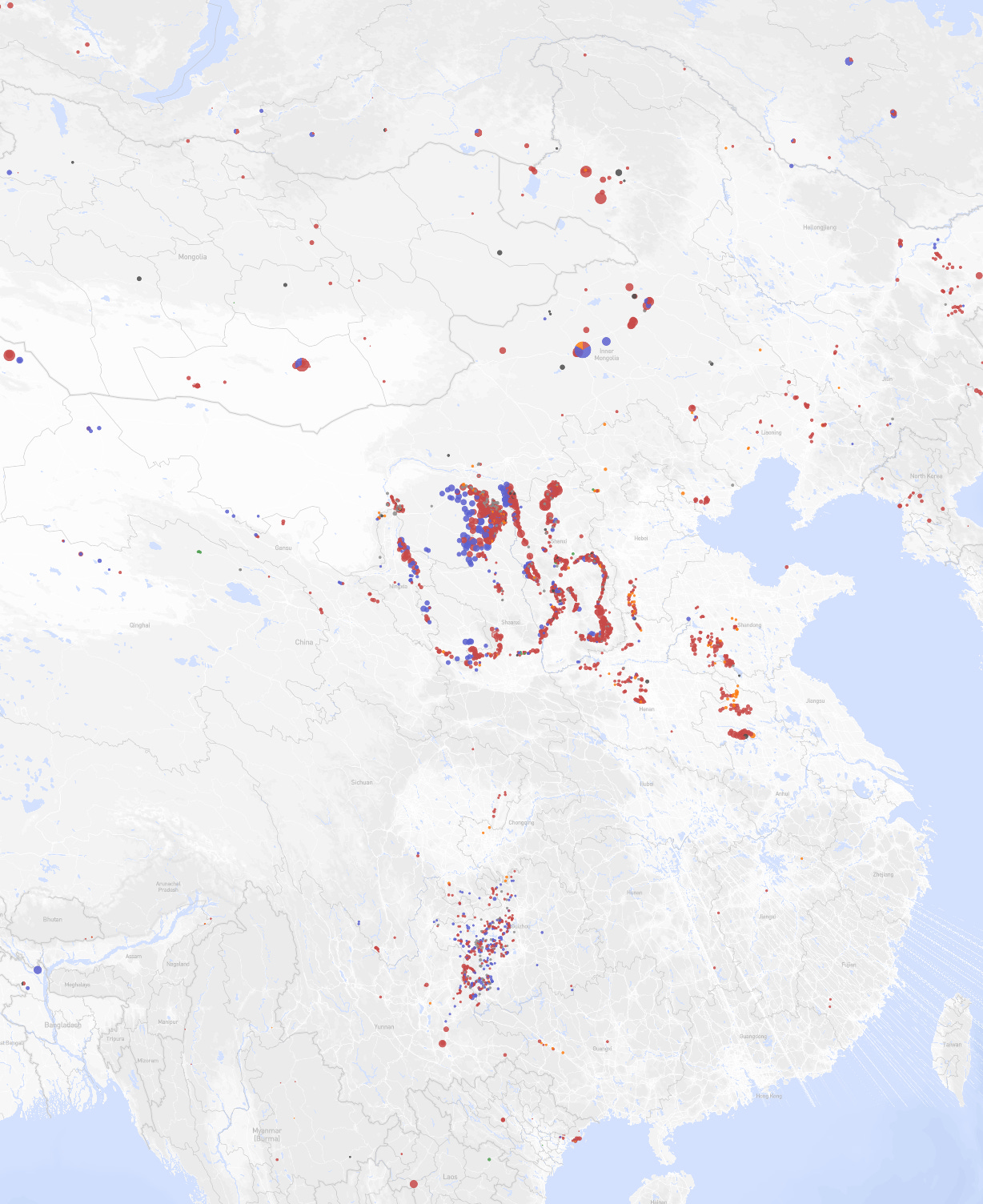
Northern China Coalfields: Moderate-to-Strong
China possessed coalfields across many regions, but the largest and most economically significant deposits before industrialization were concentrated primarily in the north and northwest, especially in Shanxi, Shaanxi, Inner Mongolia, and parts of Hebei. These regions contained some of the largest coal reserves in the world and in some cases may have exceeded the total reserves of Europe. Before industrialization, however, the coalfields possessed a mixture of major geological advantages and serious geographical limitations.
Geological Origins
Northern China’s coalfields formed within very large sedimentary basins that preserved extensive Carboniferous and Permian coal deposits across broad inland regions. Unlike many European coalfields, which were fragmented and heavily folded, parts of northern China retained enormous relatively continuous coal-bearing formations.
In several regions, erosion exposed coal seams near the surface along plateau edges and river valleys. However, the coalfields were also located deep within the interior of northern China, far from the country’s most commercially dynamic maritime regions.
Shallowness of Seams: Strong
Many coal seams in northern China were relatively accessible before modern mining technology. In parts of Shanxi especially, coal seams were exposed along hillsides and valley walls, allowing drift mining using relatively simple techniques.
These exposed seams made northern China’s coal more accessible than many deeply buried inland coal basins elsewhere in the world.
Thickness of Seams: Exceptional
Northern China possessed some of the world’s largest coal deposits with many thick seams spread across enormous areas. The scale of these reserves was extraordinary and later supported large-scale industrialization during the 20th century.
Dryness or Drainability of Geology: Strong
Much of northern China’s coal region possessed relatively dry continental conditions compared to wetter lowland coalfields in Europe. In several areas, plateau terrain and lower groundwater levels reduced flooding problems and improved drainage conditions for early mining.
Ease of Transportation: Moderate-to-Weak
Northern China was connected to major river systems including:
the Yellow River
the Fen River
the Wei River
and indirectly to the Grand Canal system through overland transportation.
However, these transportation systems were less favorable for coal distribution than the river and maritime geography of northwestern Europe. The Yellow River was difficult to navigate consistently because of flooding, heavy sedimentation, and shifting channels. Many northern coalfields were also located far inland and lacked direct integration with major maritime trade routes.
Before railroads, transporting large quantities of coal across northern China remained expensive and logistically difficult compared to coastal and river-connected coalfields in Europe.
Nearby Population and Industry: Moderate
China possessed one of the world’s largest commercial economies before industrialization, with major cities, manufacturing centers, and dense populations. However, the country’s most commercially dynamic regions were concentrated farther south along:
the Yangtze Delta
the lower Yangtze corridor
the southeastern coast
This created a partial separation between China’s largest coal reserves and its strongest commercial centers. Northern China possessed large populations and important political capitals such as Beijing, but the overlap between coalfields and the country’s most commercially advanced regions was weaker than in northwestern Europe.
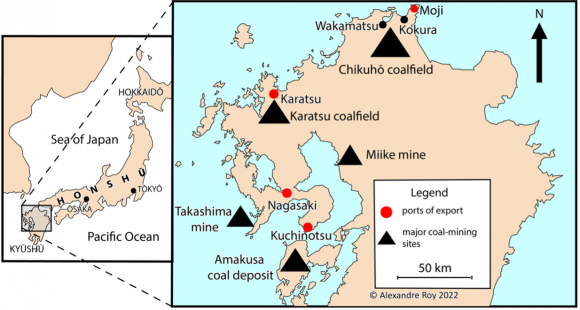
Japanese Coalfields: Moderate
Japan’s major coalfields were located primarily in northern Kyushu and southern Hokkaido during the late Tokugawa and early Meiji periods. The most important deposits were concentrated around:
the Chikuho coalfield in Kyushu
the Miike coalfield near Nagasaki (southern Japan; see above)
the Ishikari coalfield in southern Hokkaido (northern Japan)
Compared to China or Appalachia, Japan possessed much smaller coal reserves. However, Japan’s maritime geography and compact coastal settlement patterns gave its coalfields several important advantages before industrialization.
Geological Origins
Japan’s coalfields formed within smaller sedimentary basins shaped by tectonic activity along the edge of the Pacific Ring of Fire. Unlike the vast continental coal basins of China or North America, Japanese coal deposits were generally smaller, more fragmented, and often disrupted by mountain-building and faulting.
Many deposits were located relatively close to the coast, especially in northern Kyushu. This proximity to maritime transportation later became one of Japan’s greatest geographical advantages.
Shallowness of Seams: Moderate
Some Japanese coal seams were accessible near the surface and could be mined using relatively early techniques. However, the country’s mountainous terrain and tectonically disturbed geology often made mining more difficult than in flatter coal basins such as Britain or northern China.
Thickness of Seams: Moderate
Japan possessed useful coal deposits, but the reserves were much smaller than those of other regions. The country therefore lacked the enormous long-term energy reserves possessed by some continental industrial powers.
Dryness or Drainability of Geology: Moderate
Japan’s mountainous terrain provided some natural drainage advantages in certain mining regions.
However, heavy rainfall, complex geology, and tectonic fragmentation often created difficult mining conditions compared to drier continental coalfields.
Ease of Transportation: Strong
Transportation geography was one of Japan’s greatest advantages. Many coalfields, especially in Kyushu, were located close to:
coastal shipping routes
ports
inland seas
densely settled maritime corridors
Japan’s island geography allowed coal to be transported relatively cheaply by sea between industrial regions. This partially compensated for the country’s smaller coal reserves and mountainous terrain.
Nearby Population and Industry: Strong
Japan possessed dense populations, active commercial cities, skilled artisans, and integrated coastal trade networks before industrialization.
Major urban centers such as Osaka, Kyoto, and Edo created substantial demand for fuel, manufacturing, and transportation. Japan’s compact geography also helped connect coalfields to commercial populations more effectively than in many larger continental economies.
The Japanese coalfields demonstrate that extremely large reserves were not always necessary for industrialization. Although Japan possessed far less coal than China or the United States, its maritime geography and dense commercial society allowed its coalfields to support rapid industrial development during the late 19th century.
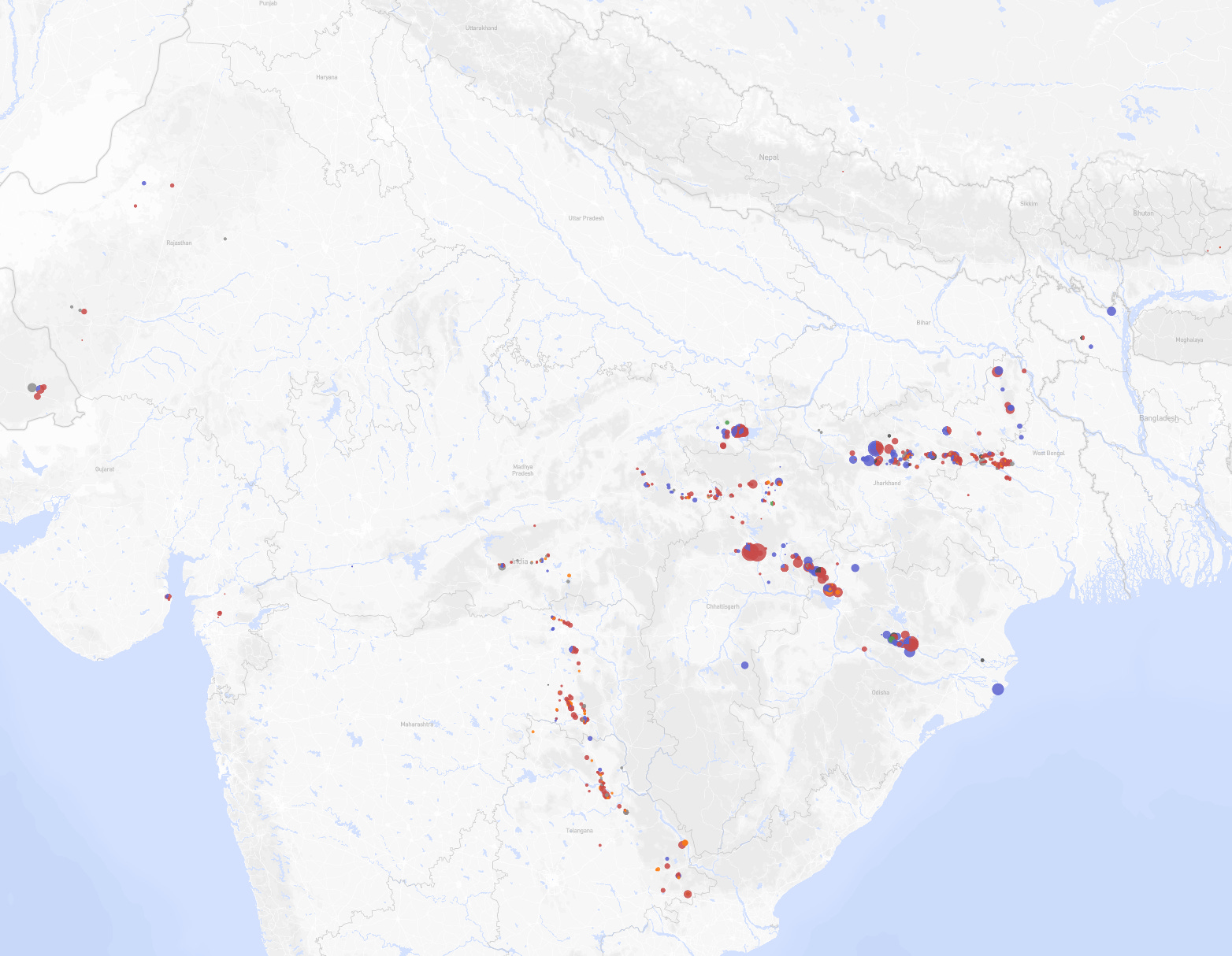
Indian Coalfields: Moderate
India’s most important coalfields during the 19th century were concentrated in eastern India, especially in the Damodar Valley region of present-day Jharkhand and West Bengal. The largest deposits included:
These regions contained substantial coal reserves and later became the foundation of India’s modern steel and industrial economy. Before industrialization, however, the coalfields possessed both important advantages and major geographical limitations.
Geological Origins
India’s major coal deposits formed primarily within Gondwana sedimentary basins that developed across eastern and central India. Unlike the Carboniferous coalfields of Europe and North America, many Indian coal deposits formed later during the Permian Period.
The coal-bearing formations were often preserved within inland river valleys and plateau regions. Some seams were exposed near the surface, but many deposits remained separated from India’s major coastal commercial centers by long overland distances.
Shallowness of Seams: Moderate
Some Indian coal seams were accessible near the surface and could be mined using relatively early methods. However, the coalfields were generally less exposed and less easily accessible than many British or northern Chinese deposits.
Thickness of Seams: Strong
The Damodar Valley contained substantial coal reserves with several thick seams capable of supporting large-scale industrial development. Although India’s coal reserves were smaller than those of China or Appalachia, they were still among the largest in Asia.
Dryness or Drainability of Geology: Moderate
Drainage conditions were mixed. Some plateau regions provided reasonable drainage advantages, but seasonal monsoon rainfall often complicated mining operations. Compared to the drier coalfields of northern China, flooding and water management created greater challenges.
Ease of Transportation: Moderate-to-Weak
India’s major coalfields were connected to river systems such as:
the Damodar River
the Hooghly River indirectly through Bengal
the Ganges Basin more broadly
However, these waterways were less favorable for large-scale coal transportation than the navigable river and maritime systems of northwestern Europe. Much of the coal region was inland, and transportation through eastern India remained expensive before railroads.
The coalfields were also geographically separated from many of India’s major commercial and political centers before modern transportation infrastructure developed.
Nearby Population and Industry: Moderate
India possessed very large populations and major commercial cities before industrialization, including Calcutta, Madras, and Bombay. The Damodar Valley also benefited from relative proximity to Calcutta, one of the largest commercial centers in Asia during the British colonial period.
However, India’s broader economy remained less mechanized and industrially integrated than northwestern Europe during the early industrial era. Large-scale coal consumption expanded mainly during the late 19th and early 20th centuries alongside railroads, steelmaking, and colonial industrial infrastructure.
The Indian coalfields demonstrate again that substantial coal reserves alone were not enough to produce early industrialization. India possessed useful and geographically significant coal deposits, but transportation difficulties, monsoon conditions, and weaker industrial integration limited their pre-industrial usefulness compared to the leading coalfields of northwestern Europe.
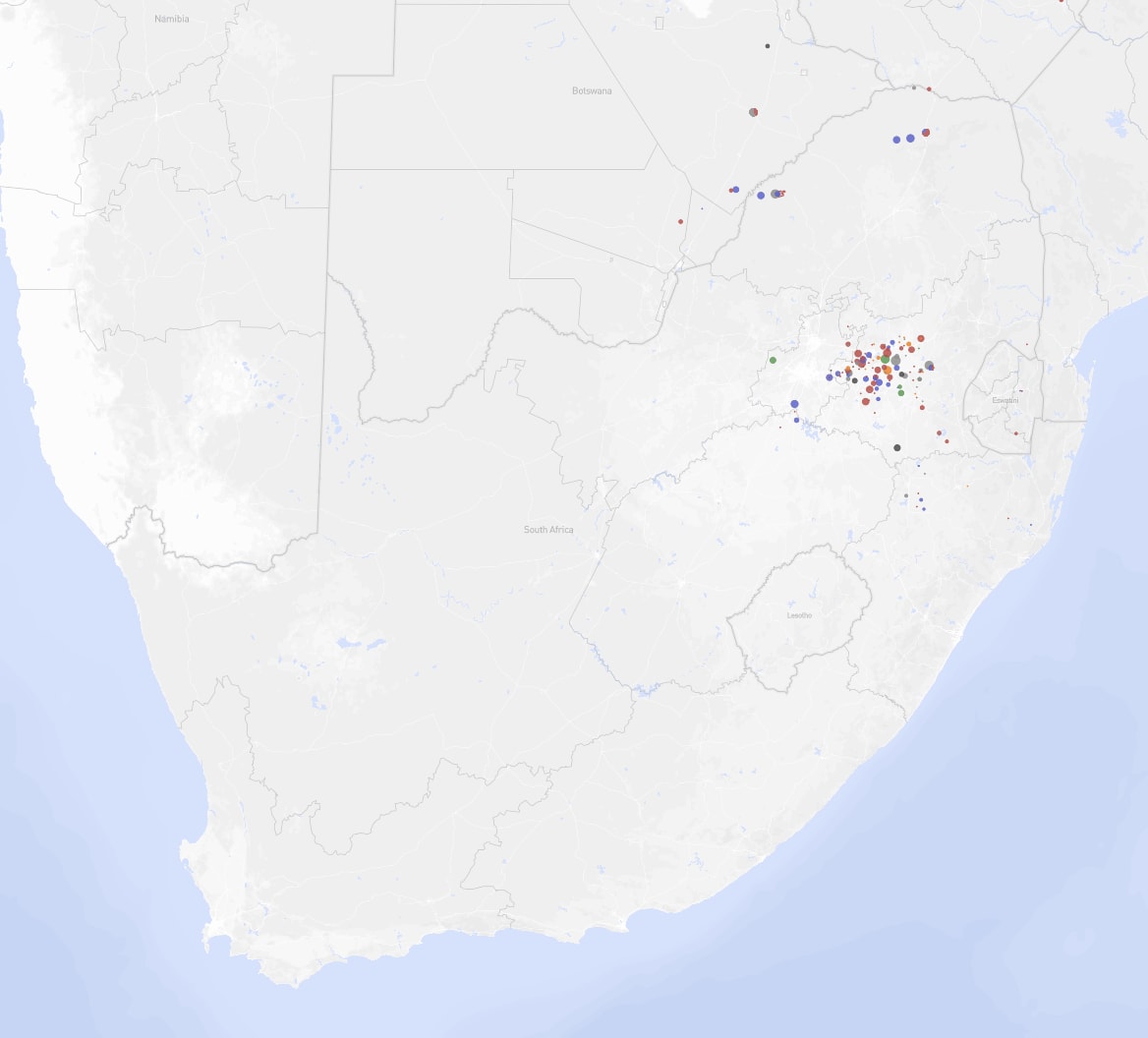
South African Coalfields: Weak-to-Moderate
South Africa’s major coalfields were located primarily in the northeastern interior during the 19th century, especially around:
the Transvaal
Natal
later the Witbank region
These deposits were substantial and later became the foundation of southern Africa’s industrial economy. Before industrialization, however, the coalfields suffered from major geographical disadvantages including inland isolation, sparse population, and weak transportation infrastructure.
Geological Origins
South Africa’s coalfields formed within large Karoo sedimentary basins that preserved extensive Permian coal deposits across parts of the interior plateau. Many deposits were relatively stable geologically and less heavily folded than European coalfields. However, the coal-bearing regions were located deep inland and separated from the coast by long transportation distances and escarpments.
Shallowness of Seams: Moderate
Some South African coal seams were accessible near the surface and could be mined using relatively early methods. However, many deposits were less exposed and less easily accessible than the shallow coastal and river-connected coalfields of northwestern Europe.
Thickness of Seams: Strong
South Africa possessed substantial coal reserves with several thick seams capable of supporting large-scale mining. These deposits later became highly important for railroads, mining, and industry during the late 19th and 20th centuries.
Dryness or Drainability of Geology: Strong
The relatively dry climate and plateau geography of much of inland South Africa provided favorable drainage conditions compared to wetter coalfields in Europe and parts of Asia.
Flooding problems were generally less severe than in many lowland coal basins.
Ease of Transportation: Weak
Transportation geography was one of South Africa’s greatest weaknesses before industrialization. The coalfields were located far inland and lacked direct access to:
major navigable rivers
dense canal systems
integrated maritime trade routes
Southern Africa also lacked large river systems comparable to the Rhine, Yangtze, or Mississippi that could cheaply transport bulk coal across major commercial regions.
Before railroads, moving large quantities of coal from the interior plateau to coastal ports remained difficult and expensive. And before European settlement, the situation was far worse.
Nearby Population and Industry: Weak
Before industrialization, southern Africa possessed relatively low population density and limited large-scale urban or industrial development near the coalfields.
The region lacked:
large manufacturing centers
dense commercial markets
integrated industrial economies
Large-scale coal demand expanded mainly after the development of railroads, mining industries, and export-oriented industrialization during the late 19th century. And before European settlement, the situation was far worse.
The South African coalfields demonstrate again that large reserves and favorable geology were not enough to create early industrialization. Before modern transportation infrastructure, inland geography and sparse commercial development greatly limited the usefulness of southern Africa’s coal resources.
Extremely Inaccessible Coalfields
Some regions possessed enormous coal reserves but remained too geographically isolated before modern industrial transportation systems developed. These coalfields demonstrate again that large reserves alone were not enough. Accessibility, transportation, climate, and proximity to commercial populations often mattered more than the total amount of coal underground.
Siberia
Siberia possessed some of the largest coal reserves in Eurasia, including major deposits in regions such as the Kuznetsk Basin. However, these coalfields were located deep within the Eurasian interior far from major commercial economies and warm-water maritime trade routes.
The region also suffered from:
extreme climate
sparse population
long transportation distances
limited navigable river integration with major world markets
Although Siberia’s rivers were enormous, most flowed northward into the Arctic Ocean rather than toward major industrial or maritime trade regions. Before railroads and modern industrial infrastructure, Siberia’s coal remained far too remote to become a major foundation for industrialization.
Indonesia
Indonesia possessed significant coal reserves, especially in Sumatra and Kalimantan. However, these deposits were scattered across a fragmented tropical archipelago with difficult transportation geography and relatively weak industrial integration before the modern era.
Many coal regions in Indonesia were separated by thinly-settled jungles, mountains, island barriers, and long maritime distances.
Although Indonesia possessed active maritime trade networks, these were oriented more toward spices, agriculture, and commerce than coal-intensive heavy industry. Until recently, Indonesia lacked the dense industrial populations and manufacturing centers that drove large-scale coal consumption in northwestern Europe.
Regions With Few Major Coalfields
Large parts of the world possessed either very limited coal resources or coalfields that were too small, fragmented, remote, or poorly connected to become major foundations for industrialization before the modern era. In these regions, economies remained much more dependent on wood, charcoal, and animal power until oil, hydroelectricity, railroads, and global trade reduced the importance of local coal supplies.
Southeast Asia
Most of Southeast Asia possessed relatively limited major coalfields compared to China, India, Europe, or North America. The region’s tropical geography favored dense forests and biomass energy rather than large accessible coal basins near commercial centers.
Some coal deposits existed in Indonesia and parts of mainland Southeast Asia, but they were generally fragmented, less integrated with major industrial economies, and often located in difficult tropical terrain.
Middle East
The Middle East possessed very limited major coal reserves. Before the rise of oil in the 20th century, this constrained the development of coal-based heavy industry across much of the region.
Several Middle Eastern societies possessed important commercial cities and trade networks, but they lacked the large accessible coalfields that helped power industrialization in northwestern Europe and later North America.
North Africa
North Africa also possessed relatively weak coal geography. Coal deposits existed in some regions, but they were generally limited in scale and poorly positioned for large-scale pre-industrial industrialization.
Latin America
Latin America possessed scattered coal deposits, but few coalfields combined large reserves, navigable transportation systems, and nearby industrial populations under pre-industrial conditions.
The Andes Mountains fragmented transportation networks across much of western South America, while many coal deposits remained geographically isolated from major commercial centers.
Central America and the Caribbean
Central America and the Caribbean possessed very limited major coal reserves.
Most of Sub-Saharan Africa
Outside southern Africa, most of Sub-Saharan Africa lacked large accessible coalfields. Many regions also possessed sparse transportation infrastructure and relatively low urbanization before the colonial era.
As a result, industrialization remained constrained by both limited fossil fuel resources and weak transportation integration before the 20th century.
These regions demonstrate that even with modern industrial technology, the global distribution of coal is highly uneven. In the pre-industrial era, coalfields that could potentially be exploited were even more rare.
Large accessible coalfields were relatively rare, and even fewer were located near commercially active populations and efficient transportation systems. Before oil and electricity, societies without favorable coal geography often faced major long-term energy constraints regardless of their agricultural wealth or commercial sophistication.
Overall Ratings
Here are the overall ratings for pre-industrial coalfields from both articles:
Exceptional: Britain and Sambre–Meuse (Belgium)
Very Strong: Ruhr and Appalachia
Moderate-to-Strong: Northern China and Australia
Moderate
Upper Silesia (Prussia)
Bohemia (Austria-Hungary
Japanese
India
Northern France
Moderate-to-Weak
Donets (Russia)
South Africa
Asturias (Spain)
Weak or None
The rest of the world.
Conclusion
Coal was distributed across much of the world, but geographically useful coal was far rarer. Before railroads and modern mining technology, coalfields were only truly valuable if they combined several advantages at once:
shallowness of seams
thickness of seams
dryness or drainability of geology
ease of transportation
nearby population and industry
Northwestern Europe possessed the world’s strongest overall concentration of geographically favorable coalfields before railroads. Britain, Belgium, and western Germany combined commercially active societies with coalfields located near navigable rivers, ports, coastal shipping routes, and dense industrial populations. This overlap gave northwestern Europe unusually cheap and concentrated access to energy before modern infrastructure reduced the importance of geography. These are exactly the regions that industrialized first, and the historical record is very clear on the importance of coal to industrialization.
Outside Europe, Appalachia came closest to matching Europe’s coal geography. The region possessed enormous reserves, strong river systems, and relatively accessible seams. However, much of Appalachia remained a frontier region before the 19th century, and large-scale exploitation depended heavily on canals, railroads, and expanding eastern American industrial cities.
Other parts of the world often possessed only some of these advantages. The broader historical pattern is therefore clear. The Industrial Revolution did not occur simply where coal existed. It occurred where coalfields scored most favorably across the same geographical criteria examined throughout this series. Before modern transportation and mining technology, northwestern Europe possessed the world’s most advantageous concentration of accessible and commercially integrated coalfields.
If you’ve been enjoying these essays but only follow me here, you’re not getting them by email. Followers see Notes; subscribers receive every new piece on the history and future of progress.
Subscribe free here 👉:
See also my other articles on:
Impact of Geography on human societies (the series)
If you’re following me but don’t yet receive these essays by email, you’re missing most of them. Substack doesn’t email articles to followers—only to subscribers. You can get every new essay free in your inbox by subscribing 👉:
If you enjoyed this article, you should read my From Poverty to Progress book series.
In the US there was initially little demand for coal thanks to abundant firewood and water power. Coal didn't necessarily win immediately over other power sources. For example the Lowell textile mills first used water to move the machinery and later to generate electricity. By 1900 the same factory would use direct water power, electricity and coal as needed.
An interesting case is Taiwan where foreign trade was spurred by steam ships (including Perry's famous fleet) stopping for taiwanese coal at the Keelung port at a time where there was little coal available in the ports of East Asia. Coal was key in the industrialisation of Taiwan