

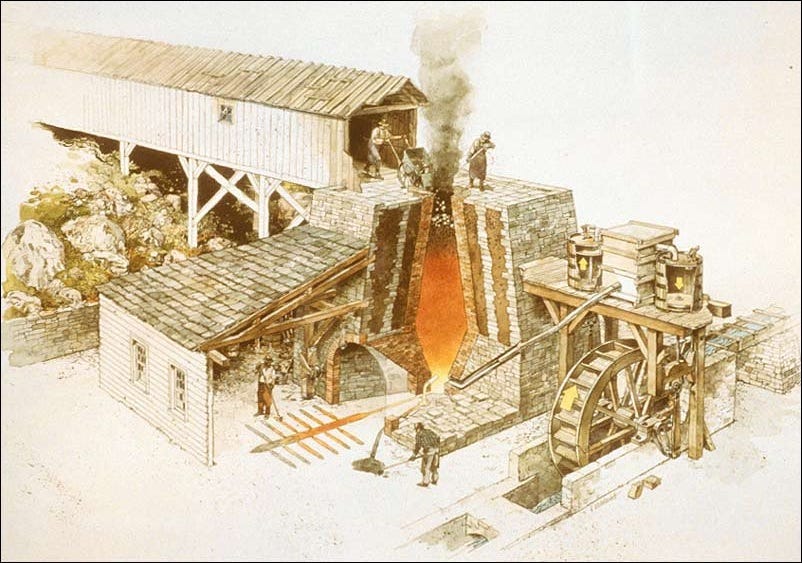
Pre-industrial Commercial societies specialized in profitable industries and deliberately avoided coal and iron. They made a rational choice, but those low-margin industries later powered the Industrial Revolution.
If you’re following me but don’t yet receive these essays by email, you’re missing most of them. Substack doesn’t email articles to followers, only to subscribers. You can get every new essay free in your inbox by subscribing 👉:
Explaining why Britain was the first nation to industrialize is one of the most controversial topics in economic history. In previous articles in this series, I explained that the Industrial Revolution happened in Britain because:
Long before the Industrial Revolution, England evolved into a Commercial society, along with Northern Italy, Flanders, and the Netherlands. This made those four societies very different from the Agrarian societies that dominated the rest of Eurasia. Those Commercial societies invented four of the Five Keys to Progress and material progress for the masses.
Among those Commercial societies, England was the only one to specialize in the exact industries needed to invent and scale up the railroad and other fossil-fuel-powered technologies. It was the railroad that triggered the massive economic transition that separated Britain from other Commercial societies.
But this observation leads to a natural follow-up question: Why didn’t other Commercial societies, such as Northern Italy, Flanders, and the Netherlands specialize in those same industries?
In this article, I argue that:
The other Commercial societies concentrated on the most profitable industries. Trade, finance, luxury manufacturing, and fine textiles offered much higher returns than coal mining, iron production, and heavy metalworking.
The industries that made industrialization possible were among the least profitable. They required enormous amounts of energy and raw materials, faced severe resource constraints, and generally offered low returns on investment.
Britain developed these industries despite their disadvantages. Its specialization in coal, iron, and metalworking eventually provided the industrial foundation for steam power, railroads, and the Industrial Revolution.
The paradox is that Europe’s other Commercial societies made economically rational choices that kept them from developing the industries that would eventually transform the world.


If you enjoy this article, you should read my From Poverty to Progress book series.

The Great Profitability Flip
The Industrial Revolution involved a remarkable reversal in which industries that had been among the least profitable became some of the most important sources of economic growth. The industries that were so critical to the industrialization were very unprofitable in the pre-industrial era. After industrialization, many (but not all) of these industries became very profitable. They typically surpassed the profitability of pre-industrial sectors.
To understand why it happened, we need to compare which industries were profitable before and after the Industrial Revolution.
Pre-industrial profit hierarchy
Between 1500 and 1750, Europe’s Commercial societies concentrated on industries that offered the highest returns on investment. This made perfect economic sense.
Three conditions shaped their choices:
Capital was scarce.
Business risks were high.
Energy, supplied mainly by food and burning wood, was expensive and geographically dispersed.
Under these conditions, the most profitable industries produced high-value goods or services while consuming relatively little energy and raw materials. They tended to be:
lightweight,
easy to trade,
dependent on specialized skills, and
protected by information advantages, reputation, or monopoly privileges.
This created a fairly stable hierarchy of profitability. At the top were long-distance trade and re-exports, where merchants could earn enormous profits through information advantages and monopoly privileges. Finance, insurance, and other commercial services were also highly profitable because they coordinated trade without requiring much physical production.
Luxury manufacturing, including silk, fine woolens, glassware, and precision crafts, commanded high prices because of specialized skills, reputation, and wealthy customers. Sugar production and refining generated exceptional profits through large-scale production and coercive labor systems. Ordinary woolen textiles provided more modest but steady returns.
At the bottom were coal mining, iron smelting, and bulk metal production. These industries required large investments in equipment, enormous amounts of fuel, and expensive transportation. Their heavy, largely undifferentiated products sold at commodity prices. Expanding production often drove fuel costs higher, further reducing already thin profit margins.
Commercial societies therefore concentrated their capital, skilled labor, and institutional support on more profitable industries. Their success came from adapting to an economy constrained by wood, wind, water, and muscle power.
Profit hierarchy of industrialization
The Industrial Revolution largely reversed this hierarchy. Before 1750, coal, iron, and heavy metalworking were unattractive investments because energy was expensive and production could not expand very far without encountering resource constraints.
But once fossil fuels began removing those constraints, the same industries gained enormous advantages. Cheap, abundant energy allowed production to expand without the rising fuel costs that had previously limited growth. Instead of relying primarily on scarcity, specialized skills, and high profit margins, businesses could generate wealth through much larger production volumes, lower unit costs, and improved engineering.
The new economic advantages were straightforward:
Throughput mattered more than margins.
Volume beat scarcity.
Engineering beat arbitrage.
Coal, iron, machinery, and transportation infrastructure became major sources of economic growth because they could now expand on a scale that had been impossible under earlier energy constraints.
But there was a problem for Europe’s other Commercial societies. By the time this transformation began, Northern Italy, Flanders, and the Dutch Republic had spent centuries specializing in the industries that were most profitable under pre-industrial conditions. Their capital, skills, institutions, political interests, and urban economies were built around those successful specializations.
Britain, by contrast, had already developed substantial experience in coal mining, iron production, and metalworking. That experience would become enormously valuable once the profitability hierarchy reversed.
The Industrial Revolution was therefore not simply the result of a sudden technological breakthrough. The Industrial Revolution depended on Britain’s long history of developing industries that had offered relatively poor economic returns.
The other Commercial societies had made rational decisions based on the economic conditions they faced. But those decisions left them poorly positioned when the industries they had avoided became the foundation of industrialization.
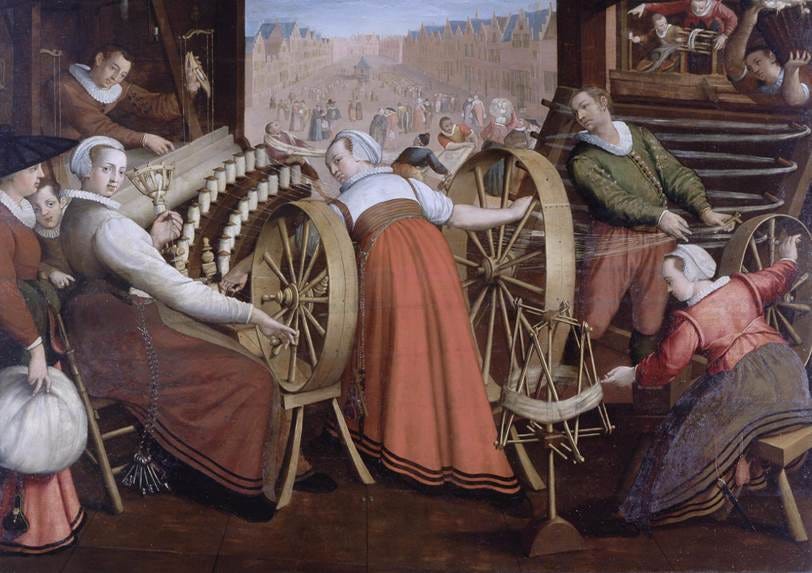
The Most Profitable Industries in Europe, 1500–1750
Which industries actually made the most money before the Industrial Revolution? The answer helps explain why Europe’s Commercial societies developed some industries while largely avoiding others.
The following ranking compares ten major industries across Europe between 1500 and 1750. It ranks them roughly by returns on capital and labor, not by total production or employment. Where historical estimates are available, I include them. Otherwise, the comparisons rely on historical evidence about prices, profit margins, and investment patterns.
1. Long-Distance Trade and Re-Exports
Long-distance trade offered some of the highest profits in pre-industrial Europe. Voyages to Asia, the Americas, and later the Caribbean could generate returns of 20–50 percent per voyage, sometimes much higher when merchants enjoyed monopoly privileges.
The Dutch East India Company (VOC), for example, generated returns in the high teens to low twenties over long periods, despite losing ships and fighting wars. Individual voyages could be spectacularly profitable.
The leading societies specializing in long-distance trade were:
Northern Italian city-states (1000–1500)
Dutch Republic (1600–1700)
England (increasingly after 1650)
These profits came primarily from access to distant markets, information advantages, scarcity, and monopoly privileges. Merchants could earn enormous returns without consuming large quantities of energy or raw materials.
2. Finance, Insurance, and Commercial Services
Finance, banking, insurance, credit, and currency exchange were closely connected to international trade. These activities frequently generated double-digit annual returns while requiring very little energy or raw materials. Although precise profit figures are difficult to establish, the historical evidence is substantial:
Interest rates fell steadily in Commercial societies as financial markets expanded and lending became more sophisticated.
Merchant-bankers in Amsterdam, Genoa, and later London accumulated enormous fortunes without owning factories, mines, or other major productive assets.
The leading societies specializing in financial services were:
Northern Italy (early)
Netherlands (at its peak)
England (later)
Finance was an ideal industry for Commercial societies. It generated profits primarily through organization, information, and trust rather than physical production.
3. Luxury Manufactures
Luxury manufacturing offered high profit margins because wealthy customers paid premium prices for skilled craftsmanship, distinctive products, and prestigious reputations. These industries included silk, fine woolens, lace, glassware, and decorative metalwork.
Precise profit estimates are scarce, but historical prices show that luxury products could sell for many times the cost of their raw materials. Venetian glass, Florentine silk, and Flemish fine cloth commanded prices far above those of ordinary products.
The leading societies specializing in luxury manufacturing were:
Northern Italy
France
Low Countries
These industries required highly skilled labor but relatively little energy. That made them especially attractive in a world where energy was expensive and constrained by natural resources.

4. Sugar (Plantation + Refining)
Sugar was one of the most profitable industries in the early modern economy. It combined large-scale agricultural production in the Americas with industrial refining and distribution in Europe. Caribbean sugar plantations often generated annual returns of 10–15 percent, sometimes higher. Refining sugar in Europe created additional profits.
The leading societies specializing in sugar were:
Portugal (early)
Netherlands
England
France
Much of this profitability depended on enslaved labor, coercion, abundant plantation land, and the transfer of enormous human costs onto others. But from the perspective of European investors, sugar offered exceptionally attractive returns.
5. Woolen Textiles
Woolen textiles were among the most important industries in Europe’s Commercial societies. Their profit margins were generally lower than those of long-distance trade or luxury manufacturing, but they offered relatively steady returns over many generations.
Their importance was enormous:
Woolen textiles accounted for an estimated 40–60 percent of English exports during the seventeenth century.
Returns on capital were competitive with other domestic investments, although generally below those available through highly profitable trading monopolies.
The leading societies specializing in woolen textiles were:
England
Flanders
Northern Italy
Woolen textiles combined substantial employment, established markets, and dependable profits. They were arguably the most attractive large-scale employment industry available to Commercial societies before industrialization.


6. Shipping and Maritime Services
Shipping was essential to international trade, but transporting goods was generally less profitable than trading them. Shipowners, freight operators, and naval contractors earned moderate but unpredictable returns. Profits varied greatly with wars, shipping losses, and changing commercial conditions.
Dutch and English shipping businesses often earned returns of approximately 5–10 percent, although wartime shortages could occasionally produce much higher profits.
The leading societies specializing in shipping were:
Netherlands
England
Shipping helped Commercial societies dominate international trade. But much of the greatest wealth went to merchants who controlled valuable goods and trading opportunities, not necessarily to the businesses transporting them.
7. Specialized Small Manufactures
Specialized manufacturing included arms, clocks, scientific instruments, paper, and precision tools. These products could command attractive prices because they required unusual skills and specialized knowledge. However, their markets were relatively small, limiting how much production could expand.
The leading societies specializing in these industries were:
German states
France
Switzerland
These industries could be highly profitable within their particular markets, but they could not generate the enormous production volumes that later became possible through industrialization.
8. Wine and Alcohol Exports
Wine, brandy, and beer could be profitable export products, especially when producers benefited from favorable geography or strong regional reputations. But alcohol was relatively heavy to transport, and spoilage created additional costs. These disadvantages limited profits, particularly when shipping products over long distances.
The leading societies specializing in alcohol exports were:
France
Iberia
Parts of Germany
These industries produced respectable returns, but they lacked the exceptional profitability of international trade, financial services, and luxury manufacturing.
9. Iron
Iron was among the least profitable major industries in pre-industrial Europe. This is where the ranking becomes especially important for explaining the Industrial Revolution.
Before 1750, iron producers faced several serious disadvantages:
Profit margins were generally thin.
Charcoal, made from wood, often accounted for most production costs.
Expanding production required increasing quantities of wood, often transported from progressively greater distances.
Most production consisted of relatively low-value, semi-finished materials such as pig iron and bar iron.
These problems made it difficult to expand production profitably.
Sweden became Europe’s leading iron exporter, not because iron offered unusually high profits, but because it possessed abundant iron ore and extensive forests that could supply charcoal. Even with these advantages, returns were relatively modest compared with those available in Commercial societies.
The leading societies specializing in iron were all relatively poor:
Sweden
Russia
Some German states
None of these were leading Commercial societies. They were primarily Agrarian societies with natural resources that made iron production economically viable despite its disadvantages.
10. Coal
Coal mining occupied the bottom of the profitability ranking. It was generally a low-margin business that depended on producing and transporting large quantities of a relatively cheap commodity.
Three disadvantages were especially important:
Coal sold for very low prices near the mines.
Transport often accounted for a large share of the final price paid by customers.
Before canals and railroads greatly improved transportation, mining profits increased slowly, if at all.
Coal became increasingly important for domestic consumption in England. But as an export industry, it offered relatively poor returns compared with the industries favored by other Commercial societies.
The one Commercial society specializing heavily in coal was:
England (almost uniquely)
England’s coal specialization would eventually become one of its greatest economic advantages. But before industrialization, coal mining offered little reason for other wealthy Commercial societies to follow its example.
The Pattern That Matters
The profitability ranking reveals a striking pattern. Every other major Commercial society specialized in industries near the top of the list. Only England specialized heavily in coal, and none specialized heavily in iron before 1750, although England would later do so.
The societies specializing in iron and other low-profit raw materials were largely Agrarian societies. Like many developing nations today, they supplied commodities that wealthier economies could turn into more profitable products.
This division of labor was perfectly rational under pre-industrial conditions. Commercial societies invested in industries that produced the highest returns, while societies with abundant natural resources supplied materials that were expensive and difficult to produce elsewhere.
But the Industrial Revolution overturned that economic logic.
Coal, iron, and heavy metalworking were not unknown industries waiting to be discovered. Europeans had used them for centuries. The problem was that expanding them offered relatively poor returns in an economy still constrained by expensive energy, scarce charcoal, and costly transportation.
Britain’s unusual specialization in these low-profit industries would eventually become a decisive advantage. But nobody in 1750 could have known that.
The Dutch Exception: Why Coal Was Unnecessary
If any Commercial society should have developed coal mining, iron production, and heavy industry before the Industrial Revolution, it was the Dutch Republic. The Dutch Republic was:
The most urbanized.
The most commercialized.
The most technically sophisticated.
Yet the Netherlands showed little sustained interest in developing coal mining, iron smelting, or other heavy industries. This was not because the Dutch lacked the skills or ingenuity to develop them. It was because they had a cheaper and more practical alternative to coal.



The Dutch alternative energy source was peat. Peat is essentially “baby coal.” It forms when dead vegetation accumulates in wetlands over centuries. It can be cut, dried, and burned as fuel. Given millions of years of heat and pressure, peat can eventually turn into coal.
Peat contains roughly half as much energy as coal, but it was a useful alternative to wood, especially in a country with few forests. Between 1550 and 1650, peat supplied an estimated 25–35 percent of Dutch energy, primarily for home heating and industrial combustion.
For most Dutch industries, peat was good enough.
Brewing, brickmaking, salt refining, sugar refining, and some metallurgical processes all required substantial amounts of heat. But they did not require the high temperatures or enormous energy inputs of later heavy industry. Peat could meet their needs without the expense of importing large quantities of coal.

More importantly, peat had a major cost advantage. In Holland, the industrial heart of the Dutch Republic, peat was:
Extracted locally.
Transported cheaply through an extensive network of canals.
Produced with relatively little capital investment.
Coal, by contrast, had to be imported from northeast England or the Ruhr region of Germany. Its price included the costs of mining, river or coastal shipping, unloading at ports, and final distribution to Dutch cities.
For much of the seventeenth century, peat was therefore cheaper per usable unit of heat than imported coal.
Coal also had technical disadvantages. Before the development of coke smelting and improved high-temperature furnaces, burning raw coal created several problems:
It burned unevenly and was difficult to control in small furnaces.
It produced dirty, sulfurous smoke.
Its combustion could damage or contaminate finished products.
Dutch industries such as brewing, sugar refining, textile finishing, and brickmaking often needed clean, predictable heat. Peat was better suited to many of these applications.
Coal became much more useful after coke and improved high-temperature furnaces were developed. But these breakthroughs came after the peak of the Dutch Golden Age.
The Dutch economy specialized in shipping, logistics, trade, finance, processing, finishing, and skilled manufacturing. These activities depended on commercial expertise, reliable transportation, skilled workers, and moderate amounts of controllable energy.
Wind power, peat, and human labor were sufficient to support these industries. Developing coal mining and iron production would have required diverting capital and skilled labor away from activities that already generated much higher returns.
The Dutch could simply import the iron and other metals they needed from societies that specialized in producing them.
The Dutch did imported some coal. Dutch merchants purchased coal from northeast England and brought smaller quantities down the Rhine from the Ruhr. But these imports served specific industries rather than transforming the Dutch economy.
Peat did not begin losing its cost advantage until the late seventeenth and early eighteenth centuries, when accessible peat deposits were becoming depleted and extraction costs were rising. By then, the Dutch economy was already deeply specialized in profitable Commercial activities that did not require a coal-centered energy system.
The Dutch therefore had little economic reason to develop their own coal mining or iron industry. They could import coal when they needed it, rely on cheaper peat for most other purposes, and purchase iron from less-developed societies willing to produce it at relatively low profits.
The Dutch did not reject coal and iron because they were backward. They avoided specializing in an unprofitable industry because there had more profitable alternatives.
England’s “Backward” Specialization in Coal, Iron, and Metals
From the perspective of a seventeenth-century Commercial society, England’s growing specialization in coal, iron, and metalworking looked backward. These were dirty, difficult, low-profit industries that wealthy societies generally preferred to avoid.
In many ways, pre-industrial England resembled a modern developing nation that specializes in exporting raw materials. Coal, iron, and basic metals were bulky commodities that required expensive equipment, large amounts of fuel, and costly transportation. Profit margins were low and unpredictable. Much of the value came later, when other businesses transformed these raw materials into more valuable finished products.
By the standards of the time, England was investing in industries that offered poor returns compared with trade, finance, textiles, and sugar. Yet England continued to develop them.
Coal production expanded steadily to supply several growing markets:
Urban heating
Brewing
Salt production
Glassmaking
Later, metallurgy
Iron production also persisted across several English regions, even though Swedish imports were often cheaper. Meanwhile, English metalworkers gradually developed greater expertise in mining, forging, casting, and toolmaking.
These industries were hardly glamorous. Many businesses struggled to earn adequate profits. But their continued expansion gave England something that other Commercial societies lacked: extensive practical experience with energy-intensive production.

Geography played a decisive role. England possessed coalfields located near navigable rivers, coastlines, and emerging industrial towns. This kept transportation costs relatively low and made coal economical for a growing number of everyday uses.
As coal became more widely available, businesses found new ways to use it. Regular use encouraged experimentation, and experimentation led to gradual improvements in mining, fuel handling, furnaces, and other technologies.
But England also had the advantage of being a Commercial society
England had an important advantage that distinguished it from the Agrarian societies specializing in iron and other raw materials. England was already a Commercial society. Its textile industry, shipping, international trade, and other profitable industries continued to expand.
England did not abandon these activities to develop coal and metals. Instead, England added a second layer to its economy: energy extraction and heavy industry.
This combination was unusual. England possessed both:
the commercial capabilities developed by Europe’s leading Commercial societies, and
the practical experience in energy-intensive industries more commonly associated with less-developed Agrarian societies.
Developing these industries absorbed capital and labor that might have earned higher returns elsewhere. But it also built up skills, production networks, and practical knowledge that could not be acquired overnight.
None of this was sufficient to produce an Industrial Revolution.
Many major obstacles still remained:
Iron production was still constrained by the availability of wood for charcoal.
Raw coal was dirty and unsuitable for many metallurgical processes.
Heavy industry remained relatively unprofitable.
Machine tools were very underdeveloped
The profession of mechanical engineering has not yet evolved.
But England’s combination of being a Commercial society that also specialized in a few key industries positioned the country to take advantage of technological breakthroughs that would eventual occur.
No one had foreknowledge
With hindsight it is obvious that the industries of coal, iron, metalworking, and machine tools was essential to long-term economic growth. But we need to put ourselves in the shoes of the people at the time.
Nobody between 1500 and 1750 knew the Industrial Revolution was coming. They probably could not even have imagined it. Even Adam Smith, one of the most perceptive economic observers of the eighteenth century, failed to anticipate the enormous economic transformation that was beginning around him.
England did not develop coal mining, iron production, and metalworking because its merchants and investors foresaw the Industrial Revolution. They developed these industries for ordinary economic reasons under the conditions they faced.
The Industrial Revolution was an unintended outcome of those decisions.
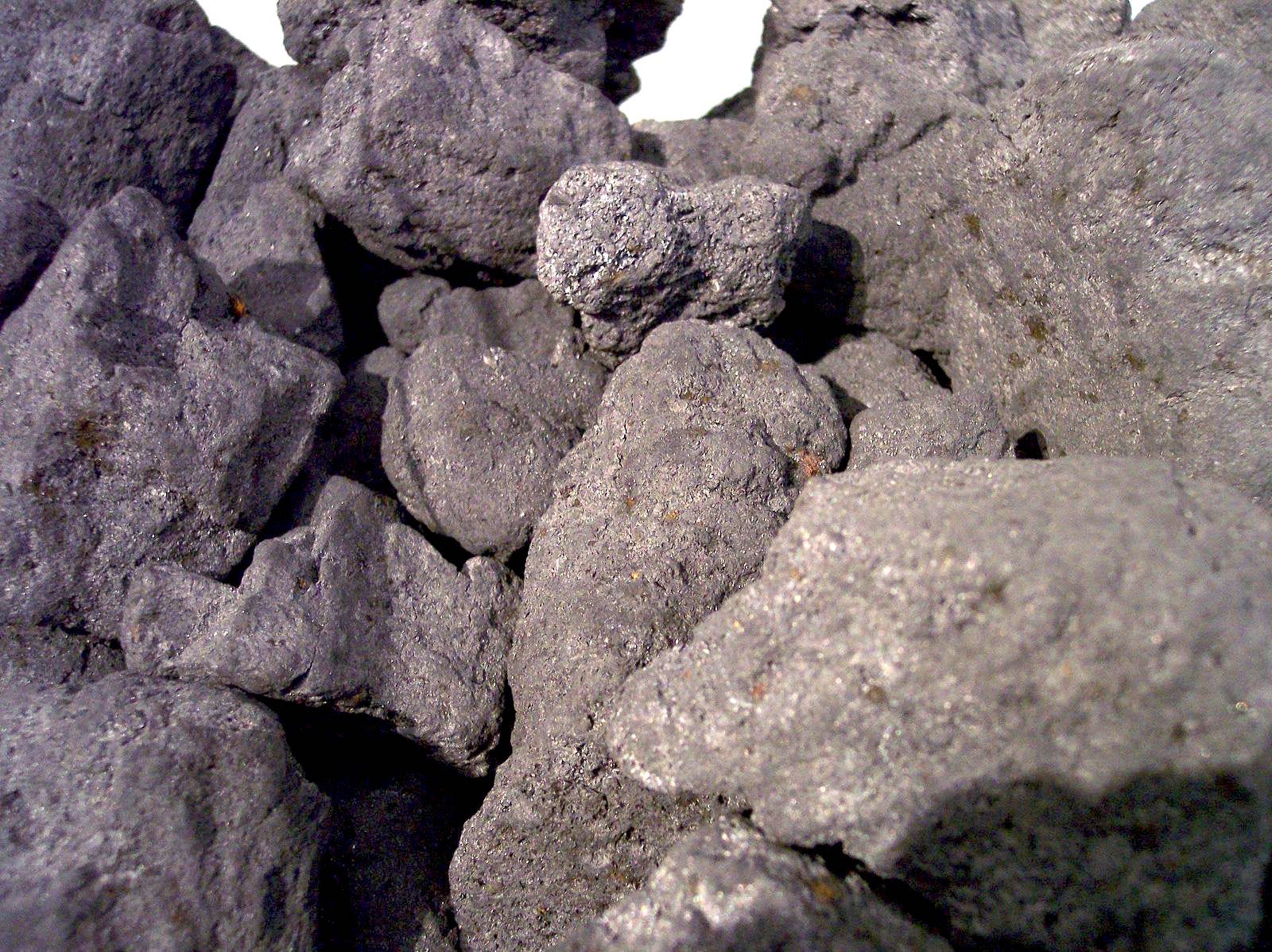
Coke Smelting and the Turning Point
Coke smelting helped turn Britain’s low-profit specialization in coal and iron into a major industrial advantage. Coke smelting removed one of the most important constraints on iron production: the need for enormous quantities of wood to make charcoal.
Before coke smelting, expanding iron production meant cutting down more forests, often farther from the furnaces. Charcoal was bulky, expensive to transport, and dependent on the slow growth of trees. As production increased, fuel costs rose and profits declined.
Coke, made by heating coal without air, changed this relationship. It provided a hotter, more consistent fuel that allowed iron production to expand without depending on forests. Instead of facing steadily rising fuel costs, iron producers could increase output, improve their methods, and lower unit costs.
The transition was gradual. Early coke-smelted iron was often brittle and inferior to charcoal iron. But improvements in furnace design, airflow, and fuel preparation eventually made large-scale iron production practical and profitable.
Once coke smelting became cost-effective at scale, entirely new downstream industries became viable. Machinery, rails, engines, tools, and eventually ships and weapons all depended on iron that was no longer scarce or expensive.
Coal transformed from a low-margin, transport-limited fuel into the central input into an expanding industrial system. Demand for coal exploded not because it was newly profitable in isolation, but because it powered processes that now scaled together:
Metallurgy
Steam engines
Mechanized textiles
Transport infrastructure
Energy-intensive industries moved from the periphery of the economy to its core.
Britain was uniquely positioned to benefit. It already had extensive coal mines, ironworks, skilled metalworkers, transportation networks, and practical industrial knowledge. Other Commercial societies had spent centuries concentrating on more profitable industries and lacked this combination.
Coke smelting did not cause the Industrial Revolution by itself. But it helped remove the energy constraints that had kept coal and iron relatively unprofitable. Britain’s earlier specialization in these industries, which had seemed economically inferior, became an enormous advantage once those constraints began to disappear.
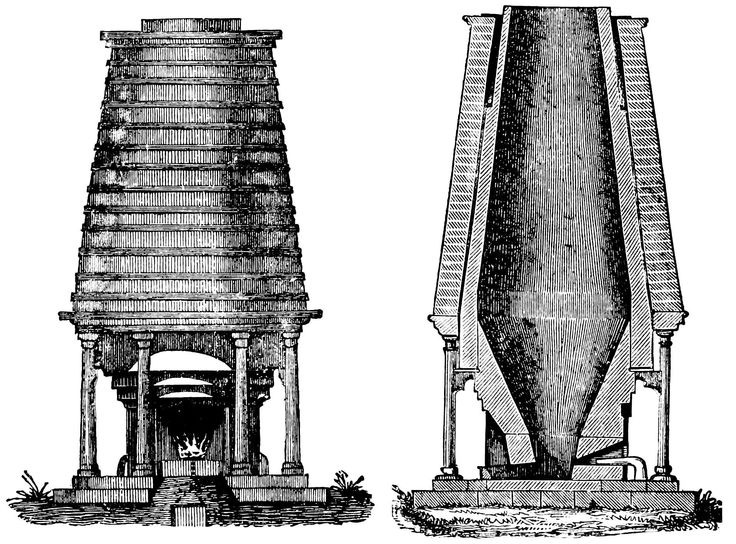
The Most Profitable Industries After 1800
The Industrial Revolution transformed which industries generated the highest profits. Before 1750, Europe’s most profitable industries relied on scarce goods, specialized skills, and commercial advantages. After 1800, the greatest opportunities increasingly came from using fossil fuels to produce enormous quantities of goods at falling costs.
The profitability ranking of the nineteenth century was almost the reverse of the ranking between 1500 and 1750.
The following ten industries are ranked roughly by returns on capital and labor, rather than total production or employment. The profit figures are historical estimates that varied across businesses and periods.
1. Iron, Steel, and Metalworking
Iron moved from near the bottom of the profitability ranking to the top. Integrated ironworks could achieve operating margins of 10–20 percent once they reached sufficient scale.
Coke smelting, rolling mills, and integrated production dramatically lowered costs and increased labor productivity. Meanwhile, demand exploded as iron became essential for railroads, machinery, tools, engines, ships, and weapons.
Iron was no longer profitable despite its bulk. Iron became profitable because businesses could produce it in enormous quantities at falling unit costs.
Specializing societies:
Britain first
Later Belgium, Germany, and the United States
2. Machinery and Capital Goods
Machinery and capital goods barely existed as a major industry before 1750. After 1800, they became among the most profitable industries, with estimated margins of 15–25 percent.
Steam engines, textile machinery, pumps, locomotives, and machine tools combined specialized engineering knowledge with growing economies of scale. As businesses improved their designs and manufacturing processes, costs fell and global demand expanded. These industries did more than produce valuable goods. They produced the machines that allowed other industries to become more productive.
Specializing societies:
Britain initially
Later Germany and the United States
3. Coal and Energy Extraction
Coal also became much more profitable, with extraction margins reaching approximately 5–12 percent.
Before industrialization, coal was a low-value fuel whose market was severely limited by transportation costs. After industrialization, it became essential to factories, cities, railroads, and other transportation systems. Demand became enormous, continuous, and increasingly difficult to replace. Meanwhile, improvements in mining, canals, and railroads allowed producers to expand output faster than their costs increased.
Coal had become the fuel that powered much of the industrial economy.
Specializing societies:
Britain first
Later Germany and the United States
4. Transport Equipment and Infrastructure
Railroads, locomotives, iron ships, and eventually electrical systems became another major source of industrial profits. Although these industries required enormous investments, established transportation networks could generate long-run returns of approximately 4–7 percent on invested capital.
Their profitability depended on scale, standardization, and the integration of large networks. They also created growing demand for coal, iron, and machinery. As transportation networks expanded, they reinforced the profitability of the industries that supplied them.
Specializing societies:
Britain first
Later Germany, France, and the United States
5. Cotton Textiles
Textiles remained important, but cotton increasingly replaced wool as the leading industrial textile. Cotton was easier to mechanize and well suited to steam-powered production. Although typical profit margins of 8–15 percent were often lower than those available in luxury manufacturing or monopoly trade, mechanization allowed production to expand enormously.
Businesses could earn much larger total profits by selling vast quantities of inexpensive cotton cloth, even as competition reduced margins.
Specializing societies:
Britain first
Later much of Europe and North America
6. Chemicals and Process Industries
Later in the nineteenth century, chemicals emerged as another highly profitable class of energy-intensive industries. Alkali, dyes, fertilizers, explosives, and eventually pharmaceuticals combined scientific knowledge with large-scale industrial processing. Once production methods became reliable, profit margins could reach 15–30 percent.
These industries depended on abundant fossil-fuel energy, specialized knowledge, and increasingly sophisticated production processes. Their products also served a growing range of other industries.
Specializing societies:
Britain initially
Later Germany most prominently
7. Finance and Industrial Services
Finance remained profitable, but its economic role changed. Before industrialization, much of its profitability came from financing trade and exploiting commercial opportunities. After industrialization, financial institutions increasingly supplied capital to factories, railroads, utilities, and other large industrial enterprises. Long-run returns on capital were approximately 4–6 percent.
Finance remained essential to economic growth, but it was no longer the leading source of new productive wealth. Increasingly, it helped finance the industries that were.
Specializing societies:
Britain
Later Germany and the United States
8. Shipping and Trade
International trade expanded enormously during industrialization, but its profit margins generally declined. Steamships, iron hulls, and increasingly competitive markets transformed shipping into a high-volume, relatively low-margin business. Typical margins were approximately 3–8 percent.
Trade remained essential, but the greatest profits increasingly came from producing industrial goods rather than transporting and selling them.
Specializing societies:
Britain initially
Later countries around the world
9. Luxury Manufactures
Luxury manufacturing survived the Industrial Revolution and remained highly profitable in specialized markets. Some businesses could still earn margins of 20–40 percent. But luxury products lost much of their importance to overall economic growth.
They served relatively small markets and could not match the enormous expansion of industrial production. Luxury industries no longer attracted the same share of capital and skilled labor or played the same central role in national economic development.
Specializing societies:
France
Italy
Switzerland
10. Agriculture and Bulk Food
Agriculture became much more productive during industrialization, but its relative profitability declined. Mechanization increased output while reducing production costs and food prices. As a result, returns on capital were often only 2–5 percent, and agriculture employed a declining share of the workforce.
Specializing societies:
All industrializing nations
The Completed Flip
From 1500 to 1750, the most profitable industries were light, scarce, and low in energy use.
Highest profits: long-distance trade (20–50 percent per voyage), finance (10–20 percent), and luxury manufacturing.
Lowest profits: coal mining (low single-digit margins) and iron production (thin or sometimes negative margins).
After 1800, the most profitable industries were heavy, energy-intensive, and industrial.
Highest profits: machinery, chemicals, and iron production.
Middle: coal, textiles, and railroads.
Lowest: agriculture and bulk trade.
The Great Profitability Flip had occurred. The industries that successful Commercial societies had avoided because of their low returns became some of the most important sources of industrial wealth.
Britain benefited because it had already developed the industries, skills, and production networks needed to take advantage of this transformation. Other Commercial societies had concentrated on the industries that were most profitable under the old economic conditions. Their earlier success had left them less prepared for the new industrial economy.
Conclusion
The Industrial Revolution emerged from an economic paradox. Europe’s most successful Commercial societies concentrated on the industries that offered the highest profits, while England developed some of the least profitable.
England did not make these investments because it foresaw industrialization. Its geography, abundant coal, and growing experience in energy-intensive production gave it reasons to develop industries that other Commercial societies could profitably avoid.
When coke smelting removed the charcoal constraint, everything changed. Coal, iron, and metalworking became the foundation for machinery, steam engines, railroads, and an expanding industrial economy.
The lesson is that industrialization did not result simply from superior institutions, culture, or technological ingenuity. It required a Commercial society that had already developed the low-profit industries needed to take advantage of fossil-fuel-powered technologies.
Europe’s other Commercial societies made rational decisions based on the economic conditions they faced. But their very success left them less prepared for the Industrial Revolution.
Britain became the first Industrial society not because it anticipated the future, but because its earlier economic development had positioned it for a future nobody could foresee.
The British Industrial Revolution (the series)

The British Industrial Revolution is one of the great transformations in the material standard of living for the masses in world history. We cannot understand material progress without coming to grips with its importance.
Bibliography
Robert C. Allen – The British Industrial Revolution in Global Perspective
Direct quantitative evidence on wages, prices, energy costs, coal, iron, and sectoral profitability proxies.Stephen Broadberry et al. – British Economic Growth, 1270–1870
The definitive national-accounts reconstruction: sectoral value added, productivity, structural change.N. F. R. Crafts & C. Knick Harley – Output Growth and the British Industrial Revolution
Quantitative reassessment of growth rates and sectoral contributions.E. A. Wrigley – Energy and the English Industrial Revolution
Quantitative energy accounting: coal vs organic energy, fuel substitution, constraints.Michael W. Flinn – The History of the British Coal Industry
Output, prices, costs, profits, investment; primary coal-industry data.Charles Hyde – Technological Change and the British Iron Industry
Iron output, prices, costs, productivity; core source for iron profitability claims.
Joel Mokyr – The Enlightened Economy
Synthesizes quantitative evidence across industries; especially useful for machinery, skills, learning curves.David Landes – The Unbound Prometheus
Long-run industrial comparisons drawing on quantitative studies (iron, chemicals, textiles).Alfred D. Chandler Jr. – Scale and Scope
Firm-level profitability, capital intensity, and margins in industrial sectors (especially post-1800).Peter Temin – Engines of Enterprise
Uses firm and sector data to compare industrial profitability and investment patterns.
Ralph Davis – The Rise of the English Shipping Industry
Freight rates, profits, capital returns in shipping.Douglass C. North – Structure and Change in Economic History
Quantitative trade costs, declining rents, institutional effects on margins.Jan de Vries – The Industrious Revolution
Consumption, prices, labor allocation; used for relative profitability context, not raw margins.
If you’ve been enjoying these essays but only follow me here, you’re not getting them by email. Followers see Notes; subscribers receive every new piece on the history and future of progress.
Subscribe free here 👉:
See also my other articles on:
The British Industrial Revolution (the series)
The British Industrial Revolution is one of the great transformations in the material standard of living for the masses in world history. We cannot understand material progress without coming to grips with its importance.
If you enjoyed this article, you should read my From Poverty to Progress book series.
Mostly agree. But I think a clearer explanation of why England kept expanding low margin industries that would later prove crucial and profitable is needed.