

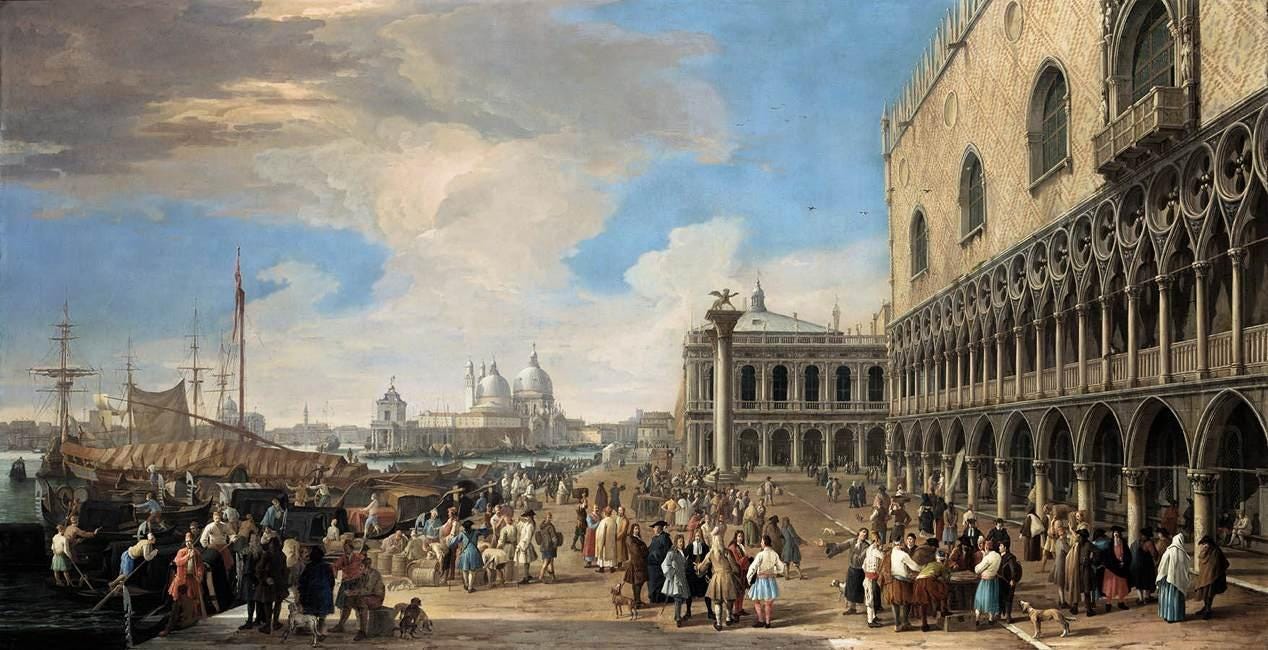
How Northern Italy’s small Commercial city-states used militias, mercenaries, arms industries, and innovation to defend their independence.
If you’re following me but don’t yet receive these essays by email, you’re missing most of them. Substack doesn’t email articles to followers, only to subscribers. You can get every new essay free in your inbox by subscribing 👉:
For three centuries before the Renaissance, the city-states of Northern Italy developed some of the most advanced Commercial societies in the world. Earlier articles in this series have examined the geography, agriculture, trade, industries, and institutions that made that transformation possible. Together, they helped Northern Italians move beyond subsistence and create societies increasingly based on producing goods and services for competitive markets.
But that leaves a major problem unexplained.
The Northern Italian city-states were small. Their wealth made them attractive targets, while the Agrarian kingdoms and empires around them could draw soldiers and taxes from populations many times larger. A prosperous city such as Florence, Milan, Genoa, or Venice therefore faced a basic challenge: how could Northern Italy remain independent long enough for a Commercial society to survive?
Northern Italy managed to solve that problem for roughly three centuries.
From about 1200 to 1500, its city-states developed military institutions suited to small, wealthy, politically independent societies. They relied at different times on citizen militias, military leagues, professional mercenaries, elaborate fortifications, diplomacy, and some of Europe’s most sophisticated arms industries. Their wealth gave them military capabilities far beyond what their populations alone would suggest.
Those institutions did more than protect Northern Italy. They also helped change European warfare. Italian methods of military organization, contracting, weapons production, fortification, and diplomacy spread beyond the peninsula. Eventually, some of the much larger Agrarian states surrounding Italy learned to combine those innovations with resources that no individual city-state could match.
That is the central story of this essay:
how the Commercial societies of Northern Italy defended their independence,
how their military institutions evolved alongside their economies, and
how those innovations transformed the nature of European wars.
This article is part of my series:
The Commercial city/states of Northern Italy 1200-1500 (the series)

Make someone’s day: Gift a subscription to your friends and family!
If you enjoy this article, you should read my From Poverty to Progress book series.

Why Northern Italy Was Different
Northern Italy’s Commercial city-states emerged from an unusual combination of historical and political conditions. Unlike much of Western Europe, many Italian cities survived the collapse of the Roman Empire as important centers of religion, administration, law, and trade. They retained strong civic identities and institutional traditions that could be adapted to self-government when commerce and population began reviving after 1000.
At the same time, political power in Northern Italy remained unusually fragmented. Feudal nobles were relatively weak, landownership was divided among many competing interests, and no powerful monarchy emerged comparable to those developing in France or England.
As towns became wealthier, their merchants, guilds, artisans, and landowners could seize control of local government rather than merely petition a king for limited privileges. They formed communes with their own councils, magistrates, laws, taxes, and militias.

The Holy Roman Empire claimed sovereignty over much of Northern Italy, but it lacked the centralized institutions and military resources needed to govern the cities directly. The long struggle between the emperors and the papacy weakened central authority further. Cities could side with one against the other, obtain privileges from both, and often acknowledge imperial authority in theory while governing themselves in practice.

By the twelfth century, Northern Italy had therefore developed something rare in the Agrarian world: dozens of wealthy, densely populated, largely self-governing cities competing with one another rather than living under a single powerful monarchy or empire. But political autonomy created a new problem. If these cities wanted to remain independent, they had to develop the military power to defend that independence.

The Citizen Militia Tradition
At the heart of every Italian commune stood its citizen militia. The militia defended the city, enforced its laws, and represented the unity of its citizens.
The underlying principle of the militia was simple: if citizens wanted to govern themselves, they also had to defend themselves. Between the twelfth and fourteenth centuries, these militias developed from loosely organized groups of armed townsmen into disciplined civic armies with regular organization, training, equipment, and budgets.
This was a remarkable institution in a feudal world.
Across most of Europe, military power rested primarily with nobles and their mounted retainers. Northern Italian cities instead created permanent, legally organized forces made up largely of ordinary citizens.
They were the first standing civic armies in Europe since the Roman Republic, and they showed that well-organized infantry motivated by a shared civic identity could defeat armored aristocratic cavalry. Switzerland, the Low Countries, and England would later develop their own powerful infantry traditions, but the Northern Italian cities pioneered this revival of the citizen army.
The militias were organized through the same institutions that governed the city. Florence, Bologna, Milan, and other communes divided their forces by district, parish, or guild. Households were expected to provide a fighting man along with basic equipment such as a helmet and spear. Bakers, weavers, merchants, and notaries appeared together on militia rolls, organized into companies commanded by elected captains.
Councils made decisions in peacetime, while captains carried them out in war. Weapons were stored in public arsenals, and bells in the city towers summoned citizens to arms.
Military service was therefore not a privilege reserved for nobles. Military service was a civic duty that came with membership in the political community. The militia made the connection between citizenship and sovereignty tangible. A commune that could raise, equip, and command its own army did not need a feudal lord to defend it.
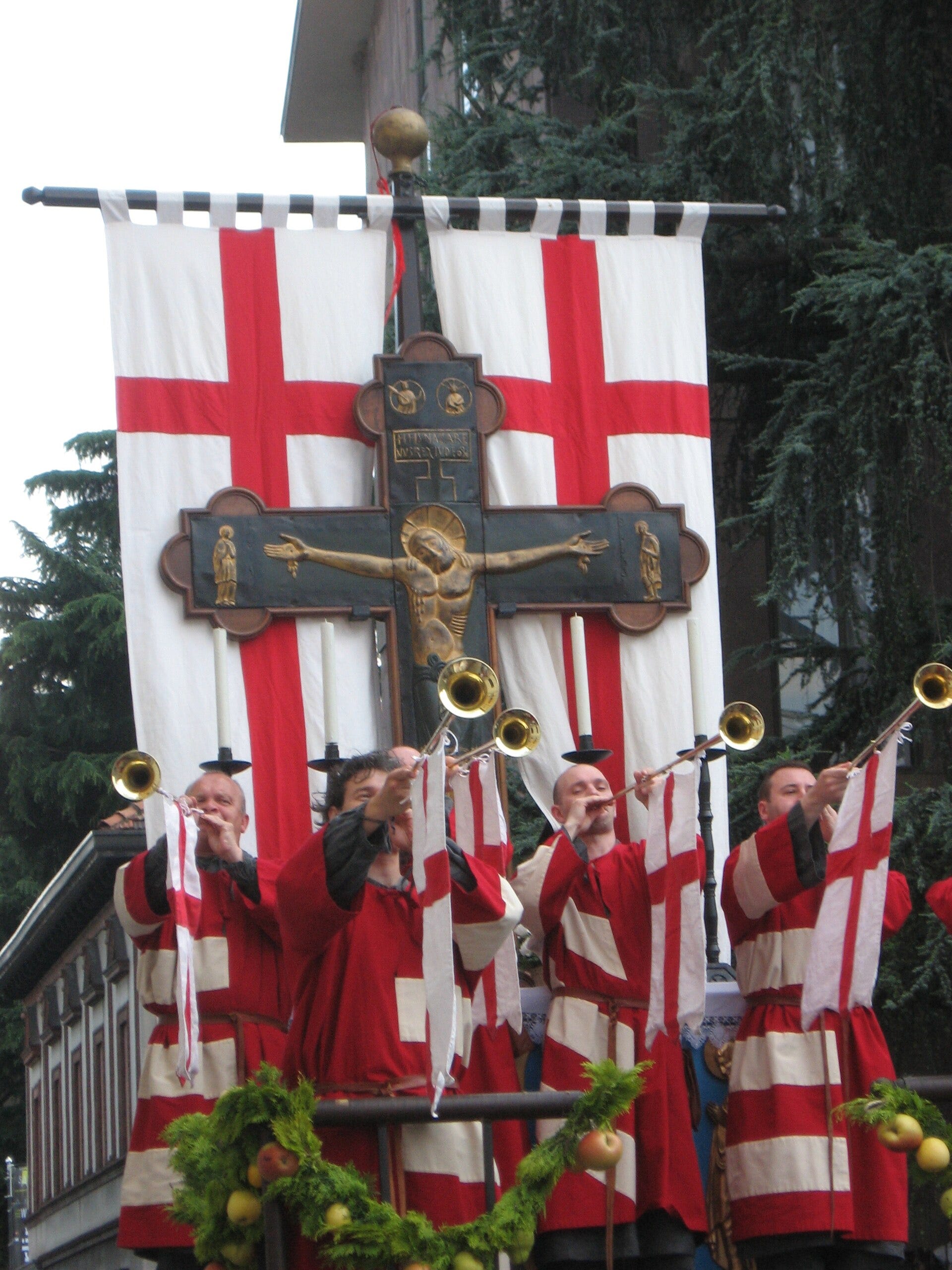
The carroccio embodied that relationship between military service and civic identity. This large war wagon carried the city’s banner, altar, and bell, and the infantry formed around it in battle.
As we saw at Legnano, Milan’s carroccio became the rallying point for the militia. Its importance went far beyond tactics. To defend the carroccio was literally to defend the commune, because the army fought for the community rather than for a lord.
City Fortifications
Citizen militias were much better suited to defense than conquest. Most campaigns consisted of sieges, raids, and short engagements close to home, where citizens could serve without abandoning their livelihoods for long periods.
This made fortifications especially important. Cities spent enormous sums rebuilding stone walls, expanding moats, and adding defensive towers. A breach in those walls threatened more than military defeat. It could mean the end of the city’s political independence.
For that reason, fortifications also became symbols of civic identity. Gates and towers carried inscriptions celebrating liberty as something collectively possessed by the citizens, including phrases such as:
“Libertas populi florentini,”
“Libertas senensis,” and
“Libertas urbis.”
Defending the walls meant defending the political community itself.
Militia service also reinforced civic cohesion inside those walls. Regular musters, parades, festivals, archery contests, and crossbow competitions turned military preparation into part of everyday civic life. Guilds sponsored military companies and provided their banners, while training grounds outside the gates brought merchants and artisans together to drill.
The habits required by military organization, including punctuality, discipline, coordination, and accountability, overlapped with those required by commerce. The same urban institutions that produced reliable infantry also helped produce reliable merchants and bankers.
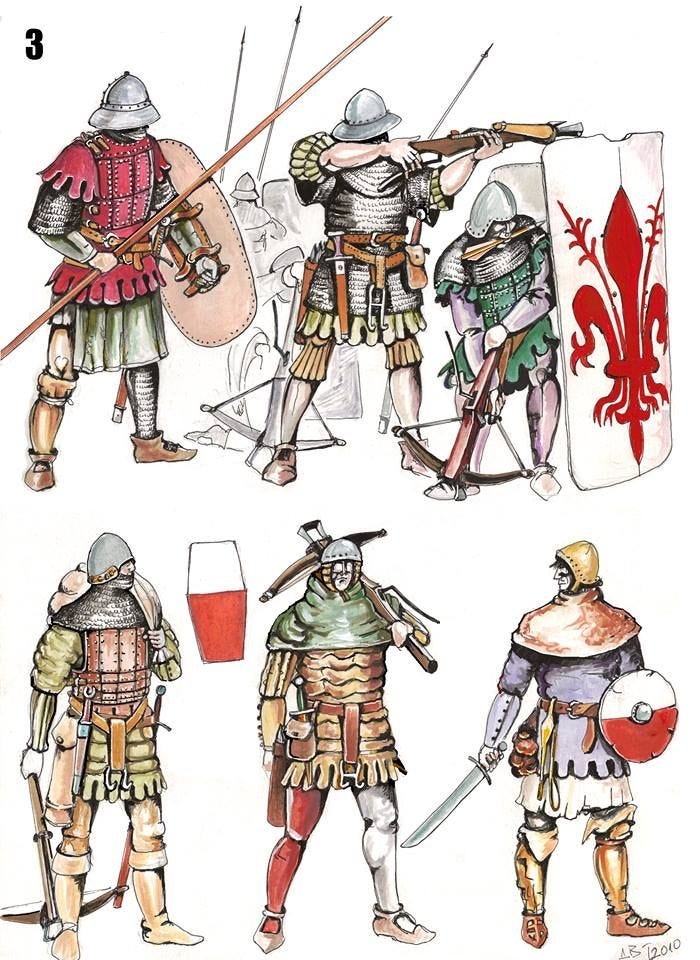
The militias also linked military power to Northern Italy’s growing industrial capabilities. Milanese armorers, Florentine crossbow makers, and Bolognese wagon builders supplied civic armies with increasingly sophisticated equipment. Italian cities were among the first to integrate military supply with large-scale urban manufacturing, standardizing weapons, organizing serial production, and developing systems of quality control centuries before modern national arsenals appeared.
The result was a distinctive military system: citizen soldiers supported by the government, finances, and industries of the commune. These militias became the backbone of the Italian republics and helped lay the foundations for Europe’s later professional armies.
More broadly, citizen militias demonstrated a principle that would repeatedly reappear in European history: a society without a king could still organize the resources, discipline, and military power necessary to defend itself.
Military Leagues and the Defense of Liberty
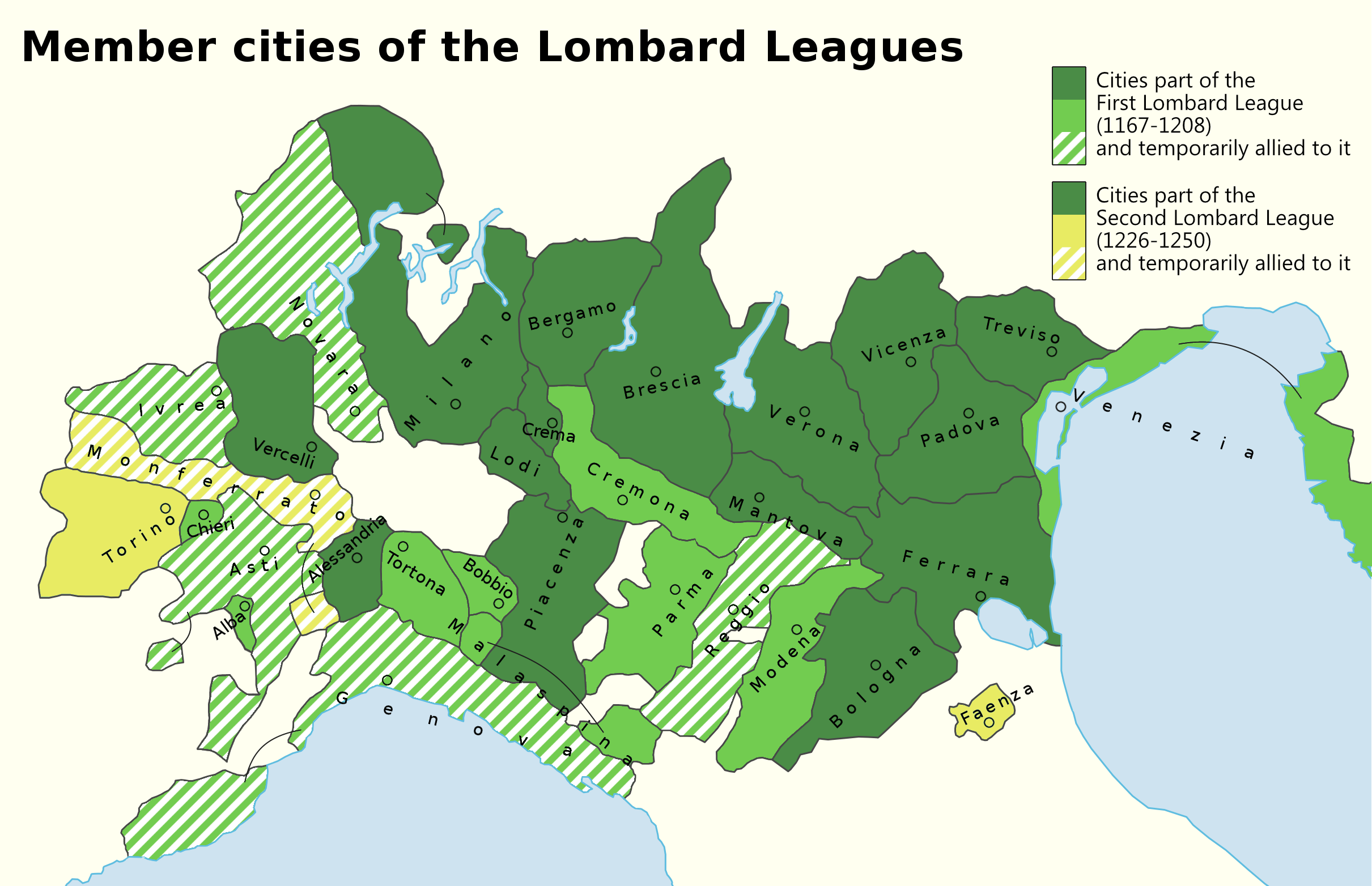
Even with highly developed citizen militias, however, the Italian communes could not defend their independence alone. When emperors or rival cities threatened them, they formed military leagues that allowed several small states to combine their armies and resources against a much larger enemy.
The most important was the Lombard League, founded in 1167 in response to Emperor Frederick Barbarossa’s attempts to impose greater imperial control over Northern Italy. Individually, cities such as Milan, Cremona, Brescia, and Bergamo could not match the forces of the Holy Roman Empire. Together, they could.
At a time when no standing army could match imperial knights in open battle, the Italian cities achieved through cooperation what none could do alone. Their victory at Legnano in 1176 was a turning point not only in Italian history but in the military history of Europe.
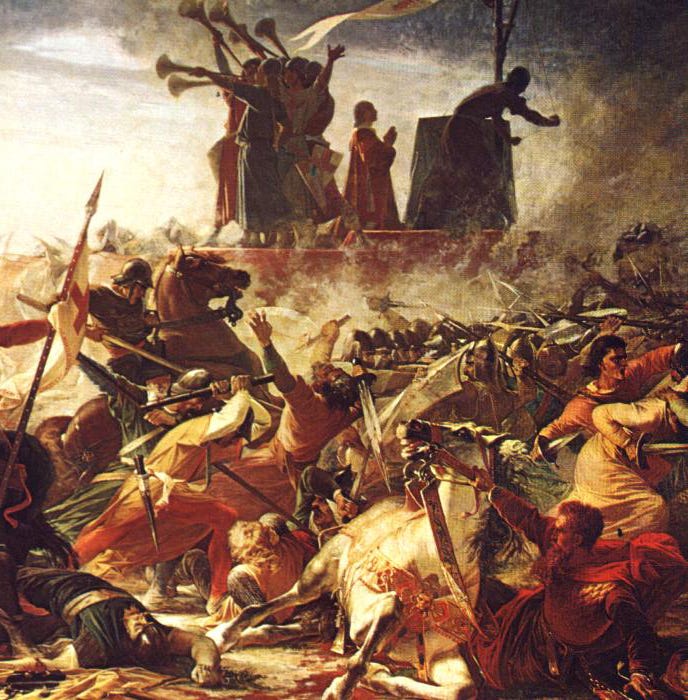
At the Battle of Legnano in 1176, the citizen militias of Milan and its allies faced Frederick’s professional cavalry. The fighting centered on the carroccio, the communal war wagon that carried the city’s banner and served as a rallying point. When the imperial charge broke through the first ranks, the Milanese infantry held its position long enough for their cavalry to counterattack. Frederick’s army collapsed, and the emperor barely escaped with his life.
The victory shocked Europe. For the first time since antiquity, an army of ordinary citizens had defeated the mounted nobility of a great empire.
Legnano demonstrated that disciplined infantry organized by civic institutions and motivated by a shared political identity could defeat the feudal military elite. The significance was therefore social and political as well as military. These men were not fighting because a feudal lord had summoned them. They were citizens defending their own city and their right to govern it.
In this respect, Northern Italy anticipated the infantry revolutions that later occurred in places such as Flanders and Switzerland. Military power no longer had to rest entirely on a small aristocratic warrior class. A city could organize its citizens into an effective military force of its own.

The Treaty of Constance in 1183 converted that military victory into a political settlement. The communes continued to recognize the nominal authority of the Holy Roman Emperor, but they gained the right to elect their own magistrates, administer justice, and raise troops. In return, they offered symbolic recognition of imperial sovereignty.
The compromise effectively institutionalized the independence the cities had won for themselves. It also reinforced a political principle that would become central to Italian diplomacy: power did not always have to be imposed from above. It could be negotiated among competing political entities.
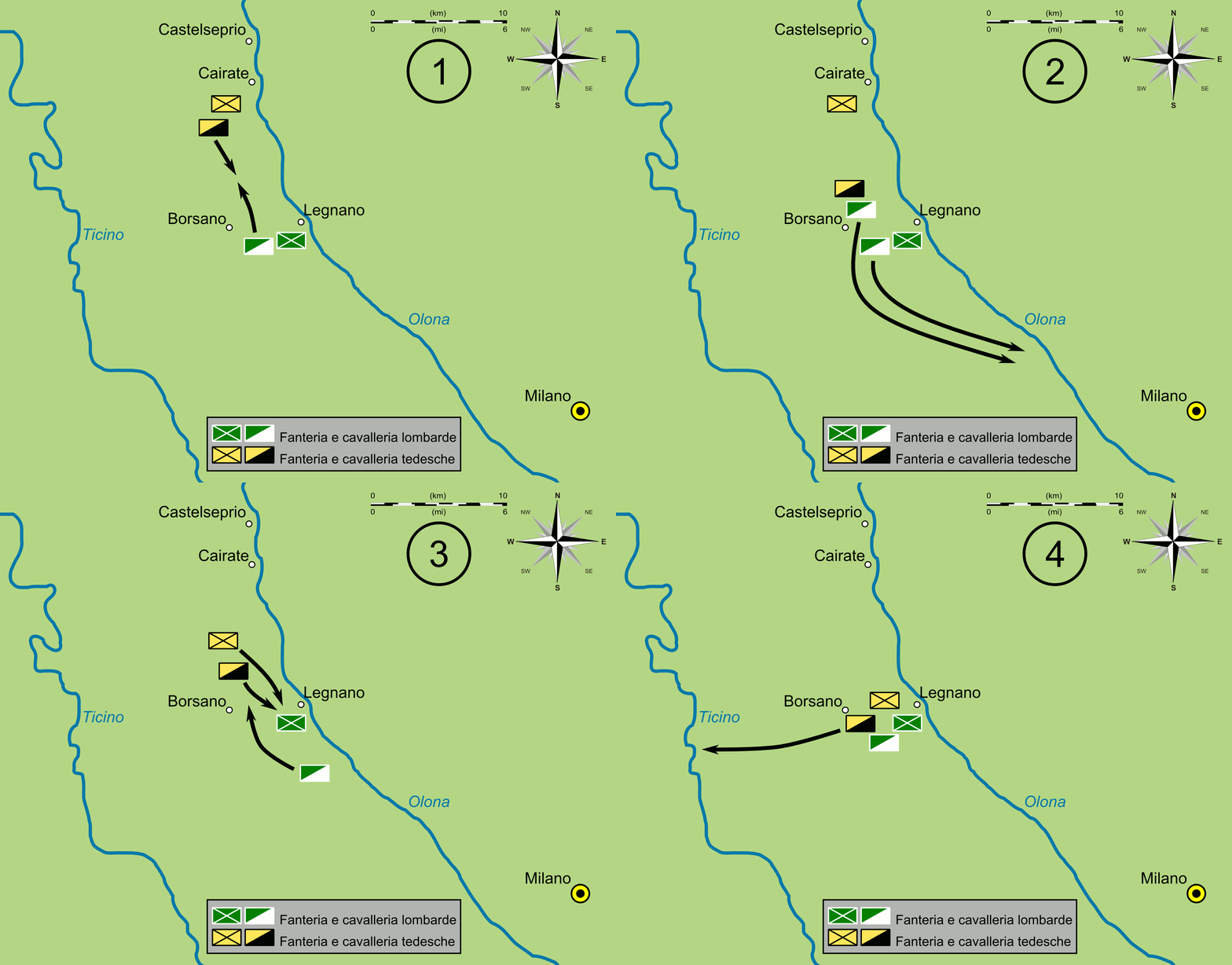
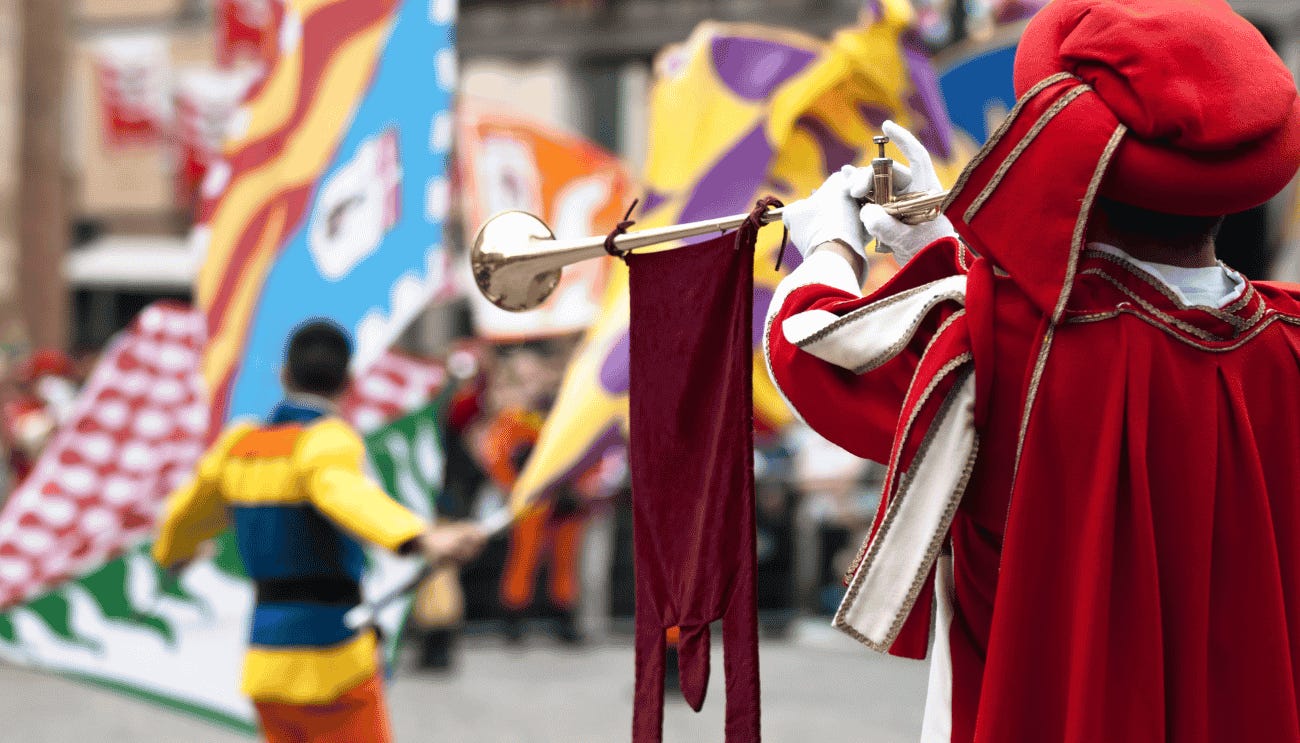
The consequences of Legnano were enormous. The Italian victory helped establish roughly 300 years of de facto independence for the city-states of Northern Italy. Its importance remains part of local historical memory today, with the victory still commemorated each year in the Palio di Legnano.
Military leagues remained an important part of Italian politics during the thirteenth and fourteenth centuries. The Lombard, Tuscan, Veronese, and other leagues appeared as circumstances demanded. Some lasted only long enough to confront a particular threat. Others helped lay the foundations for larger regional powers such as Milan and Venice.
These alliances did not end the intense rivalry among the Italian cities. The same cities that cooperated against an emperor or pope might soon return to fighting one another. What they shared was not a desire to create a unified Italy. They wanted to preserve the sovereignty of their own cities.
That required a surprisingly sophisticated level of cooperation. The leagues pooled military resources, shared intelligence, coordinated armies, and sometimes established common command structures. Long before modern alliances such as NATO, the Italian communes were learning how independent states could cooperate militarily against a common enemy without surrendering their political independence.
War therefore became one of the foundations of civic freedom in Northern Italy. The same political fragmentation that left each city vulnerable also encouraged them to develop institutions for collective defense. Military leagues allowed dozens of small states to remain independent in a world still dominated by much larger Agrarian kingdoms and empires.
Europe copies Northern Italy
Northern Italy’s militia system did not remain confined to the peninsula. As Italian cities demonstrated that organized infantry could defend wealthy, self-governing communities against feudal armies, similar institutions began appearing elsewhere in Europe.
The Flemish cities of Ghent and Bruges adopted guild-based militias that closely resembled those of Northern Italy. Companies were organized by trade, and burghers selected their own captains. These urban armies gave commercially successful cities a way to defend their political privileges without relying entirely on kings or feudal nobles.
The Swiss developed an even more formidable infantry tradition. They adapted Italian-style civic military organization to their own mountainous terrain and eventually used massed infantry formations to defeat the knights of Burgundy and Austria. In France and England, where monarchies remained much stronger, urban militias also revived during the fourteenth century, drawing partly on the example established by the Italian cities.
The larger principle spread with the institution: civic freedom required the ability to defend it. That idea later became central to other European republics, including the Netherlands and the Swiss cantons.
Northern Italy’s militia tradition was therefore more than a local response to military necessity. It helped reintroduce into Europe the ancient connection between citizenship, political participation, and organized self-defense. Citizens drilled, voted, and fought together because defending the political community was understood as part of belonging to it.
That connection between political liberty and military service would survive long after the medieval Italian communes themselves had disappeared.
The Rise of Mercenaries and Condottieri
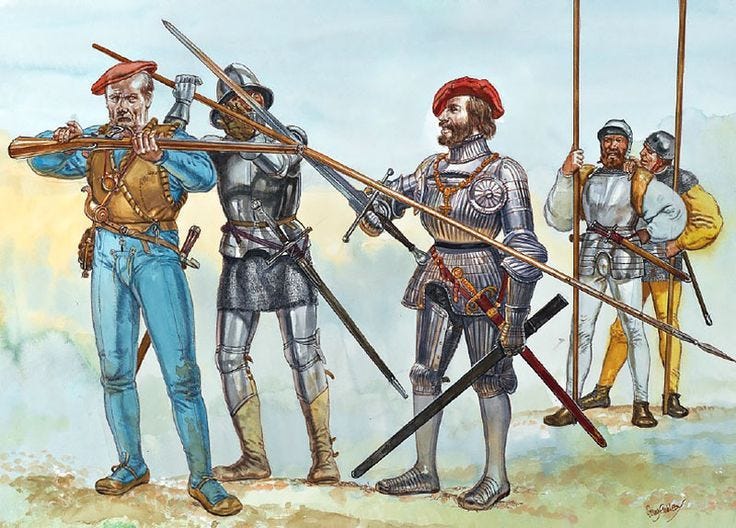
As Italian cities grew wealthier and their wars became more frequent, citizen militias began to show their limits. Thirteenth-century armies were still largely made up of artisans and guildsmen, but by the early fourteenth century warfare had become too specialized, expensive, and continuous for amateurs.
The solution was professional soldiers. Italian cities increasingly hired mercenary companies led by condottieri, captains who sold their military services to the highest bidder.
The condotta system was a major military innovation. These were the first formal written contracts governing the pay, obligations, and conduct of an entire army, complete with provisions for audits, penalties, and arbitration. Florence, Milan, Siena, and other cities were applying the same commercial and legal methods they used in banking and business to warfare. Military service was becoming a contractual relationship rather than a feudal obligation based on lineage and personal oaths.
The first major mercenary companies were foreign, particularly German, Swiss, and Provençal. By the middle of the fourteenth century, however, Italians had mastered and improved the system. Commanders such as Giovanni Acuto, better known as Sir John Hawkwood), Francesco Sforza, and Bartolomeo Colleoni became among the most celebrated military professionals in Europe.
The leading condottieri also transformed how armies were run. They maintained standing companies, standardized pay, drilled soldiers throughout the year, and developed sophisticated logistics. Many employed their own engineers, armorers, and scribes, combining military command with the administrative methods of the Commercial city-states that hired them.
Their discipline and organization impressed foreign observers. More importantly, the condottieri represented a major transition in European warfare, from temporary feudal levies toward the permanent professional armies that would dominate Europe by the seventeenth century.
Europe copies Northern Italy, pt 2
Italian military professionalism spread quickly across Europe. Feudal armies built around knights and temporary levies increasingly struggled against trained soldiers who fought year-round and operated within permanent organizations.
The French adopted Italian contracting practices when they created their compagnies d’ordonnance after their early defeats in the Hundred Years’ War. Burgundy copied Italian training methods and armor standards. Austrian and German rulers hired Italian captains to reorganize their cavalry, while the Ottomans recruited Italian engineers for campaigns in the Balkans.
Italy had become Europe’s military school, exporting tactics, contracts, and technical expertise alongside textiles and banking methods. The condottieri helped establish the model of military professionalism that larger European states would later adopt.
But the system had serious weaknesses. Mercenaries were loyal to contracts, not governments. A captain serving Florence one year might fight for Milan the next. Some, including Francesco Sforza, eventually used their armies to seize political power themselves. Others threatened to defect when cities failed to meet their demands. Italian governments became trapped in bidding wars for the best commanders and companies.
Despite these dangers, Italian warfare between roughly 1350 and 1500 was the most organized, technical, and financially sophisticated in Europe. The condottieri applied the same emphasis on skill, calculation, contracts, and specialization that characterized Italy’s Commercial societies. For nearly a century, the Italian city-states led Europe in the organization of professional warfare, and the rest of the continent increasingly copied them.
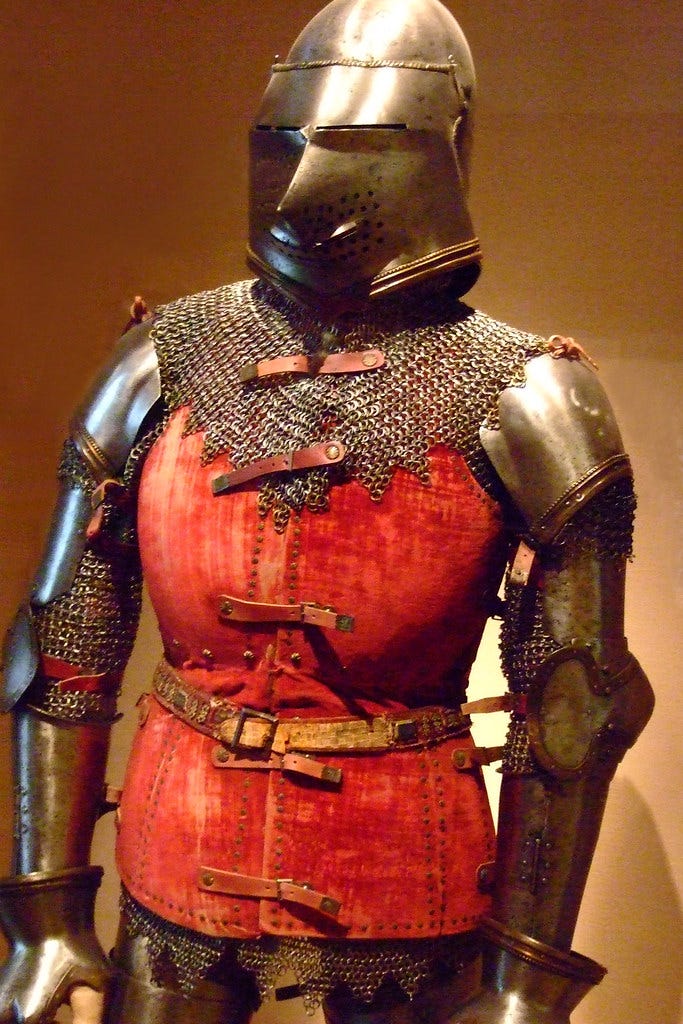
The Italian Arms Industry
The Italian city-states did not merely hire soldiers. They built the industries that armed them. Between 1250 and 1500, Northern Italy became Europe’s leading center for weapons, armor, ships, and military equipment.
This grew directly out of the Commercial economy. Milan, Venice, Florence, Brescia, and other cities already had large industries producing textiles, glass, metal goods, and ships for distant markets. They applied the same specialization, contracting, and large-scale production to warfare. Arms were increasingly produced as standardized equipment for entire armies rather than as individual pieces for wealthy knights. For the first time since the Roman Empire, Europe was again seeing something approaching mass production of military goods.
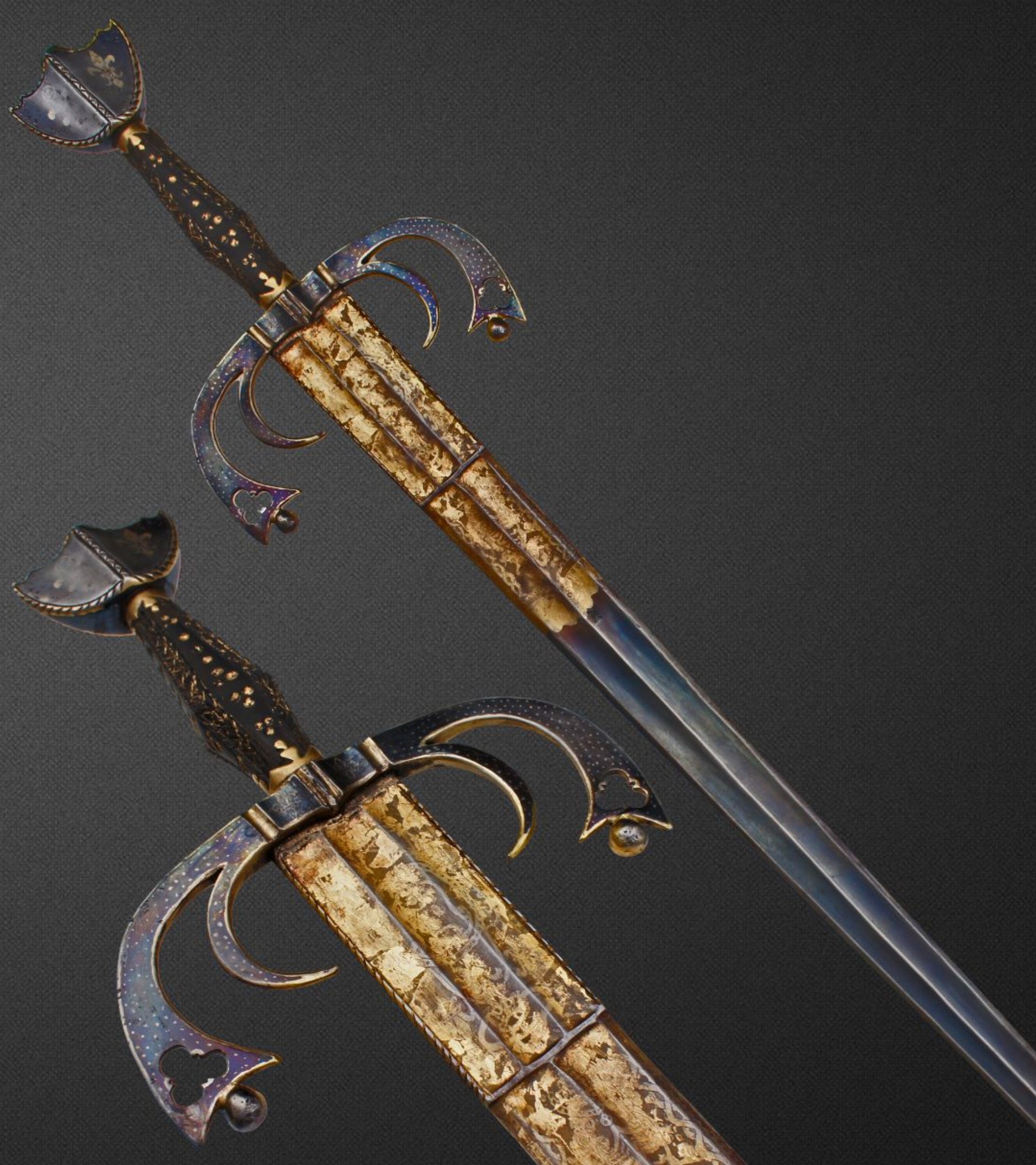
Milan became Europe’s leading center for armor. Its smiths helped perfect the full steel plate harness during the fourteenth century, producing armor that combined protection with mobility. Milanese armor became prized across Europe, and its armorers exported large quantities to France, Burgundy, England, and elsewhere. Their workshops divided production among specialists who forged, riveted, polished, and assembled different components.
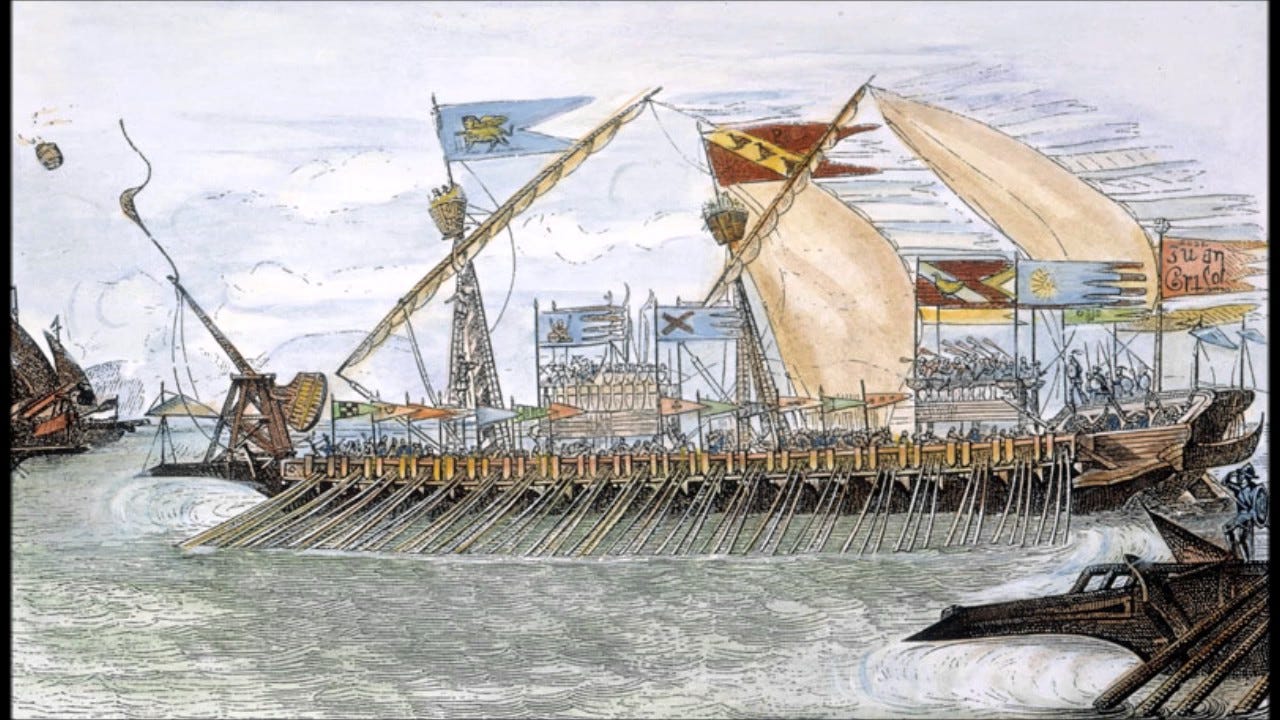
Venice applied the same principles on an even larger scale to shipbuilding. The Venetian Arsenal was probably the largest industrial complex in Europe before the Industrial Revolution, employing thousands of carpenters, rope-makers, sail-makers, smiths, and other workers. Standardized parts were stored in warehouses and moved through specialized stages of production. During wartime, Venice could reportedly produce a galley in a day, while maintaining the cannon, supplies, and repair facilities needed to keep a large fleet at sea.

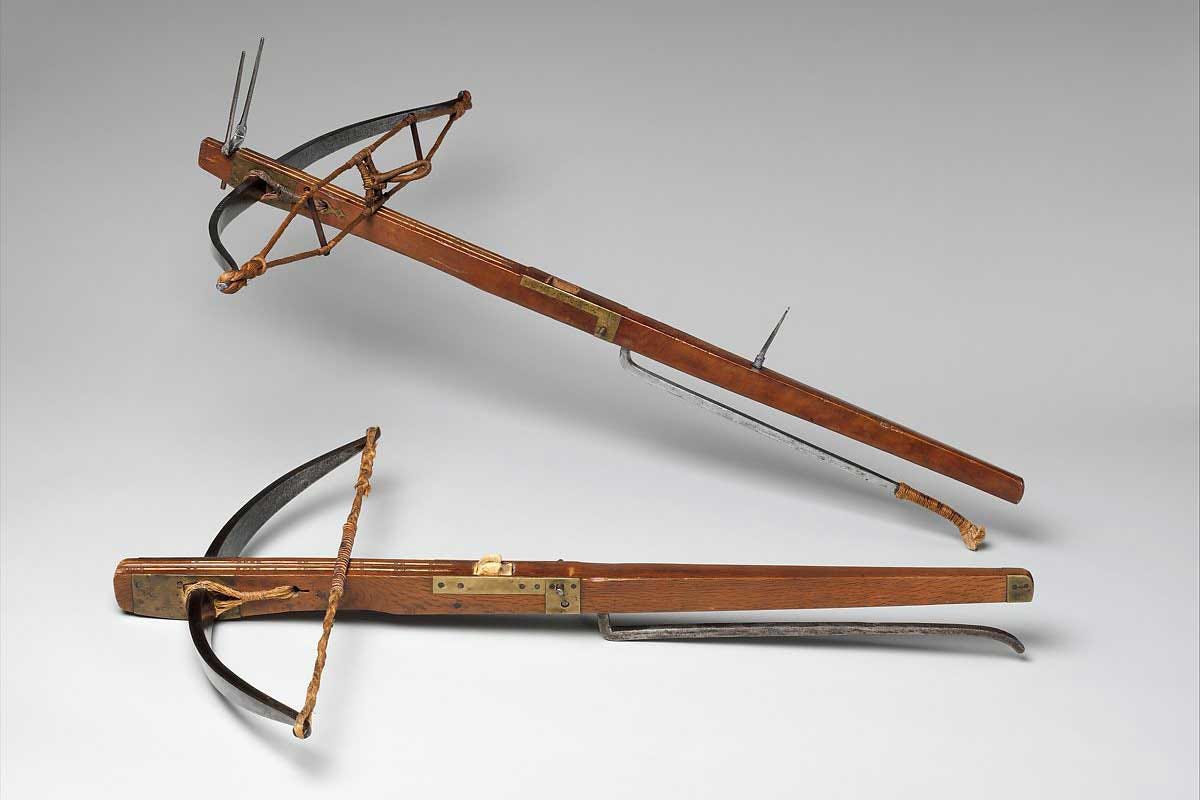
Other cities developed their own specialties. Florence’s merchants organized supply chains for iron, sulfur, and saltpeter. Brescia became an important center for swords and crossbows and later for early firearms. Italian metalworkers experimented with gun barrels, firing mechanisms, steel alloys, and increasingly effective artillery. Northern Italy became Europe’s leading laboratory for military technology.

The cities also developed new ways to manage all this production. Public officials supervised arsenals, inspected weapons, managed contracts, tracked inventories, and accounted for military spending. This gave Italian governments a much more reliable system for supplying armies than the traditional feudal practice of assembling men and equipment when war began.
These industries became important export businesses. Milanese armor equipped knights across Europe. Italian artillery and metallurgical expertise spread abroad. Foreign rulers bought Italian weapons, hired Italian engineers, and sent craftsmen to learn Italian techniques. Military technology became another area, alongside banking, textiles, and commerce, in which Northern Italy supplied knowledge and products to the rest of Europe.
Military industry also shifted the balance of power within Italy. Cities such as Milan and Venice could maintain professional forces, replace equipment, and recover from war more easily than poorer rivals. Their industrial capacity became an important source of political power.
By 1500, Northern Italy had created the most sophisticated arms economy in Europe. It combined commercial finance, specialized manufacturing, technical innovation, and government procurement in ways that anticipated the military-industrial systems of later European states.
Europe copies Northern Italy, pt 3
Northern Italy’s arms industry became a world-class export business. But that success created a dangerous problem. Italian cities sold their best weapons, armor, and military technology to other European kingdoms.
Though poorer, those European kingdoms had one big advantage over Northern Italian city/states. They could tax millions of subjects, build much larger armies, and equip them with the same advanced weapons the Italians had developed.
This would come back to haunt Italy.
The French Invasion of 1494
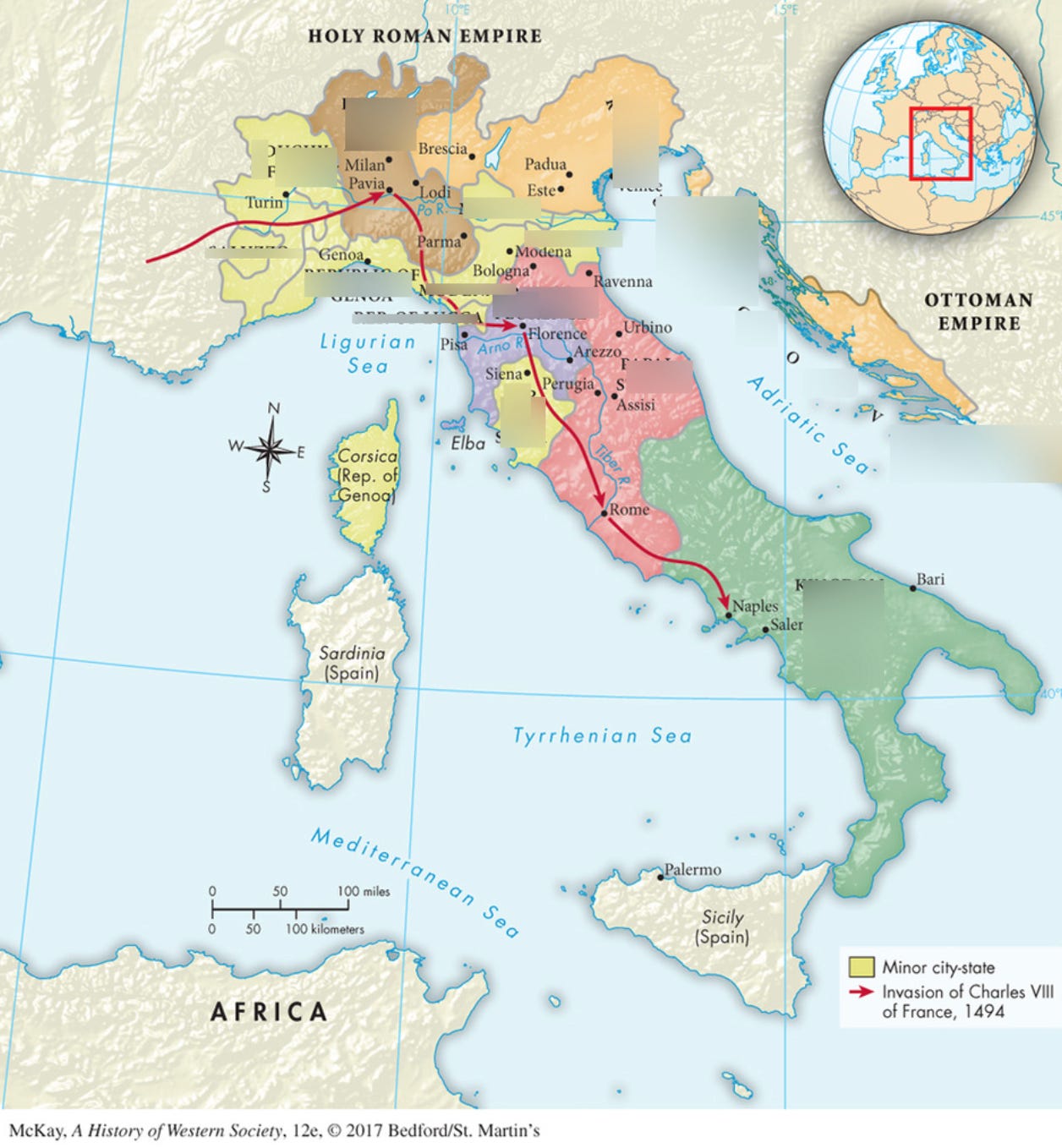
In 1494, Charles VIII of France crossed the Alps with an army unlike anything the Italian city-states had faced before. His forces brought heavy bronze cannon capable of reducing medieval walls in hours rather than weeks. The campaign of 1494–95 shattered a political order that had survived for roughly three centuries and marked the beginning of a new balance of power in Europe.
Until then, the Italian states had maintained a delicate equilibrium. Milan, Venice, Florence, and Naples relied on alliances, professional condottieri, strong fortifications, and immense wealth. Their military system worked well for limited wars among relatively equal states. It was far less suited to confronting a monarchy that could mobilize the resources of a much larger population.
The French invasion exposed that weakness almost immediately. Charles’s cannon were lighter, more mobile, and more accurate than earlier siege artillery. They were cast using methods developed in Italian foundries, but France could deploy them on a scale that no Italian state could match. At Monte San Giovanni, French artillery breached the walls in eight hours. Florence opened its gates without resistance, and Naples fell within weeks.
The fortifications that had protected the communes for centuries were suddenly vulnerable. High stone walls and towers, built to withstand traditional siege warfare, could be shattered by concentrated cannon fire.
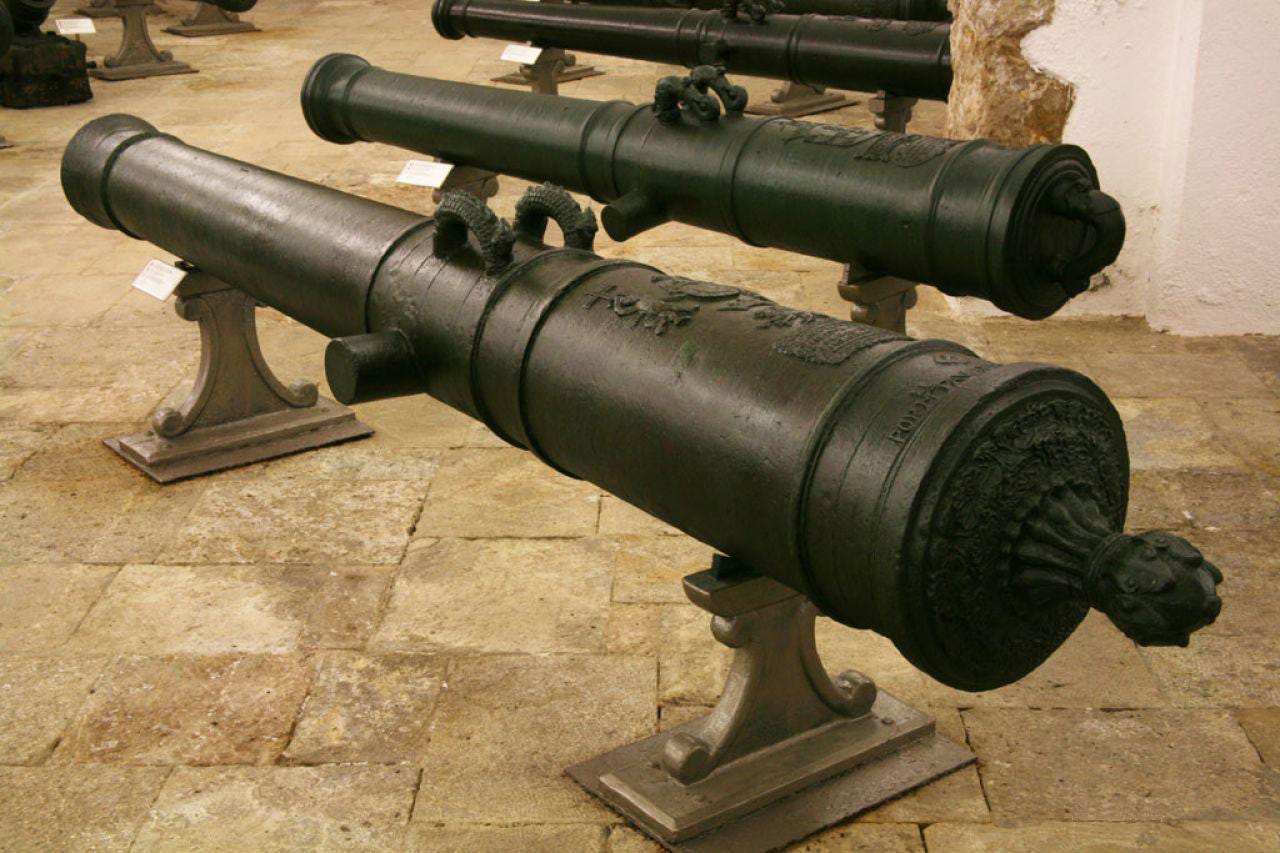
The shock was particularly striking because Italy had spent centuries teaching Europe how to wage war. Italian metallurgy, cannon casting, military contracting, and engineering had spread across the continent. Now a much larger monarchy was combining those innovations with resources the city-states could not match. The small, carefully maneuvered armies of the condottieri were overwhelmed by the scale and speed of the French advance.
The invasion also exposed the weakness of Italy’s political system. The city-states had relied on shifting alliances to prevent any one Italian power from becoming dominant, but those alliances failed against a major foreign invasion. Ludovico Sforza of Milan had invited Charles into Italy to weaken his rivals, only to find himself threatened by the same French army. Florence and Venice also shifted sides as each tried to protect its own interests.

For the first time since the age of Barbarossa, the Italian states could no longer determine the political future of the peninsula themselves.
Invention of Artillery Forts
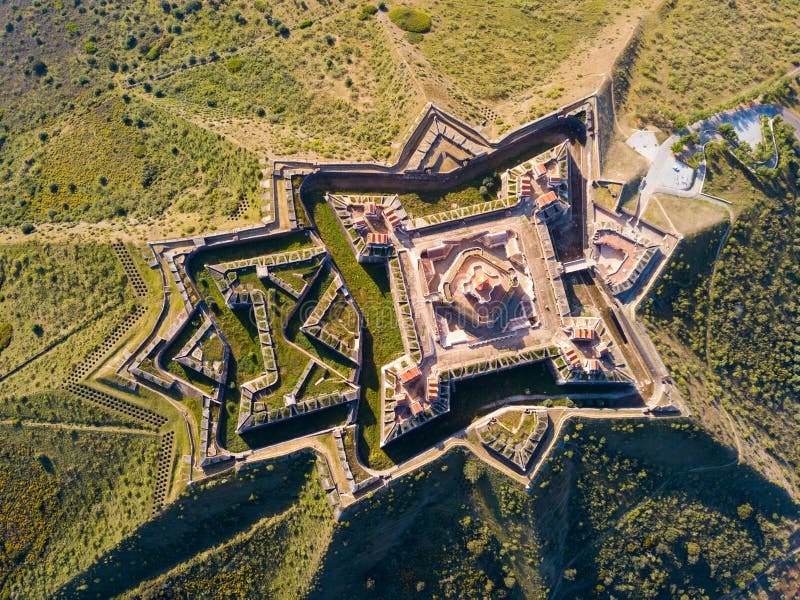
The French invasion of 1494 forced Italian cities to rethink fortifications from the ground up. High medieval walls and towers could not withstand concentrated cannon fire. The Italian response was one of the most important military innovations of the Renaissance:the artillery fort, or trace italienne
The basic idea was simple. Instead of tall stone walls that shattered under bombardment, engineers built low, thick ramparts of earth faced with brick. Angled bastions projected from the walls so defenders could fire along adjoining sections and eliminate blind spots. Ditches and sloped glacis absorbed or deflected cannon fire. The fortress became a geometric system of overlapping fields of fire rather than a single defensive wall.
The first generation of these bastion forts appeared in the closing years of the fifteenth century. Florentine engineers such as Francesco di Giorgio Martini and later Giuliano da Sangallo experimented with angled walls, bastions, and underground casemates. Venice invested heavily in rebuilding its mainland defenses, while Siena and Ferrara developed their own bastioned fortifications. Within a generation, Italian cities were spending enormous sums adapting their defenses to artillery.
This was the birth of a new discipline: military engineering as a science. Italian engineers wrote treatises, drew scaled plans, and used instruments to calculate angles of deflection and ranges of fire. They applied the same geometric reasoning that artists used in perspective drawing to the design of fortifications.
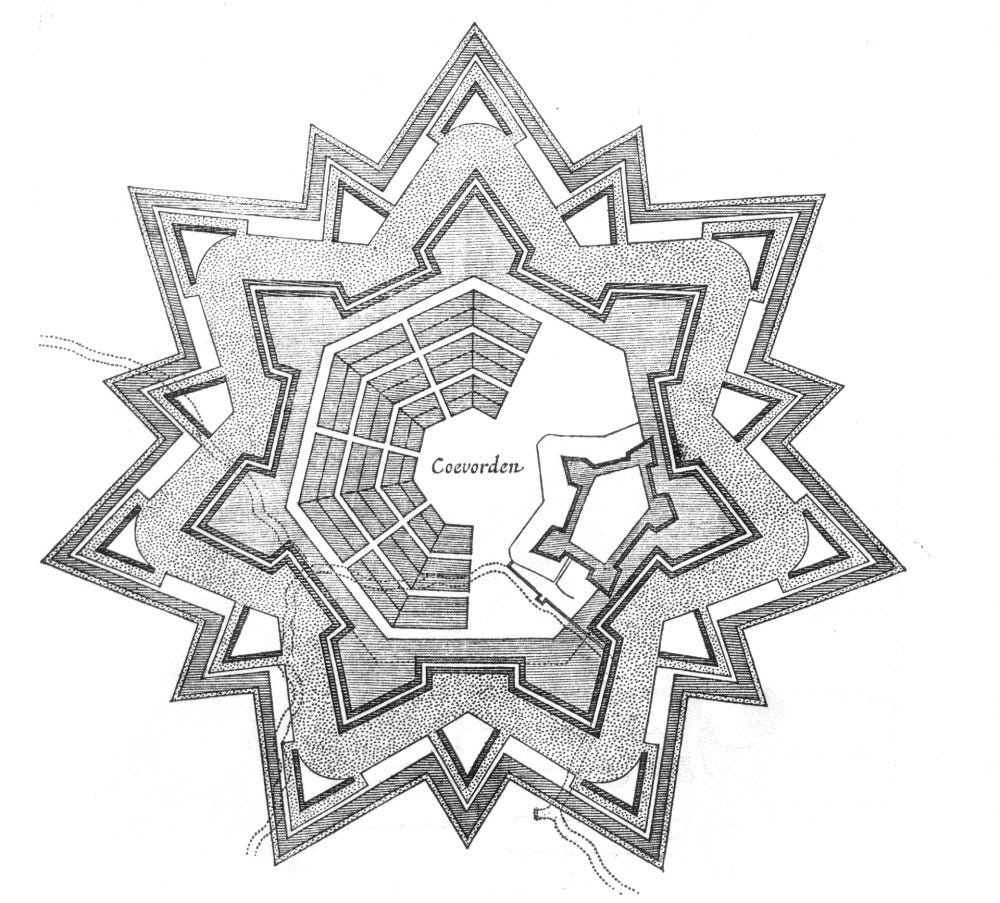
The new fortresses also changed artillery itself. Defending them required carefully positioned cannon, standardized calibers, trained gunners, and reliable ammunition. Venetian and Florentine foundries improved the casting of bronze cannon to precise dimensions, Milanese metallurgists produced more uniform iron cannonballs, and Italian theorists wrote early manuals explaining how powder charges, barrel length, and firing angle affected a projectile’s range.
Italy had responded to the destruction of its medieval defenses by creating a new system of warfare based on engineering, geometry, standardized weapons, and specialized technical knowledge. The artillery fort became one of the clearest examples of the Italian city-states turning military necessity into technological innovation.
Europe copies Northern Italy, pt 4
Foreign rulers quickly recognized the superiority of the new Italian fortifications. By the 1520s, French, Spanish, and Imperial armies were hiring Italian engineers to redesign their defenses. The trace italienne spread from Lombardy into France, from Venice into Austria and the Balkans, and across the Mediterranean into Spain’s empire. Italian military engineers became some of the most sought-after specialists in Europe, sometimes earning salaries comparable to senior commanders.
The influence of the trace italienne was immense. For the next three centuries, European warfare revolved increasingly around sieges of Italian-style fortresses. The great wars between France and Spain and between the Habsburgs and the Dutch were dominated by these defenses. When Vauban built his famous fortifications for Louis XIV, he was refining principles first developed in Tuscany and the Veneto.
Italian designs spread even farther through European expansion. Forts built in India and the Americas used the same geometric principles developed by Renaissance Italian engineers.
For Italy, however, this technical triumph accompanied political decline. Italian engineers and craftsmen increasingly served France, Spain, Austria, and other foreign powers. The same expertise that had once helped Milan, Florence, and Venice defend their independence was now strengthening the much larger states that dominated the peninsula.
Italy had lost much of its political power, but it remained Europe’s leading laboratory for military engineering. Its city-states could no longer determine the balance of power, yet the military technologies they had created continued to shape warfare far beyond Italy.
The artillery fort completed the cycle of Italian military innovation. The communes had invented the citizen army; the condottieri had created the professional contract army; the arms industries had developed mass production; and the engineers had now transformed defense into a science. No other region in Europe had so consistently reinvented the art of war, and no other had seen its militaries so widely copied.
Exporting Innovation by Being Conquered
The French invasion of 1494 was only the beginning. For the next sixty-five years, France, Spain, the Holy Roman Empire, the Papal States, and the Italian powers fought for control of the peninsula in the Italian Wars. These conflicts destroyed much of Italy’s political independence, but they also carried Italian military innovations across Europe.
The Italian Wars became the first great continental conflicts of the gunpowder age. The French adopted Italian artillery logistics and fortification techniques. The Spanish combined Italian infantry practices with their own to develop the tercio, the pike-and-shot formation that dominated European battlefields for the next century. German and Swiss soldiers carried home Italian weapons, armor, and artillery techniques. Armies that fought in Italy often emerged better equipped and more professional than when they arrived.
Italy became a transmission belt for Europe’s military revolution. Its engineers, gunners, metallurgists, and shipwrights were in demand across the continent. Venetian shipwrights worked on Habsburg fleets in the Adriatic, Florentine artisans cast cannon for France, and Milanese armorers supplied competing armies. The Sack of Rome in 1527 scattered still more Italian craftsmen and engineers across Europe, spreading their knowledge from Lisbon to Kraków.
The Sack of Rome also symbolized a much larger political shift. The era of independent Italian city-states was giving way to a major shift towards the growth of large kingdoms carving up the continent, a trend that would continue until 1918. The Commercial societies that had pioneered many of Europe’s military innovations could no longer match the scale of states able to tax and mobilize millions of subjects.
The wars spread Italian financial innovations as well. Banking families such as the Medici, Spinola, Grimaldi, and Fugger financed campaigns on both sides using instruments developed in Florence and Genoa. Armies increasingly marched for wages delivered through credit and letters of exchange rather than through feudal obligation. The financial and industrial networks created by the Commercial societies had become essential to the monarchies conquering them.
By the Peace of Cateau-Cambrésis in 1559, Italy’s independence was largely gone.
Spain controlled the south and Milan,
Austria dominated much of the north,
France retained influence along the western frontier, and
The papacy ruled the center.
Yet Italian influence extended farther than ever. Its weapons, fortifications, engineering, and financial systems now supported the military power of Europe’s largest states. Italy had lost political control of the peninsula, but many of the institutions it created were helping reshape the continent.
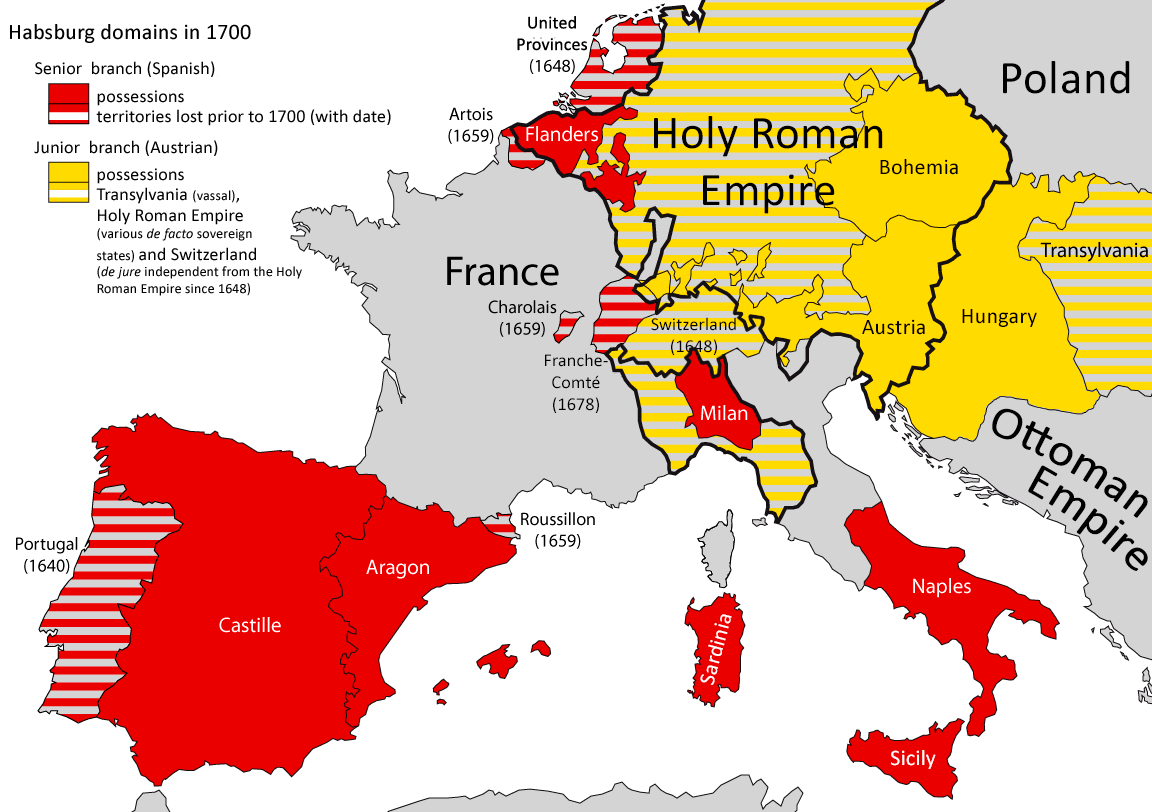
The Long Shadow: Absorption by Empires
Foreign rule did not end Italy’s military influence. Once the city-states had been absorbed into larger empires, their engineers, craftsmen, financial networks, and administrative systems became part of those empires. Italy lost political independence while its military institutions spread farther than ever.
Spain’s global empire depended heavily on Italian expertise. Genoese bankers helped finance its wars and fleets, Milanese workshops supplied armor and weapons, and ports such as Naples supported Mediterranean naval operations. Commercial networks that had once connected independent Italian cities to the rest of Europe were now helping larger imperial states project power across continents.
Italian engineers and craftsmen also became important exports. Fortification designers from Florence and Verona worked in Flanders, Venetian shipwrights helped build arsenals elsewhere in the Mediterranean, and Italian metallurgists supervised cannon production in Central Europe. Through European expansion, the principles of the trace italienne spread to the Americas and Asia.
Italy increasingly became a center for military education as well. Padua, Bologna, and Pisa trained engineers who entered royal artillery and fortification corps across Europe. Military manuals by Francesco di Giorgio Martini, Pietro Cataneo, Girolamo Maggi, Buonaiuto Lorini, and other Italian writers were translated and studied abroad. Italy had lost much of its military power, but it remained one of Europe’s leading sources of military knowledge.
The same was true of military administration. Permanent arsenals, organized supply systems, procurement procedures, and accounting practices developed in cities such as Venice, Florence, and Milan became models for larger states. France’s military bureaucracy, Spain’s arsenals, and England’s naval dockyards all developed similar systems for managing increasingly large and complex armed forces.
Military knowledge also fed into the emerging sciences. Italian work on artillery required increasingly careful study of motion, range, and trajectory. Galileo’s later investigations of projectile motion grew partly from this military tradition. The practical problems faced by Renaissance engineers were helping turn mathematics into an experimental science.
The political ideals of the communes survived as well. Machiavelli’s The Art of War and The Discourses on Livy defended the connection between civic liberty and citizen arms. Later republics, including the Dutch and eventually the Americans, drew on similar ideas about the relationship between political independence and the ability of citizens to defend it.
Italy’s absorption into larger empires therefore transformed rather than ended its influence. The city-states ceased to be major independent military powers, but many of the institutions they had developed became part of the emerging European state system. Their engineers, arsenals, administrative methods, military writings, and civic traditions continued to shape European warfare long after the political world that created them had disappeared.
Conclusion
Northern Italy’s Commercial societies faced a basic problem: they were wealthy enough to attract powerful enemies but too small to defend themselves through population alone. Their answer was innovation. Citizen militias, military leagues, professional mercenaries, arms industries, and new fortifications allowed relatively small city-states to preserve their independence for centuries.
Those institutions also spread. European rulers copied Italian military organization, hired Italian engineers, bought Italian weapons, and adopted Italian financial and administrative methods.
By the sixteenth century, however, much larger territorial states could combine these innovations with populations and tax bases that no Italian city-state could match. The military system that had helped protect Northern Italy was increasingly being used by the powers conquering it.
That pattern captures one of the central tensions of material progress. Commercial societies can generate extraordinary innovation because they reward specialization, experimentation, and competition. But innovations do not remain where they were created. Once larger states learn to use them, economic and technological leadership does not necessarily translate into lasting political power.
Bibliography
If you are interested in reading more on this topic, I would recommend:
Lane, Frederic C. Venice: A Maritime Republic.
Parker, Geoffrey. The Military Revolution: Military Innovation and the Rise of the West, 1500–1800.
Abulafia, David. Italy in the Central Middle Ages: 1000–1300.
Hale, J. R. War and Society in Renaissance Europe, 1450–1620.
Mallett, Michael E. Mercenaries and Their Masters: Warfare in Renaissance Italy. .
Martines, Lauro. Power and Imagination: City-States in Renaissance Italy.
Waley, Daniel, and Trevor Dean. The Italian City-Republics.
More articles here:
The Commercial city/states of Northern Italy 1200-1500 (the series)
Make someone’s day: Gift a subscription to your friends and family!
If you enjoyed this article, you should read my From Poverty to Progress book series.
A single post that has more interesting info than most books!
This is very good. I’m surprised it doesn’t have more likes.