

If you’re following me but don’t yet receive these essays by email, you’re missing most of them. Substack doesn’t email articles to followers—only to subscribers. You can get every new essay free in your inbox by subscribing 👉:
Industrialization transformed the world more profoundly than any event since the invention of agriculture, and Britain’s early breakthrough set this transformation in motion. Understanding why Britain was first is essential for understanding why modern economic growth began at all. The decisive shift happened in the late eighteenth and early nineteenth centuries, when a handful of British industries suddenly achieved unprecedented and sustained increases in productivity.
This article is the introductory article to my larger series on the British Industrial Revolution.

This article examines the leading explanations for why Britain industrialized first, outlining their logic, strengths, and weaknesses. It also explores why scholars have tended to pursue monocausal answers and why comparative baselines influence their conclusions.
As we will see, the literature on the causes of the British Industrial Revolution is:
Massive (probably more than any other single topic in economic history). It is so large that this article can only skim the surface and many important issues will not be discussed.
Divided into competing schools of thought who push for mono-causal theories that are plausible but do not tell the entire story.
Extremely controversial. Even the usefulness of the term “Industrial Revolution,” its exact timing, and how much it benefitted the material standard of living of the masses in the short-term is hotly debated.
If you enjoy this article, you should read my From Poverty to Progress book series.

Before industrialization, Britain, and particularly south-east England, was already a highly commercialized society with extensive market participation, growing urban centers, and a dense network of skilled labor. Its agricultural sector was unusually productive for the period, supporting both rising populations and substantial non-farm employment. This combination of commercial agriculture, urban growth, and widespread market exchange made Britain structurally different from Agrarian societies across Eurasia.
That is why I label it a “Commercial society” that more closely resembled the following than other Eurasian societies:
Medieval city/states of Northern Italy (Venice, Florence, Genoa, Milan, and many more)
Late Medieval city/states of Flanders (Ghent, Bruges, Ypres, and Antwerp in modern-day Belgium)
The Dutch Republic (1579-1795)
Likely also many of the city/states of Ancient Greece


Politically, Britain experienced a series of major conflicts and institutional shifts that shaped its economic environment. The English Civil War (1642-51), the Glorious Revolution of 1688, and the subsequent settlement of power between Parliament and the Crown altered the balance of authority and strengthened property rights.
The eighteenth century brought the War of Spanish Succession, the Seven Years’ War, and the prolonged struggle against Napoleonic France (1792-1815). These conflicts increased fiscal capacity, stimulated domestic industry, and reinforced Britain’s commitment to naval and commercial supremacy.
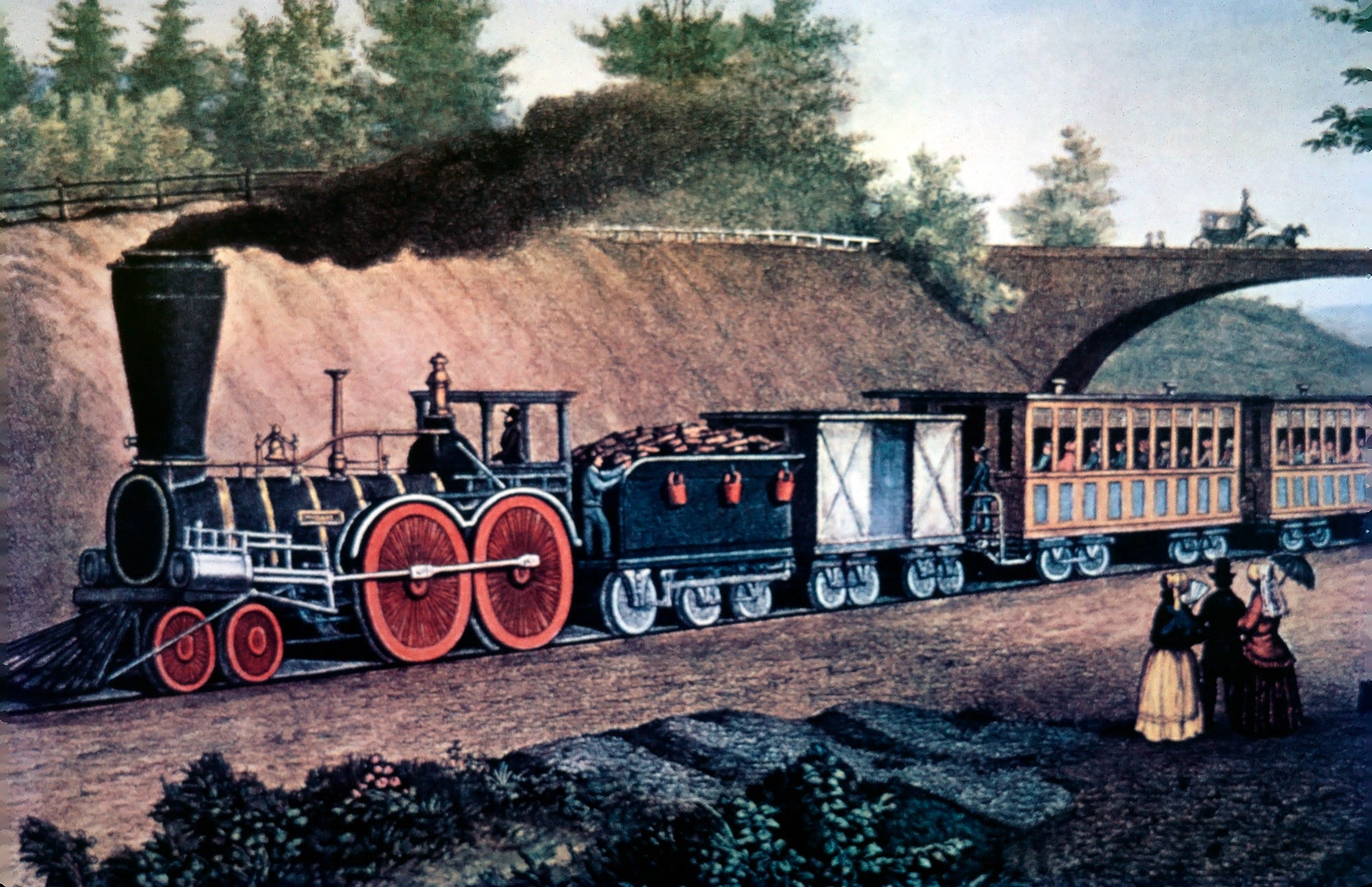
The single most important fact about the British Industrial Revolution was that unlike all other nations, Britain had no other nation to copy. That is why the British Industrial Revolution is considered to be THE Industrial Revolution.
This one simple fact greatly shaped the different path that Britain took. While subsequent nations could copy, Britain had to go through the extended process of experimentation without even knowing what the outcome would be. After Britain every nation knew that industrialization was possible and the result would be a massive increase in national wealth and military power. The British only knew that small steps in that direction were yielding positive results, so they should keep going in that direction.
Britain’s closest counterparts were other Commercial societies: the Dutch Republic and, earlier Italian city-states, which were richer in some periods but did not experience sustained industrial takeoff. In terms of national security, Britain faced persistent competition with France, creating an external incentive to expand navy, finance, and manufacturing.
Although Britain could look to the Dutch Republic for institutional and financial inspiration, no existing nation provided a full model for industrialization. The conditions that would eventually fuel its rapid growth emerged largely from domestic evolution rather than imitation of an already industrialized neighbor.


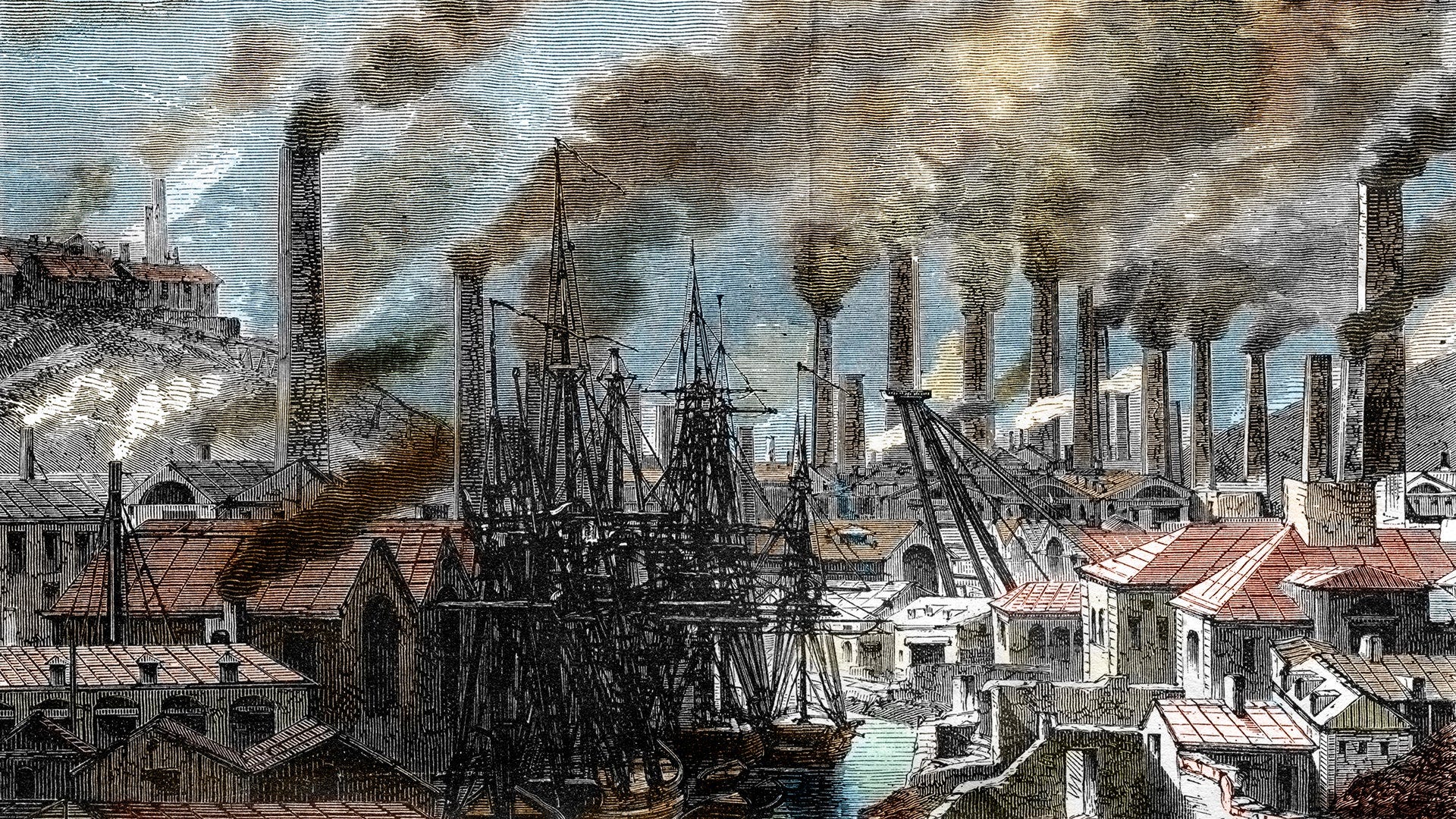
Definition of industrialization
Scholars define industrialization in several different ways, and these differences shape how Britain’s experience is interpreted.
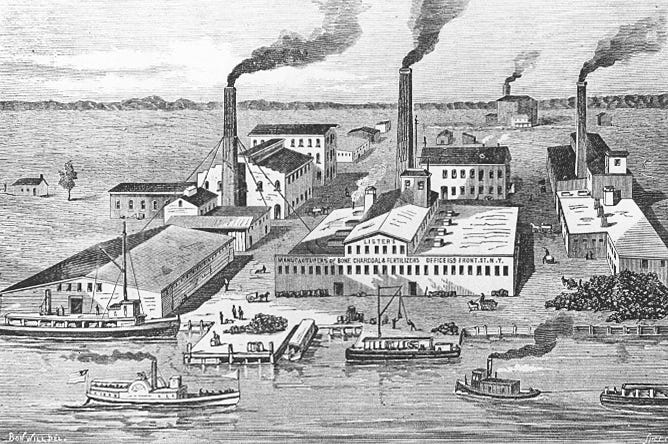
Structural change
One common approach emphasizes structural change, focusing on how much of national output and employment shifts from agriculture into industry and services. In this view, a country becomes industrial when factories and urban employment account for a rising share of economic activity.
Typical metrics for this structural approach include:
Industry’s share of GDP
Industry’s share of total employment
The decline of agriculture’s share of GDP and employment
Urbanization rates and city size distributions
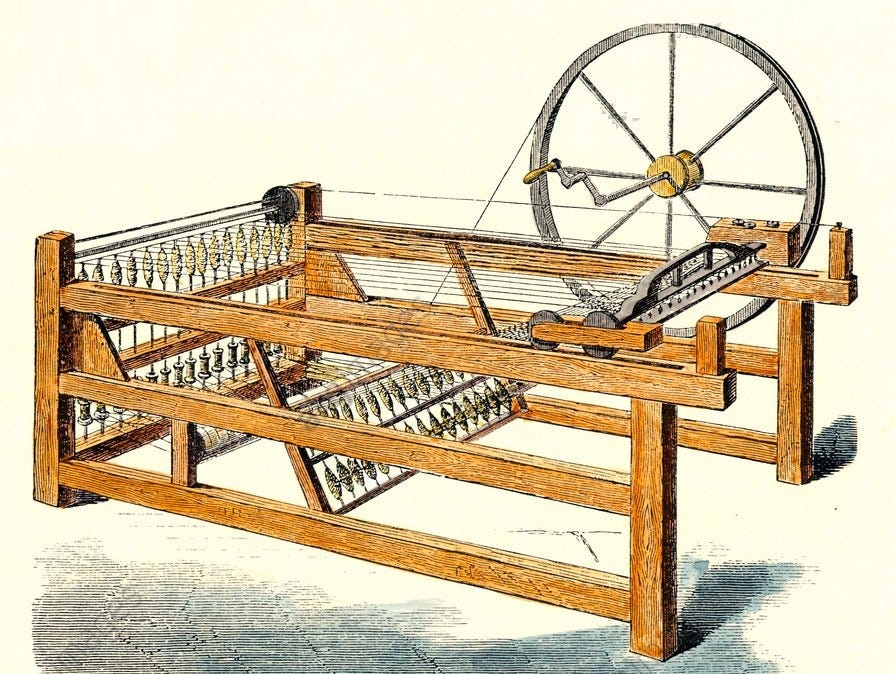
Technological innovation
A second approach emphasizes technological innovation. Here, the key question is whether new technologies fundamentally alter how goods are produced. Industrialization is then marked by the spread of specific innovations such as mechanized spinning and weaving, steam engines, coke-based ironmaking, and later railways.
Metrics for this technological approach often include:
The number and distribution of steam engines in use
The share of output produced with mechanized equipment
The diffusion rates of key technologies (spinning jennies, power looms, blast furnaces)
Patenting activity or recorded inventions in core sectors
Productivity growth
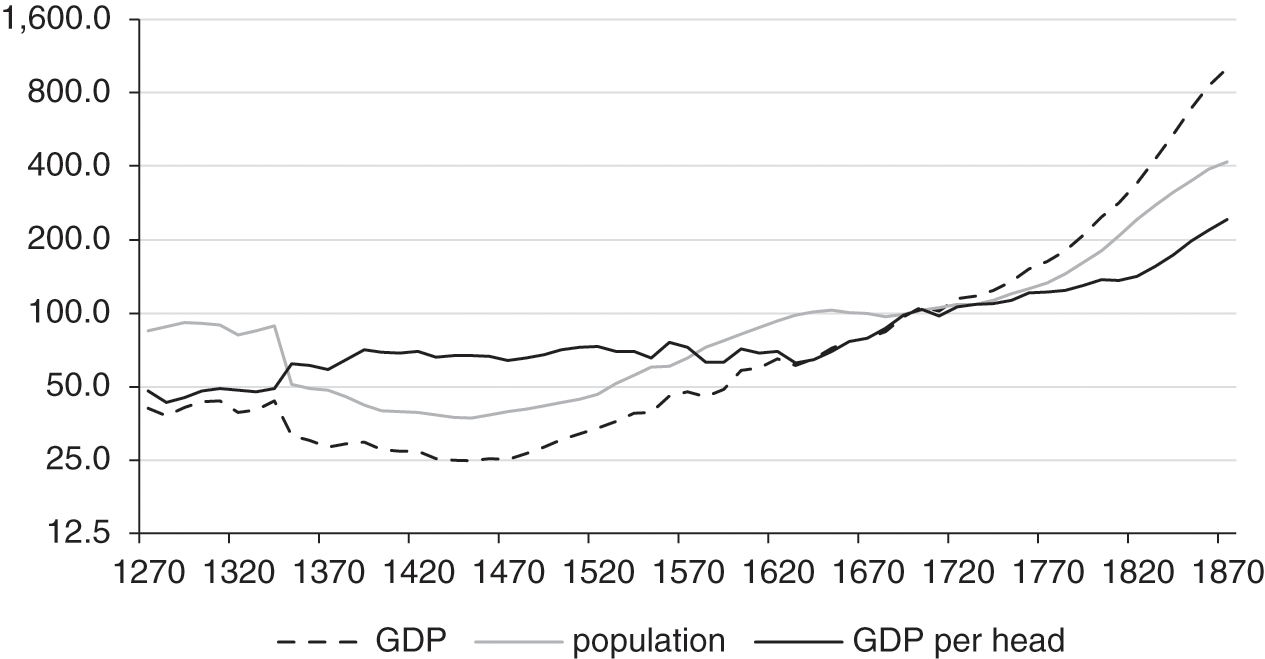
A third approach focuses on productivity growth, particularly sustained increases in output per worker or per unit of capital. From this perspective, industrialization is less about which sector is largest and more about whether the economy has moved onto a path of continuous efficiency gains. This often overlaps with welfare concerns because sustained productivity growth creates the potential for higher real incomes.
Metrics for the productivity approach typically include:
Labor productivity by sector (output per worker)
Total factor productivity at the sectoral or aggregate level
Growth rates of per capita GDP
Changes in capital per worker
Energy
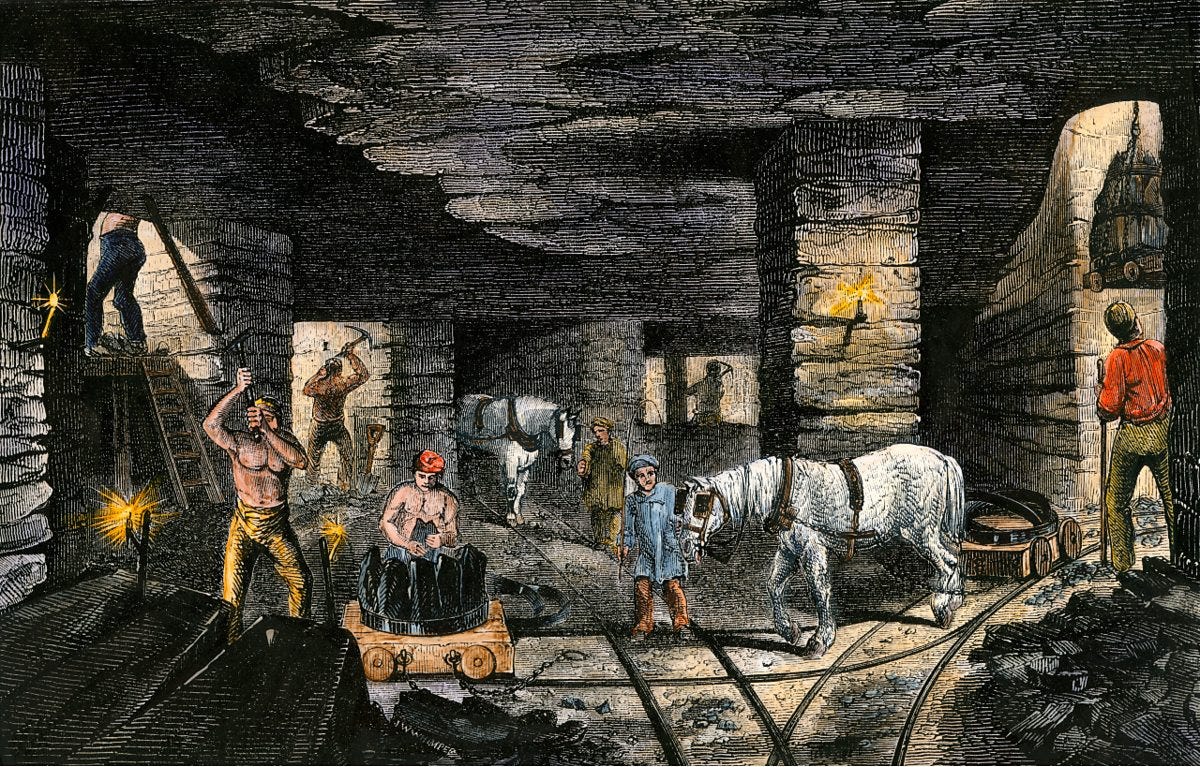
A fourth approach centers on energy use, especially the transition to coal. In this view, industrialization occurs when an economy escapes the limits of organic energy systems and begins to rely heavily on coal or other commercial energy sources. The key transformation is the dramatic increase in the amount of energy available per worker.
Metrics for the energy-based approach include:
Coal consumption per capita
Coal consumption per worker
Commercial energy use relative to total output
Energy intensity of key industries
Workplace organization
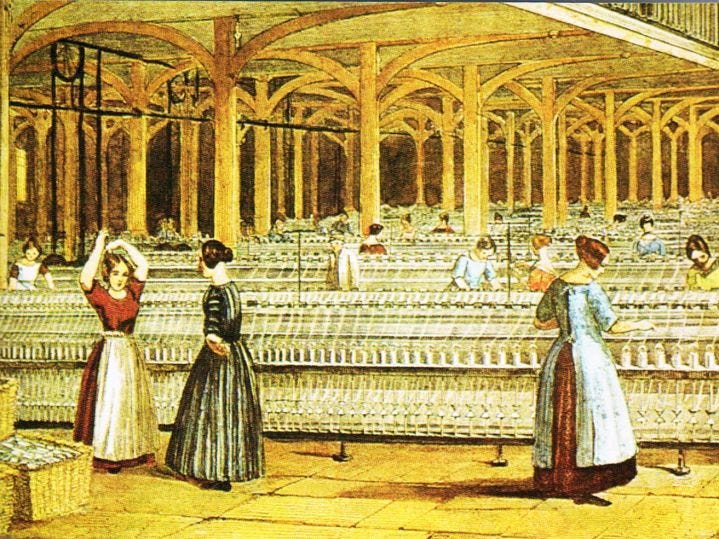
A fifth approach focuses on workplace organization, emphasizing the rise of factories, large-scale machinery, and centrally managed production. Here, industrialization is defined by a shift away from household production and small workshops toward concentrated, capital-intensive workplaces.
Metrics for the workplace-organization approach include:
The share of workers employed in factories
The scale and concentration of firms in major industries
Capital stock per worker
The ratio of machinery to labor across key sectors
All of these approaches are valid, but they do lead to a problem. Economic historians of the period often “talk past” each other because they are actually talking about different trends within the overall industrialization trend. This has made it difficult for the discipline to agree on the key points.
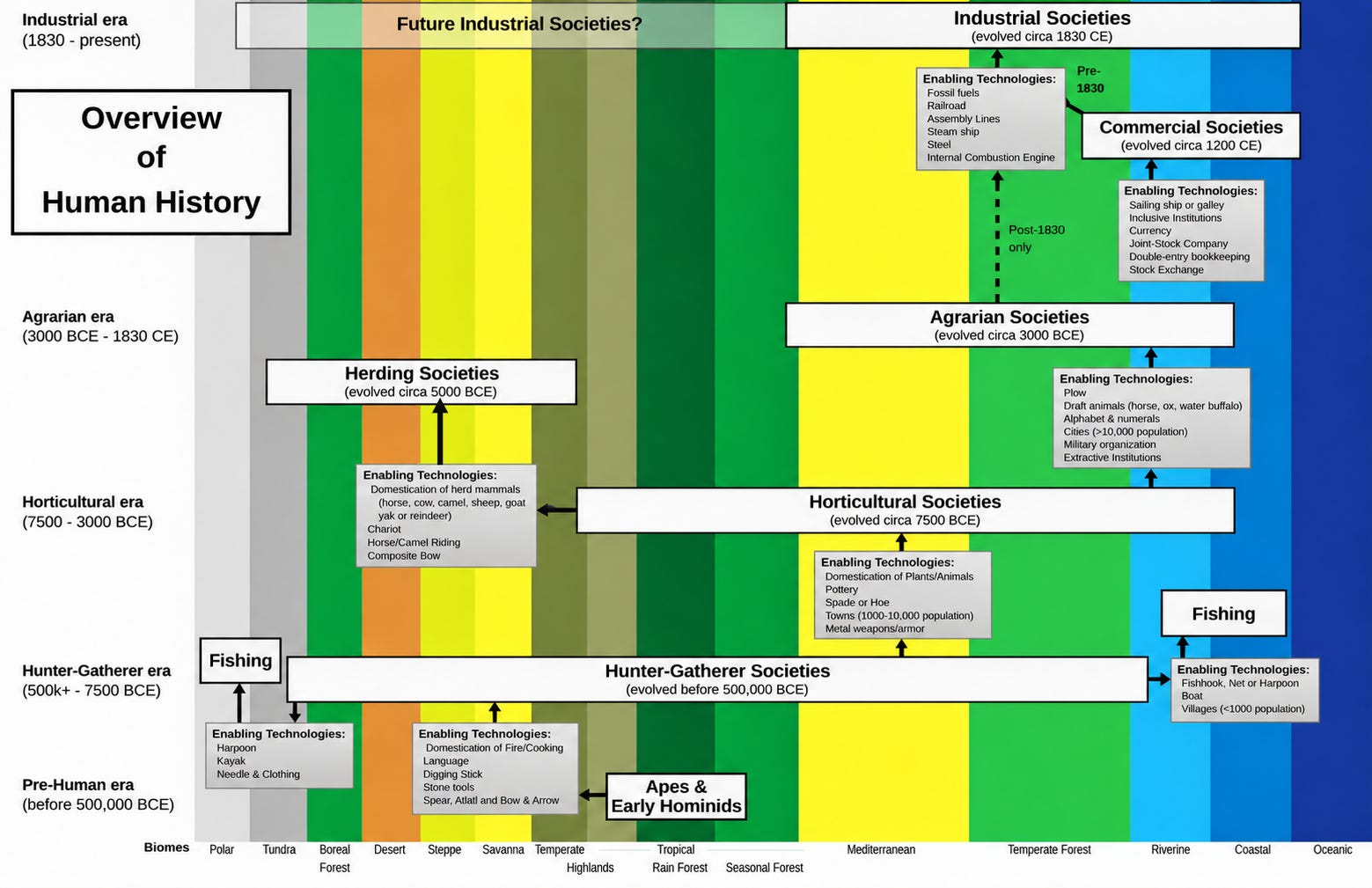
I personally so not have any objections to any of these approaches, but I tend to favor the sectoral (transition from agriculture) and energy (from non-fossil fuel energy sources to fossil fuels) because they closely align with the Society Type framework, which categories societies by their food and energy uses. This allows us to connect the Industrial Revolution to the rest of human history in a way that other approaches do not (see graphic below).


I also want to add that my primary interest is in material progress, which I defined as:
“the sustained improvement in the material standard of living of a large group of people over a long period of time.”
Other economic changes are of interest to me, but I am primarily concerned with those that create increased material standard of living for the masses over a long period of time.

Was it actually a revolution?
Whether Britain’s transformation should be called a “revolution” is a longstanding debate among economic historians. Some view the period from the late eighteenth to early nineteenth century as a sharp break with the past, driven by rapid technological change and new ways of organizing production. From this perspective, the speed and scale of Britain’s transformation were unlike anything seen in earlier economic history, justifying the term “revolution.”
Others argue that the changes were more gradual, unfolding over decades rather than erupting suddenly. They emphasize that many structural and technological developments had deep roots in earlier commercial and agrarian trends. Britain’s rise in productivity and living standards, on this view, was remarkable but not abrupt; what made it decisive was that the slow accumulation of innovations eventually reached a tipping point.
Part of the disagreement arises because scholars rely on different definitions and metrics when assessing the pace of change. Those who focus on technology see dramatic breakthroughs in cotton, steam engines, and iron production. Those who emphasize energy use point to a decisive shift from organic to fossil fuel systems. Sectoral analysts observe a long transition from agriculture toward industry, while scholars concerned with material living standards note that real wages rose only slowly for much of the early period.
These differing lenses contribute to scholars “talking past” each other, since each approach recognizes a different moment as the turning point. Whether the Industrial Revolution was sudden or gradual depends largely on which dimension of industrialization is being measured.
Timing of the Industrial Revolution
Scholars disagree sharply about when the Industrial Revolution actually began, and the debate often reflects the different definitions and metrics used to measure industrialization.
Those who focus on technological breakthroughs usually identify the late eighteenth century as the critical period. From this perspective, the appearance of mechanized spinning, the widespread adoption of the steam engine, and the introduction of new ironmaking techniques between the 1760s and early 1800s mark the decisive break with earlier economic history. These innovations represented a shift in the methods of production that, while limited to a few industries at first, eventually spread through much of the British economy.
Others emphasize aggregate productivity and output growth, and therefore highlight a somewhat later period. Growth accounting shows that total factor productivity rose only modestly before 1830 and accelerated more noticeably after that date. From this viewpoint, the most dramatic and sustained improvements occurred in the mid-nineteenth century, when railways, improved machinery, and more efficient energy use combined to produce faster economic expansion. Scholars in this tradition sometimes argue that the true onset of modern economic growth occurred after 1830, even if the technological foundations were laid earlier.
Still others focus on real wages and living standards, and their dating differs again. Real wages for ordinary workers grew slowly, unevenly, or in some cases barely at all before the 1830s. Only later in the nineteenth century is there clear evidence of broad-based rises in consumption, better diets, and improved housing for the majority of the population. For scholars who equate industrialization with rising material well-being, the decisive phase of the Industrial Revolution is therefore placed even later than the technological or productivity-based dates suggest.
These differing lenses contribute to scholars “talking past” each other, since each approach recognizes a different moment as the turning point. Just as with the discussion of whether the transition was actually a revolution depends on your metric, so does the debate over the timing of the Industrial Revolution.
Did it benefit the masses?
A central question in evaluating the British Industrial Revolution is whether it improved the material standard of living for ordinary people, and, if so, when these gains began.
Scholars generally agree that major structural and technological changes occurred before mass living standards rose substantially, which has created a persistent debate between the so-called “optimists” and “pessimists.”
Optimists emphasize:
long-run gains in real wages,
the expansion of consumer goods, and
improvements in housing, clothing, and diet.
Pessimists point to:
the difficult working and living conditions of early factory labor,
slow wage growth before the mid-nineteenth century, and
evidence of deteriorating health outcomes in rapidly growing industrial cities.
Part of the disagreement arises from the fact that different measures of well-being tell different stories. Real wages for many workers were stagnant or grew only modestly before the 1830s, while consumption of certain manufactured goods increased earlier and more quickly. Urban conditions were often harsh, yet the availability of low-cost textiles, household goods, and eventually better transportation expanded choices for many families. Demographic indicators such as life expectancy and child health improved only slowly and unevenly, further complicating efforts to assess the timing of welfare gains.
Because structural change and rising living standards did not occur at the same pace, scholars often highlight the distinction between:
industrialization as a shift in production structures and
industrialization as an improvement in mass welfare.
The early decades of mechanization transformed output and productivity in select industries, but the broad gains for workers and households took longer to appear. This distinction helps explain why economic historians reach different conclusions: what counts as “benefit” depends on whether the metric is wages, consumption, health, or broader measures of material progress. It also reinforces the point that industrialization was a multi-dimensional process whose impacts unfolded over different timelines.
Next in the series
Industrialization was not a single moment or a single transformation but a set of overlapping changes that unfolded at different speeds and affected the population unevenly. Understanding these distinctions is essential, because the timing of each change has shaped how scholars have understood the Industrial Revolution and why they disagree about its causes.
The next essay in this series will examine the major theories proposed to explain Britain’s early industrialization. In the third and final essay in this series, I critique each theory and offer a synthesis that connects these insights into a broader interpretation of Britain’s unique path that is linked to overall human history.
The British Industrial Revolution (the series)

The British Industrial Revolution is one of the great transformations in the material standard of living for the masses in world history. We cannot understand material progress without coming to grips with its importance.
If you’ve been enjoying these essays but only follow me here, you’re not getting them by email. Followers see Notes; subscribers receive every new piece on the history and future of progress.
Subscribe free here 👉:
See also my other articles on British progress:
Commercial England:
Industrial Britain:
British settlers spread progress:
If you enjoyed this article, you should read my From Poverty to Progress book series.
Fascinating synthesis of the historiographical debates. The point about scholars talking past each other because they're measuring diffrent dimensions is spot on. Back in grad school we spent weeks on this exact problem and the sectoral vs productivity vs welfare framing caused endless arguments. The energy transition angle is underrated tbh because it connects to the long arc of societal change better than most other framworks. Curious if the next essay will tackle the Mokyr institutionalist vs Allen factor price debate more directly.