

Make someone’s day: Gift a subscription to your friends and family!
A central theme of this Substack and my book series is that Commercial societies have played an under-appreciated role in the history of human material progress. These nations did so because they invented and scaled up four of the Five Keys to Progress. The Five Keys to Progress states that to transition from poverty to widespread material progress for the masses, a society needs to acquire the following preconditions:
Key #1: A highly efficient food production and distribution system. This enables societies to overcome geographical constraints to food production so that large numbers of people can focus on solving problems other than getting enough food to eat.
Key #2: Trade-based cities packed with a large number of free citizens possessing a wide variety of skills. These people innovate new technologies, skills, and social organizations and copy the innovations made by others.
Keys #3: Decentralized political, economic, religious, and ideological power. It is of particular importance that elites are forced into transparent, non-violent competition that undermines their ability to forcibly extract wealth from the masses. This also allows citizens to freely choose among institutions based upon how much they have to offer to each individual and society in general.
Key #4: At least one high-value-added industry that exports to the rest of the world. This injects wealth into the city or region, accelerates economic growth and creates markets for smaller local industries and services.
What held back Commercial societies from full industrialization was the lack of the Fifth Key: Widespread use of fossil fuels. The incredible energy density of fossil fuels injects vast amounts of useful energy into society enabling it to solve a wide variety of problems. That Fifth Key was not invented until Britain industrialized. It is my claim that Britain could not have done so without previously being a Commercial society.
But recently a reader in the comments mentioned other energy sources beyond agriculture (i.e. animal-power and human-power derived from food and heat derived from burning wood). Among those alternative energy sources are:
Wind (which powers windmills and sailing ships)
Water (which powers watermills)
Peat (or ‘baby coal” as I call it, which can be burnt to create heat energy for homes and manufacturing).
All three of those energy sources were critical for powering Commercial societies before the Industrial Revolution. In this article, I will explain why.
Read more articles about Commercial societies:
If you enjoy this article, you should read for my From Poverty to Progress book series.
In the long centuries before the Industrial Revolution, most of humanity lived in societies powered primarily by food calories and firewood. Energy scarcity defined the rhythm of life. Fields produced the calories to feed both people and the animals that plowed, hauled, and carried. Forests supplied fuel for cooking and heating, but as populations grew, wood grew scarce.
In this world, only a few societies managed to break out of the tight energy constraints of agrarian existence. They did so not by discovering fossil fuels, but by exploiting the renewable forces of nature—rivers, winds, and the hidden reserves of peat bogs.
Northern Italy, Flanders and the Netherlands, and England (all Commercial societies) found themselves drawn into this transformation. Each developed new energy systems—water mills in the river valleys of Italy and England, windmills and peat extraction in the Netherlands, and sailing fleets that harnessed the free energy of the winds across the seas. These innovations allowed for larger cities, more complex manufacturing, and commercial networks that spanned continents. They also showed that energy, as much as institutions or technology, was the lifeblood of economic change.
The story of these societies is a story of energy transitions. First, from agrarian dependence on food and wood to the renewable forces of water, wind, and peat. Then, in the eighteenth century, from these renewable sources to coal, which made the Industrial Revolution possible. Understanding these transitions shows how Europe moved step by step toward industrial modernity.
The Energy Poverty of Agrarian Societies
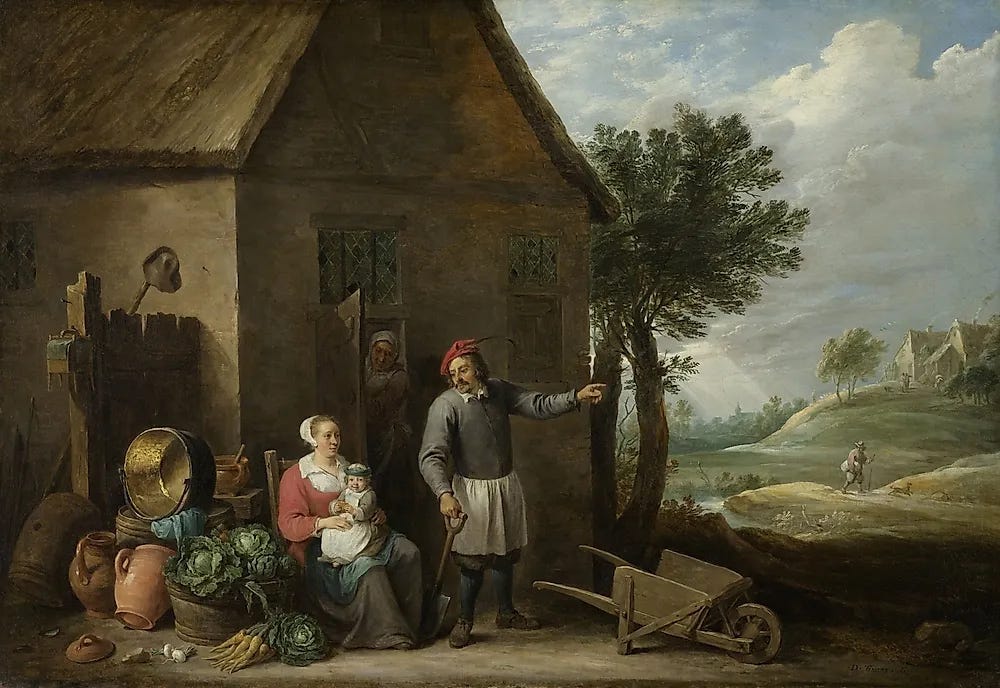
To grasp the leap forward that wind, water, and peat provided, one must first understand the limits of traditional agrarian energy systems. Human labor output averaged around 75 watts of continuous power, with perhaps 0.5 kilowatt-hours of useful work in a full day.
Draft animals—oxen, horses, and donkeys—could deliver two to five times more power than a human, but they required enormous amounts of feed. A horse might consume five kilograms of oats and ten kilograms of hay per day, requiring about a hectare of farmland per animal. In an economy where land was the ultimate scarce resource, devoting so much acreage to feeding animals drastically limited the energy that could be directed toward crafts or commerce.
Firewood was the chief thermal energy source, but it too was constrained. A hectare of mature woodland might yield only one to two tons of firewood per year without destroying the forest. Each ton contained roughly 15 gigajoules of energy. In cities like Paris, Venice, or London, demand soon outstripped the local forests. Wood had to be carted in from distant regions at great expense, raising costs for the poor and threatening urban survival. By the fourteenth century, deforestation was already a major problem in much of Western Europe, creating what historians have sometimes called a “wood crisis.”
In such a context, any new source of mechanical or thermal energy—whether from rivers, winds, or peat—gave an immediate advantage. Where most societies remained trapped in the low productivity of muscle and wood, a few found escape routes.
Quantitative Comparisons of Energy
To understand why these sources were so transformative, consider their energy outputs:
A man: 0.1 horsepower, 0.075 kilowatts.
A horse: 0.5 to 0.75 horsepower, 0.4 to 0.6 kilowatts.
A typical water mill: 2–5 horsepower, 1.5–4 kilowatts.
A large Dutch windmill: 10–20 horsepower, 7–15 kilowatts.
A ton of firewood: ~15 gigajoules.
A ton of peat: ~10 gigajoules.
A ton of coal: ~25–30 gigajoules.
The leap from man to water wheel was a multiplication of twenty to fifty times. The leap from wood to coal was another doubling. These differences explain why societies that exploited water and wind could sustain manufacturing and commerce, while those that later exploited coal could industrialize.
Rivers as Engines: Northern Italy’s Water Power
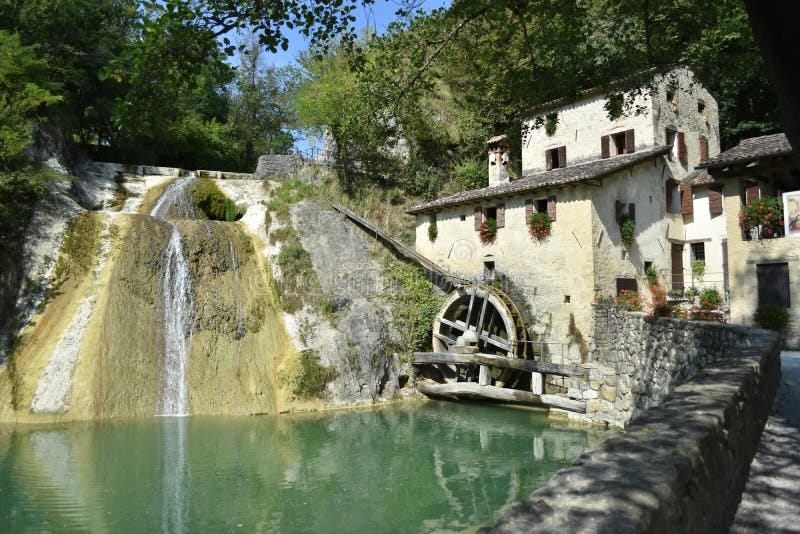
Northern Italy was among the first regions to exploit water power systematically. The Po Valley, with its network of rivers and canals, became a laboratory of energy innovation. By the twelfth century, the number of mills had multiplied, and by the thirteenth, their functions had expanded far beyond grinding grain.
The overshot water wheel, introduced into Italian river valleys, could generate two to three horsepower, equivalent to the work of twenty or more men. By linking several wheels to a single mill building, entrepreneurs could produce mechanical energy on a scale far beyond anything achievable with human or animal labor.
Wool manufacturing
The woolen cloth industry of Florence illustrates the importance of water power. Fulling mills, powered by water-driven trip hammers, beat woolen cloth to compact and finish it. A single fulling mill could replace dozens of laborers. By the fourteenth century, Florence was producing tens of thousands of bolts of cloth annually, much of it exported across Europe. This industrial scale was possible only because water provided the motive power.
Silk manufacturing
Silk, too, became an energy-hungry industry. In Bologna, water-powered throwing machines wound silk threads, a process that demanded continuous and even motion. The city’s canals were carefully engineered to maintain the flow of water to dozens of mills. Bologna’s silk industry was so productive that it exported across Europe and beyond, its success inseparable from water power.
Paper manufacturing
Water also powered the first mechanization of paper production. Rag-paper mills in Italy used water-driven hammers to pulp linen rags, replacing the labor of hand pounding. Without these mills, the rise of printing in the fifteenth century would have been much slower, for the supply of affordable paper would have been limited.
Northern Italy thus shows how rivers, when captured in wheels, could transform an economy. They powered textiles, paper, food processing, and metallurgy. They allowed Italian cities to become centers of commerce, banking, and culture. And they demonstrated the leap in energy productivity that came when societies harnessed flowing water instead of relying on muscles and wood.
Ship construction
The Venetian Republic offers a particularly vivid example of water power applied to shipbuilding. The Arsenal, Venice’s great shipyard, was a marvel of pre-industrial energy use. Water wheels drove saws that cut timber, trip hammers that shaped iron, and winches that moved heavy loads. This mechanization allowed Venice to produce war galleys and merchant ships on a scale unmatched in Europe. At its height, the Arsenal could turn out a fully equipped galley every day. This was an industrial process centuries before the Industrial Revolution, made possible by water-driven machines and the labor of thousands of skilled artisans.
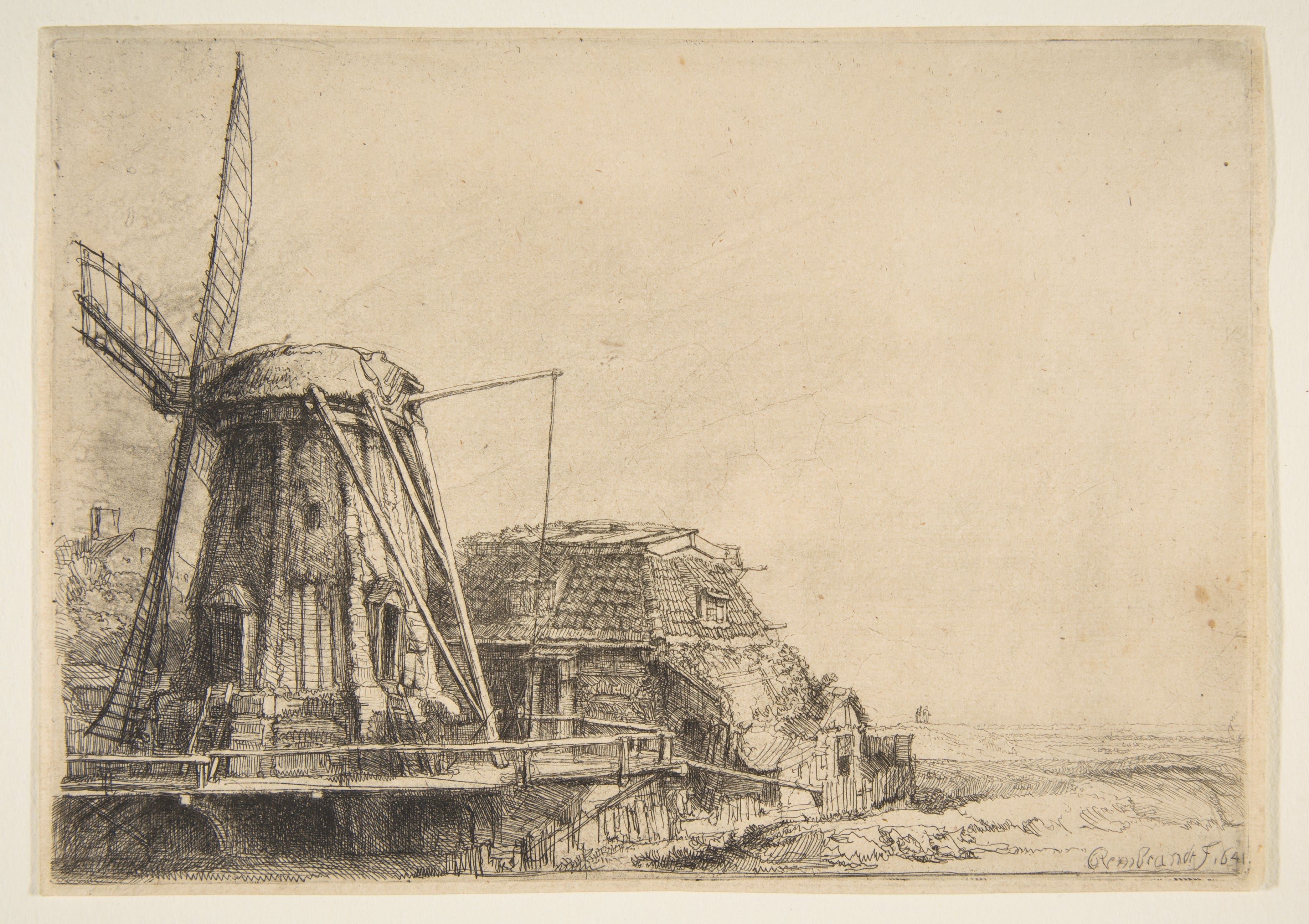
Winds on Land and Sea
If rivers powered Italy, winds powered the Low Countries and northern seas. The North Sea winds, steady and strong, offered both mechanical and maritime energy.
The invention of the post mill in the twelfth century, and later the tower mill in the fourteenth, revolutionized northern agriculture. Windmills could grind grain for bread, the staple of the population, without dependence on rivers. They could be built where rivers were absent, making them especially valuable in the flat landscapes of Flanders and Holland.
By the fifteenth century, the Dutch had begun to apply windmills to new industrial uses. The oilseed press, the paper mill, and above all the sawmill were driven by sails. Cornelis Corneliszoon’s wind-powered sawmill, patented in 1594, multiplied timber processing capacity. A single wind-driven sawmill could process thousands of planks per week, compared to the slow pace of manual sawing. This gave Dutch shipyards a decisive advantage, enabling them to build ships faster and cheaper than their rivals.
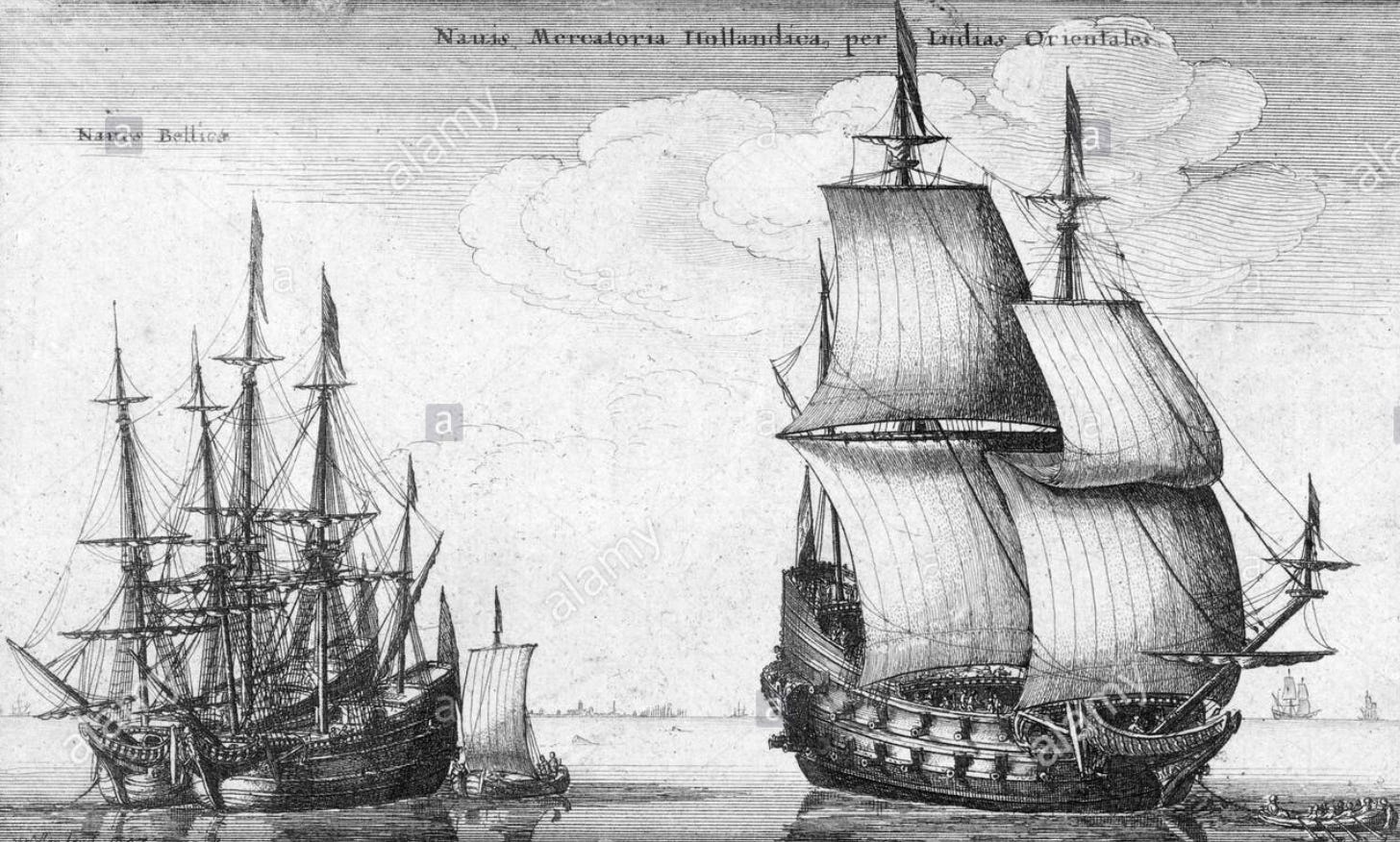
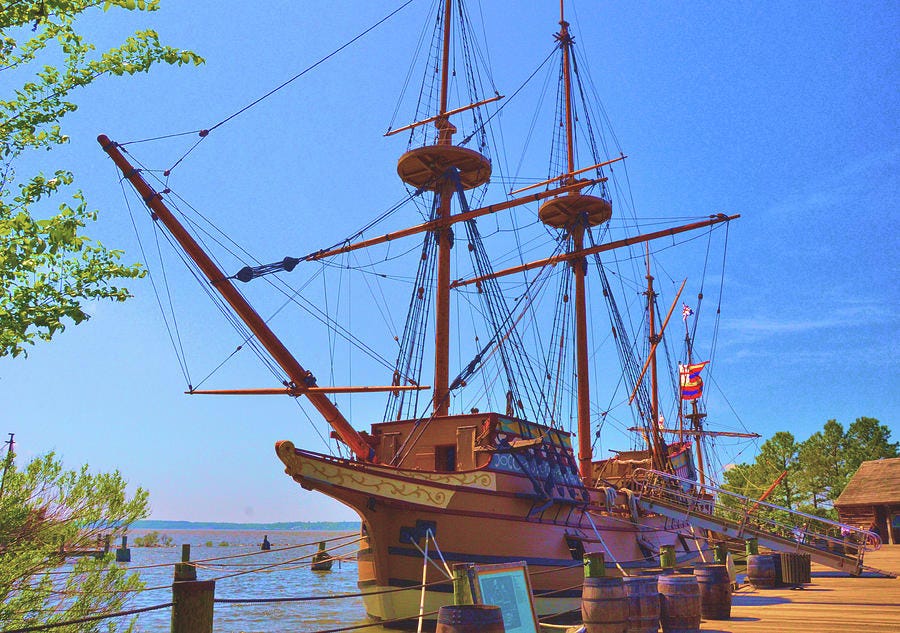
At sea, the power of the wind made possible the commercial empires of both the Dutch and the English. The fluyt, a Dutch cargo ship, was designed to maximize carrying capacity while minimizing crew. It was a ship built to harness wind efficiently, reducing costs and dominating bulk trade. English galleons and later East Indiamen likewise depended entirely on wind. The age of exploration, colonization, and transoceanic trade was an age of sails.
Without the free propulsion provided by wind, Europe could never have connected its markets to Asia, Africa, and the Americas. Horses could pull carts across land, but no animal could carry bulk cargo across oceans. The wind at sea was the one form of free, renewable energy that made global trade possible.
The seventeenth-century Dutch Republic was a society built on wind and peat. Windmills reclaimed land from the sea, sawed timber for ships, ground grain for bread, and pressed seeds for oil. Peat fires heated homes, fueled breweries, and powered brick kilns. Dutch cities like Amsterdam became centers of world trade because their ships, built with wind-powered sawmills and propelled by sails, could carry goods cheaply across the globe. The Dutch Republic demonstrates how a society could achieve a commercial golden age by mastering renewable energy sources.
The Peat Fires of the Netherlands and England
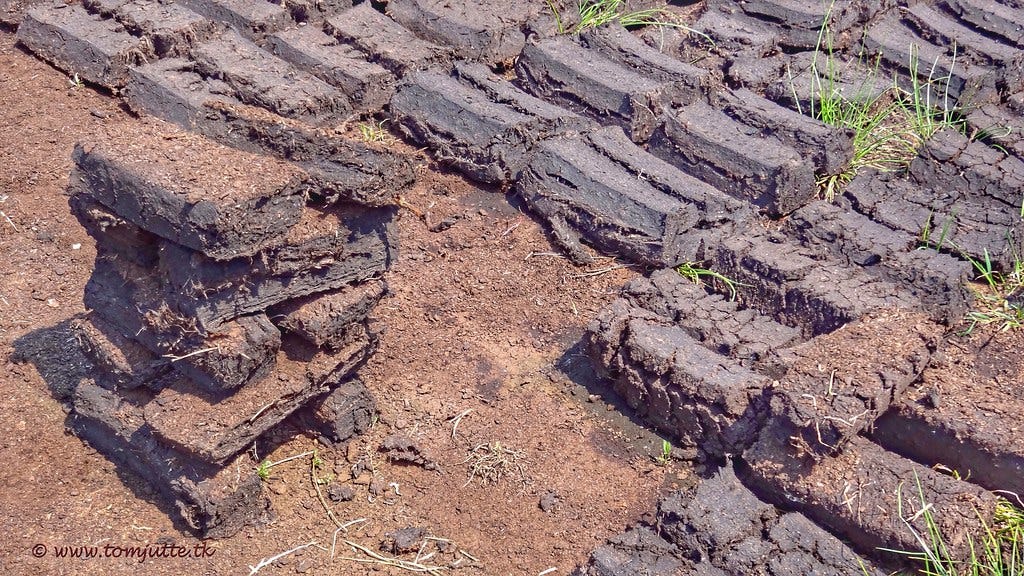
Peat, though less glamorous than wind or water, was vital. Formed from centuries of decayed vegetation in wetlands, peat could be cut, dried, and burned like wood. Its calorific value was about half that of coal but still far more concentrated than wood. In Holland, entire industries depended on peat. Breweries used it to boil wort, saltworks to evaporate seawater, and households to cook and heat.
Peat cutting was so extensive that it reshaped the Dutch landscape, creating lakes and ponds where bogs had once been. These were later pumped dry by windmills, turning the scars of peat extraction into fertile polders. Peat thus linked to windmills in a cycle: peat provided heat for cities, windmills reclaimed the land where peat had been dug.
In England, peat was most significant in the Fens and northern bogs. Fenland peat fueled Cambridge and Ely, while in Lancashire and Yorkshire peat fires warmed cottages. It was never as dominant as in the Netherlands, for England turned earlier to coal, but it was nonetheless a crucial supplement where wood was scarce.
Per Capita Energy Use in Pre-Industrial Europe
When one looks at estimates by historians on how much usable energy ordinary people commanded in different parts of Europe before the Industrial Revolution, the contrasts are dramatic. The average peasant in France, Germany, or Spain lived in an economy that consumed roughly 15 to 20 gigajoules per person per year. In these agrarian societies, human beings themselves supplied close to 30 to 40 percent of all useful energy, while animal traction contributed another 30 percent. Wood fuel, burned in hearths and kilns, accounted for about 25 to 30 percent, while water mills rarely contributed more than 5 to 10 percent. Wind was negligible except in pockets of northern Germany, and peat scarcely mattered outside the bogs of Westphalia. In short, perhaps two-thirds of all useful energy still came from muscle and wood, technologies little advanced from antiquity.
Northern Italy during its commercial flowering between 1200 and 1500 already offered a different picture. Total per-capita energy supply was probably in the range of 25 to 30 gigajoules per year, at least 50 percent higher than the European agrarian average. Only about 20 percent of this came from human labor, and another 20 percent from animals. Wood remained crucial, supplying around 35 percent of the total, but what made Northern Italy distinctive was that water power contributed fully 20 to 25 percent of useful energy. Rivers and canals around Florence, Milan, and Venice were dense with mills for grinding, fulling, sawing, and hammering, allowing mechanical power to replace hundreds of laborers. Wind remained marginal, and peat was absent, but the share of water power alone raised per-capita energy availability to a level that made sustained urban manufacturing possible.
The Dutch Republic of the seventeenth century carried this transformation further than anyone. Total per-capita energy use rose to 45 to 55 gigajoules per person per year, perhaps three times that of Spain. Human labor provided barely 10 percent, and animals about 15 percent. Wood accounted for around 20 percent, but by then it was mostly imported from the Baltic.
The great innovation in the Dutch Republic was the combined use of peat and wind: peat supplied 35 to 40 percent of total energy, while windmills provided another 20 to 25 percent. In practical terms, the Dutch derived nearly two-thirds of their energy from sources other than muscle and wood. Their vast fleets, breweries, and textile industries were powered by this abundance, and their wind-driven sawmills alone gave Dutch shipbuilders a decisive advantage over rivals. Amsterdam consumed more energy per capita than any city in Europe, a direct reflection of its highly diversified energy economy.
England, on the eve of its industrial breakthrough around 1700, stood between the Italian and Dutch patterns. Total per-capita energy supply was on the order of 30 to 40 gigajoules per person per year, well above the European agrarian norm but still below the Dutch. About 15 percent came from human labor, 20 percent from animals, and 25 percent from wood. Water power provided 15 percent, and wind contributed 5 to 10 percent, while peat played a small role at roughly 5 percent.
Already, however, coal was beginning to appear in the mix in northern England, a sign that England’s per-capita energy would soon leap ahead. Even before coal, though, England had diversified enough that half of its energy came from sources beyond human and animal muscle.
The comparison across Europe could not be sharper. Agrarian France, Germany, and Spain averaged 15–20 GJ per person per year, with 60–70 percent coming from muscle and wood. Northern Italy averaged 25–30 GJ, with a quarter from water power alone. England reached 30–40 GJ, spread across multiple sources, while the Dutch peaked at 45–55 GJ, two-thirds of it from wind and peat. These percentages and totals explain why the commercial societies could sustain denser cities, more shipping, more manufacturing, and higher living standards: they simply commanded more energy, and more of it in mechanical form, than their agrarian neighbors.
The Ceilings of Pre-Industrial Energy
Yet the limitations of wind, water, and peat were real. Rivers froze in winter or dried in summer. Too many mills on one stream reduced efficiency. Windmills fell silent on calm days. Peat cutting exhausted the land and lowered ground levels, inviting floods. All of the these energy sources were highly constrained by geography. Most important, they were simply not as energy dense as fossil fuels.
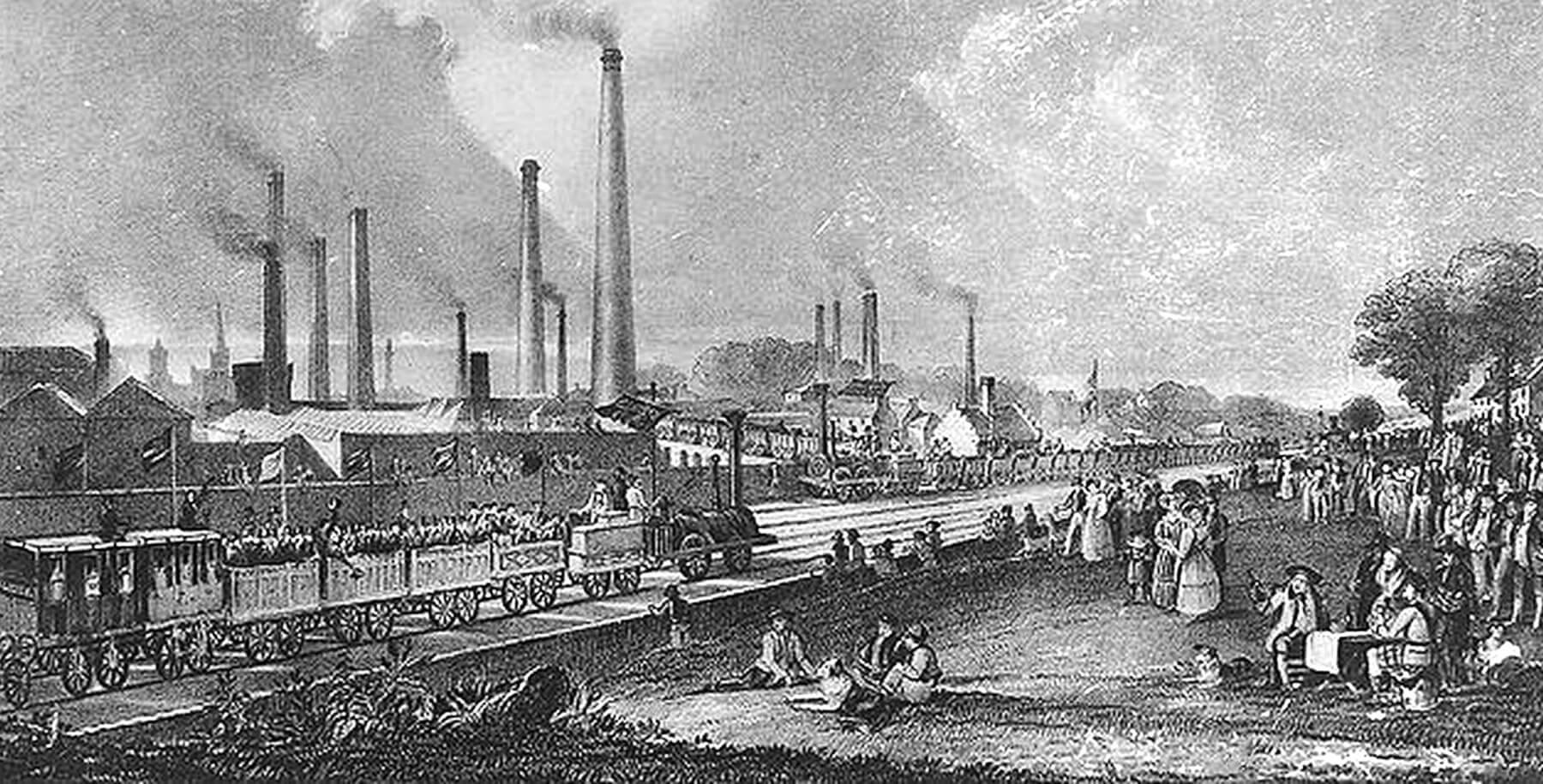
Wind, water, and peat were enough for Commercial societies but not for Industrial societies. They could power a silk mill, a sawmill, or a brewery, but not the steam engines and rolling mills of the nineteenth century. Coal’s concentrated power was needed for that leap.
Just as important, the British leveraged the awesome energy density of coal to invent new technologies in transportation, agriculture, manufacturing, communications, materials, the military. By copying the industrial technologies, skills, and social organizations from Britain, other nations that had previously been trapped in poverty by geographical constraints were able to follow Britain’s path to material prosperity for the masses.
The centuries before the Industrial Revolution were an age of ingenuity in renewable energy. Italians used rivers to power textiles and paper. The Dutch used wind to drive mills and ships, and peat to fuel cities. The English combined water mills, sails, and peat with increasing use of coal. These societies built commercial systems that far surpassed agrarian economies.
But they had ceilings. Their energies were powerful yet diffuse, tied to geography and weather. Coal was different: dense, abundant, transportable, and scalable. It broke through the ceilings and powered the Industrial Revolution. Yet without the centuries of experience with wind, water, and peat, Europe might never have been ready to embrace coal. The story of pre-industrial energy is thus the story of how societies learned to harness nature beyond the limits of muscle and wood, setting the stage for the modern world.
Bibliography
If you interested in this topic, I would recommend the following books:
Energy and Civilization: A History by Vaclav Smil (particularly this book summary on my online library of book summaries).
Energy Transitions by Vaclav Smil (summary here)
Foragers, Farmers and Fossil Fuels by Ian Morris (summary here)
Power to the People by Astrid Kander, Paolo Malanima and Paul Warde (summary here)
For estimates of energy usage in each society, see:
Energy and the English Industrial Revolution by Wrigley, E. A.
The First Modern Economy: Success, Failure, and Perseverance of the Dutch Economy, 1500–1815 by De Vries, J., & Van der Woude, A. M.
Italy in the Renaissance: A Leading Economy in the European Context, 1350–1550 by Malanima, P. in Economic History Review.
Read more articles about Commercial societies:
If you enjoyed this article, you should read for my From Poverty to Progress book series.
A great piece.
Have you read The Rise and Fall of Classical Greece: https://www.amazon.com/Classical-Greece-Princeton-History-Ancient/dp/0691173141 ?
It has some great parts about the economic outperformance for the Greeks compared to their contemporaries. They did have some workshops that seem like proto-specialization/factories, but they didn't have wind and water mills or other such energy sources.
How do you see Athens fitting into this picture? Did they simply max out what could be done without harnessing more energy?
Outside of what the short burst the one time stash of fossil-fuel energy made possible during a couple of centuries, commercial societies based on the surplus energy provided by wind and water (with collectors not dependent on fossil fuels) are probably the apex of what humans can aspire to. That is, when optimal conditions discussed previously are met.
This is still a harsh life. With lot of injustices. In particular, these societies depends also, in part, on slavery. That is muscle energy which investment and cost is limited to its barest minimum, both in its origin and in its daily maintenance.
But in the long term, this kind of societies are probably what the luckiest among our descendants can expect. And not the techno-utopian wind turbines and solar panels powered future that is so often presented to us...